Purnia: Union Home Minister Amit Shah will hold a high-level security review meeting in Purnia on Friday, marking the third and final day of his Seemanchal tour. The meeting will focus on curbing infiltration and strengthening border security in districts along the India–Nepal border.

The meeting will take place at a five-star hotel near Zero Mile in Purnia and will be attended by district magistrates and superintendents of police from Seemanchal districts—Purnia, Araria, Katihar and Kishanganj—along with senior officials from other districts and central security agencies. Officials said discussions will centre on the current infiltration scenario, possible solutions and future strategy, based on inputs from intelligence and security agencies.
Elaborate security arrangements have been put in place across the hotel zone and key urban areas of Purnia. Police personnel and senior officers have been deployed at intervals of around 100 metres. Special arrangements have been made for parking, crowd management and route lining. Security agencies are on high alert, while health department teams, ambulances and trauma support units have been kept ready for emergency response. A multi-layered security cover has been ensured to avoid any lapses.

During the meeting, officials are expected to review management, surveillance and intelligence coordination along nearly 700 kilometres of international border falling in the Seemanchal region. The area, which lies close to the Nepal and Bangladesh borders and near the strategic Siliguri Corridor, is considered sensitive due to persistent concerns related to infiltration and cross-border activities. The meeting is seen as a key step towards shaping future policy and operational decisions.
Shah arrived in Purnia late Thursday and stayed overnight at the hotel, where all rooms have reportedly been booked for February 26 and 27. He is scheduled to return to Delhi later in the evening after concluding the meeting.
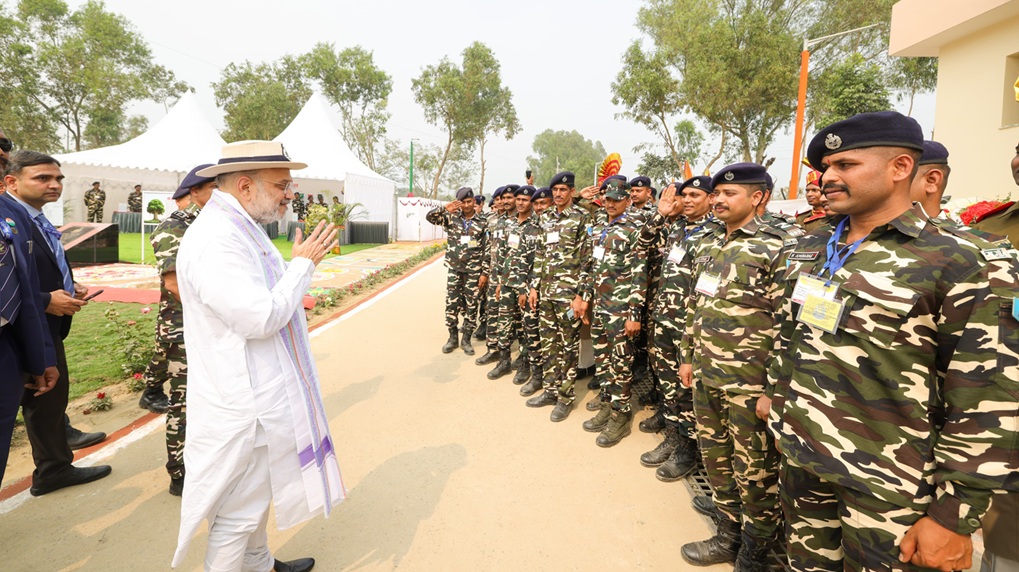
Earlier, while addressing Sashastra Seema Bal personnel in Araria, Shah said that consultations held over the past three days with the Bihar government, district administrations and security agencies were aimed at preparing a comprehensive action plan. He reiterated that all illegal encroachments within 10 kilometres of the border would be removed.
Shah said infiltration not only affects elections but also places pressure on welfare schemes, reduces employment opportunities for local youth and poses a serious threat to national security. He announced that a focused mission would be launched to identify and expel infiltrators from the Seemanchal region.
He also highlighted concerns related to demographic changes, illegal smuggling, narcotics trafficking and other cross-border activities, stressing the need for a standard operating procedure to ensure ground-level alertness. Calling the open border a major challenge, he assured enhanced facilities and welfare measures for Sashastra Seema Bal personnel and their families.
Officials noted that although the open India–Nepal border facilitates legitimate movement, it also creates vulnerabilities. Intelligence inputs have pointed to multiple routes used for illegal entry, including forged documents, footpaths along border villages and unaided crossings by individuals blending in with local populations. Security agencies have emphasised the need for tighter monitoring, stronger intelligence coordination and sustained enforcement.