
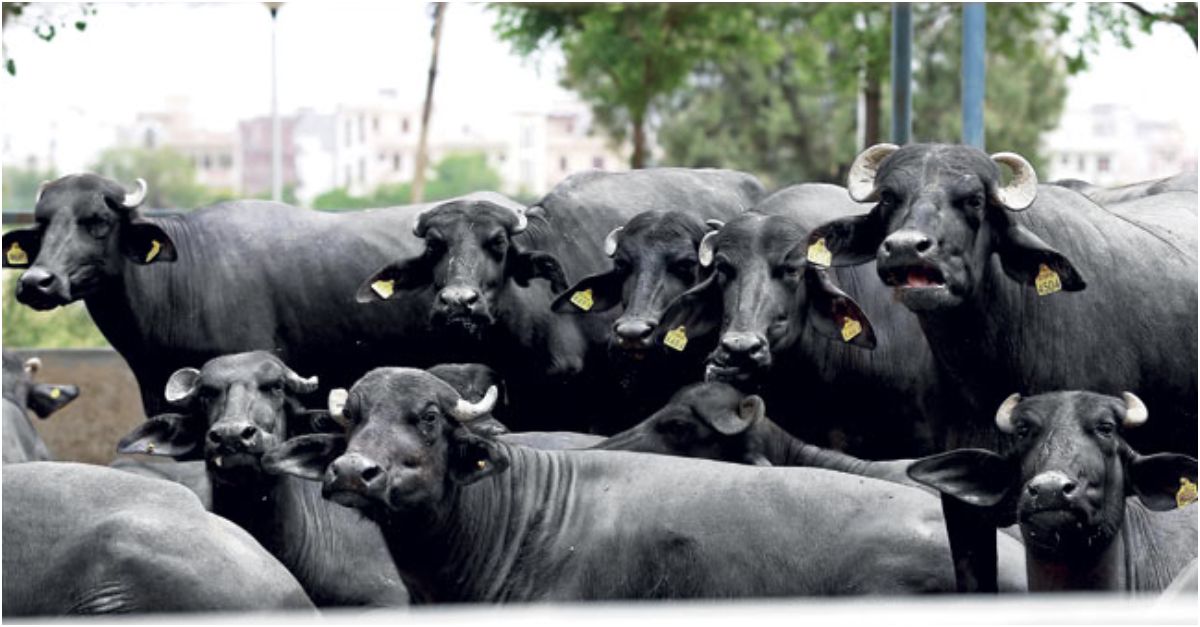
Patna: Scientists at Bihar Animal Sciences University have begun applying in vitro fertilisation (IVF) technology to buffaloes in a move they say could improve breed quality and increase milk production in the state.

The university’s researchers have started trials on 12 Murrah buffaloes housed at its livestock farm. The project follows earlier success with IVF in cattle and is being described by officials as a step towards expanding assisted reproduction techniques in the dairy sector.
If successful, the programme is expected to be scaled up and eventually extended to farmers.

IVF involves retrieving eggs from a donor animal and fertilising them with sperm in a laboratory setting. The resulting embryo is then implanted into a surrogate animal. Scientists say the technique enables selective breeding for traits such as higher milk yield and improved genetics.
According to the university, the buffaloes selected for the initial phase are being closely monitored as part of the controlled trial.
The initiative builds on previous work with cattle, in which the university reported the birth of 29 calves through IVF. At present, 11 cows are also pregnant using the same technique, officials said.
The earlier results with cattle encouraged researchers to extend the programme to buffaloes, which form a significant part of India’s dairy economy and are valued for their higher fat content in milk.
Dr Dushyant Yadav, a scientist associated with the project, said the technology could play a key role in improving livestock breeds and raising the population of high-yield animals. “This will help in increasing the number of high milk-producing animals and improving farmers’ income,” he said.
The university has also sourced advanced buffalo breeds, including Murrah stock from Haryana, for experimental use in the programme.
Officials said the IVF facility is currently being offered free of cost to farmers, who can approach the university to have their cattle or buffaloes included in the programme.
Dr Indrajeet Singh, vice-chancellor of Bihar Animal Sciences University, said the broader aim is to make advanced reproductive technology accessible and practical for the rural dairy economy. “The primary objective is breed improvement in cows and buffaloes, which will directly support milk production and farmers’ income,” he said.
He added that once the buffalo trials are validated, the technology could be deployed more widely across Bihar.
Researchers say the long-term goal is to accelerate genetic improvement in livestock and reduce dependence on traditional breeding methods, though they acknowledge that scaling IVF in field conditions will require infrastructure, training and sustained support.
For now, the focus remains on monitoring the first batch of buffaloes as the university attempts to replicate its earlier success in cattle.