Patna: The Bihar government has announced plans to develop 55 constituent colleges as Centres of Excellence in a bid to strengthen the state’s higher education system. The move is part of a broader effort to address long-standing challenges in universities and colleges and to build a stronger quality education ecosystem across the state.

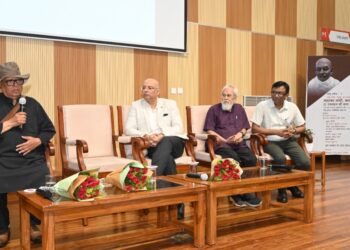
The proposal was discussed during a workshop organised by the state’s higher education department, where education experts highlighted the need for comprehensive reforms. Participants said that improving infrastructure alone would not be enough, and stressed the importance of strengthening teaching methods, updating academic content and incorporating modern technologies such as artificial intelligence in the learning process.
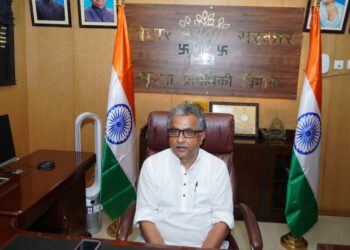
The workshop was inaugurated by education minister Sunil Kumar, who said that suggestions received from experts would be included in the government’s future action plan for higher education. According to the minister, the selected colleges will be developed with advanced facilities including modern laboratories, digital learning systems, skill development centres and improved research infrastructure.

Officials also underlined the need to improve student participation in higher education. Development commissioner Mihir Kumar Singh said the government was committed to bringing qualitative improvements to the sector, while Dr Chandrashekhar Singh, secretary to the chief minister, emphasised the importance of increasing the gross enrolment ratio in higher education across Bihar.
Introducing the theme of the workshop, higher education secretary Rajeev Ranjan said improving the quality of higher education remained a top priority for the government. The event was attended by senior academics and officials, with director of higher education Prof N.K. Agrawal welcoming participants and deputy director Dr Deepak Kumar Singh delivering the vote of thanks. The workshop was coordinated by Ram Sagar Singh, deputy secretary of the state higher education council.
Educationist and former Patna University vice-chancellor Dr Ras Bihari Singh said that the higher education system faced numerous structural challenges and required ambitious reforms. He stressed the need for closer coordination between the government and academic institutions, regular curriculum upgrades and continuous efforts to improve academic standards.
Other academicians also raised practical concerns. Munger University vice-chancellor Prof Sanjay Kumar noted that several college laboratories remain non-functional due to the shortage of laboratory assistants. Magadh University vice-chancellor Prof Shashi Pratap Shahi said higher education must be closely integrated with technological advancement, while Patna University vice-chancellor Prof Namita Singh highlighted the need for newly appointed teachers to develop strong teaching and learning content to improve classroom engagement.
Experts at the workshop recommended several measures to improve the academic environment in colleges, including the establishment of high-tech laboratories, modern libraries and better research facilities. They also stressed the need for continuous academic dialogue between teachers and students, improved training for faculty in modern teaching methods and greater opportunities for research scholars.
Prominent academicians who participated in the discussion included scientist Prof Bhavnath Jha, historian Prof Ratneshwar Mishra, Aryabhatta Knowledge University vice-chancellor Dr S.P. Singh, Prof Sanjay Kumar Chaudhary of Lalit Narayan Mithila University, Prof P.K. Bajpai of Jai Prakash University, former vice-chancellors Prof K.C. Sinha and Prof Dolly Sinha, and NAAC coordinator Prof Arun Kumar.