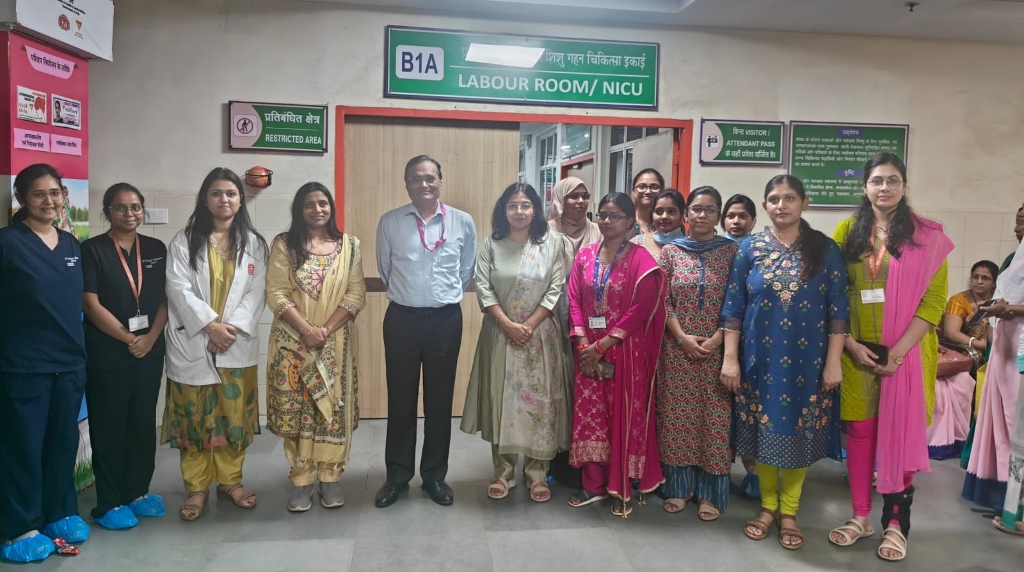
Patna: A two-day training programme on subdermal single-rod contraceptive implants concluded in Patna on Tuesday, aiming to strengthen family planning services in Bihar’s public health system. The programme was organised by the District Health Society, Patna, in collaboration with PSI India as part of efforts to expand newly introduced contraceptive services in the state.

The training, held on March 9 and 10 at AIIMS Patna, brought together 12 MBBS doctors from ESIC Bihta, Nalanda Medical College and Hospital (NMCH), Patna, and AIIMS Patna. The sessions were led by district lead trainers Dr Mukta Agrawal from AIIMS and Dr Lata from ESIC, who provided both theoretical lessons and practical hands-on training to help participants develop the necessary skills to offer the service effectively.
Dr Sangam Jha also supported the programme during the two-day session, while PSI India’s State Lead for Bihar, Saurav Tiwari, coordinated the training. The organisers said the initiative is part of regular capacity-building activities conducted by the State Health Society Bihar to expand the number of trained healthcare providers offering modern contraceptive methods.

Prof (Brig) Dr Raju Agarwal, executive director of AIIMS Patna, welcomed the initiative and praised the participants for their commitment to strengthening community-based family planning services. He said trained providers would play an important role in expanding access to the newly introduced subdermal implant method.
The Ministry of Health and Family Welfare introduced two new contraceptive options under the National Contraceptive Programme the Medroxy Progesterone Acetate Subcutaneous (MPA-SC) injection, also known as ANTRA-SC, and the single-rod subdermal implant. The methods offer long-term protection against pregnancy, with the injection effective for three months and the implant for up to three years.
The programme is being piloted in 10 states, including Bihar, where it was launched in September 2023. In the first phase, the State Health Society Bihar selected Patna and Bhagalpur districts to pilot the subdermal implant service, while Munger and Sheikhpura were chosen for the MPA-SC injection.
Following positive outcomes from the initial rollout, the state government has begun expanding the programme. Subdermal implant services are now set to be introduced in 11 additional districts, while MPA-SC services will be extended to 13 more districts, taking the overall reach of the initiative to 28 districts across Bihar.