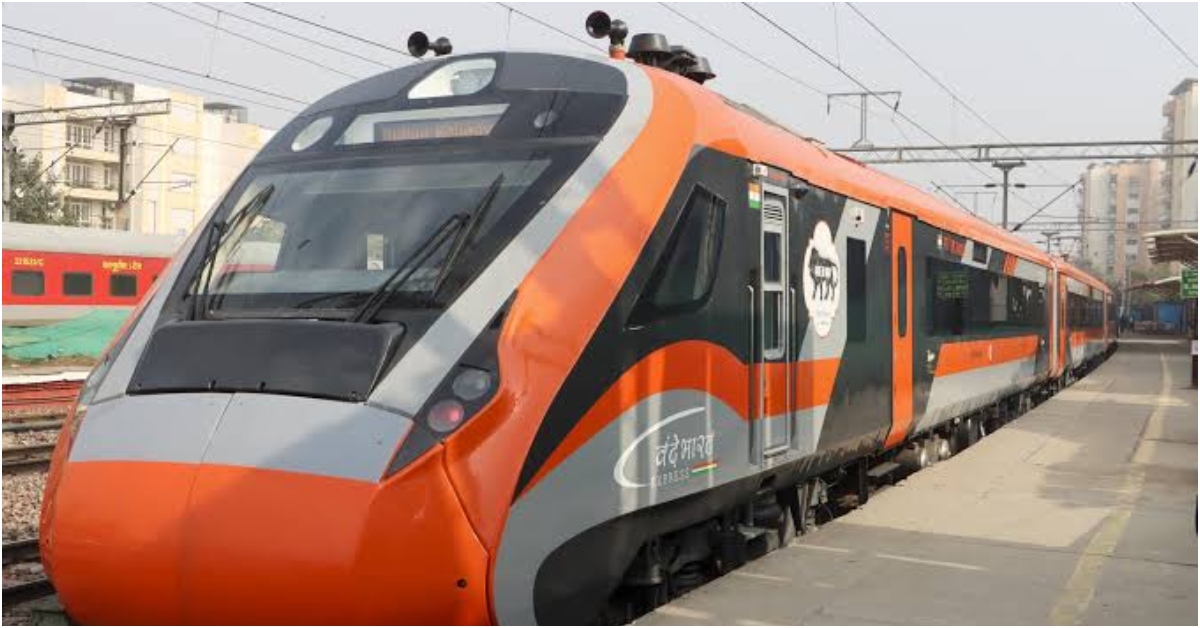
Patna: In the quiet city of Kapurthala, known for its agrarian landscape and cultural heritage, a vast industrial complex is redefining the future of Indian railways. Tucked away from highways and farmland, the Rail Coach Factory Kapurthala (RCF) has emerged as a key centre where India’s high-speed rail ambitions are taking shape.

Spread across more than 1,100 acres, the facility was recently opened to journalists under an outreach programme organised by the Press Information Bureau. What appears to be a conventional factory soon reveals itself as a highly coordinated ecosystem of advanced engineering, where each section contributes to building modern railway coaches.
The process begins with stainless steel sheets cut using high-precision laser machines, forming windows, doors and structural panels. These are seamlessly welded into the skeletal frame of a coach. The structure then moves to assembly platforms where wiring, flooring, and fittings are installed, along with wheels sourced from the Rail Wheel Factory. Finishing includes painting and water testing to detect leaks.

Inside, engineers install seating, lighting, displays, batteries and charging systems, ensuring passenger comfort. The factory produces coaches for Vande Bharat Express and Namo Bharat, designed for speeds up to 160 km/h. Lighter stainless-steel bodies, air suspension and disc brakes mark a shift from older models.
Producing over 2,500 coaches annually, the facility stands as a symbol of India’s growing technological capability and push towards self-reliance.