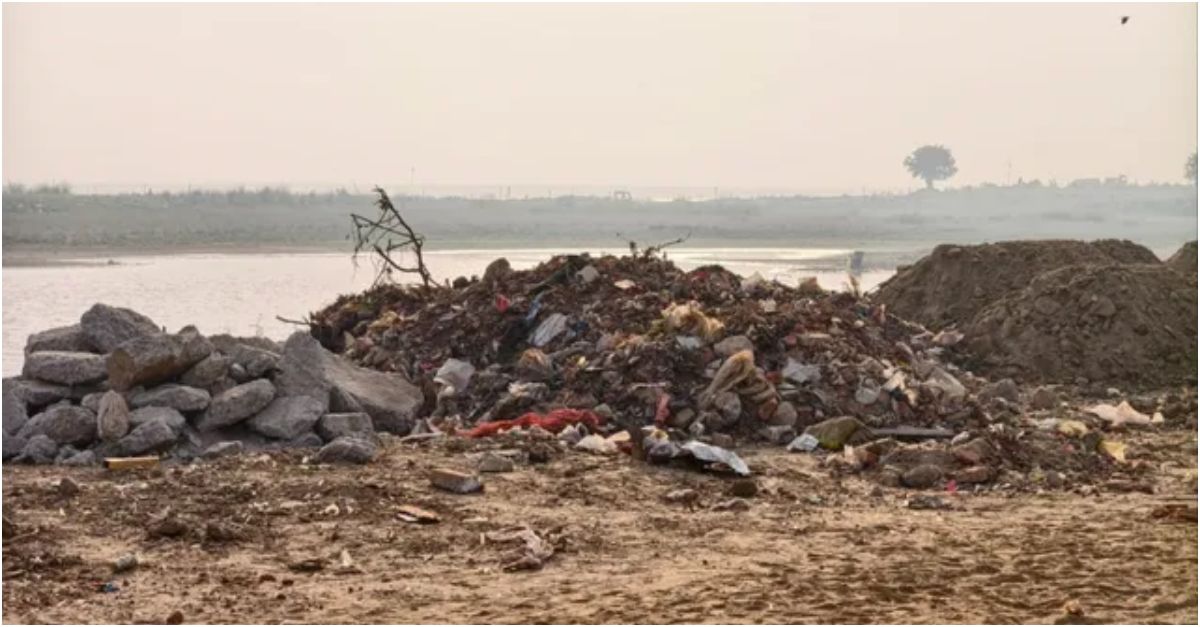
Patna: Sanitation conditions along the Ganga riverfront in Patna have deteriorated sharply, with piles of uncollected waste and instances of open burning contributing to rising pollution levels at several ghats.

At Digha Ghat No. 88, large quantities of garbage have accumulated over days without clearance. Some of this waste has been set alight, releasing smoke and exacerbating air pollution in the surrounding area. Residents say the situation has persisted despite regular footfall from devotees who visit the ghats each morning for bathing and religious rituals.
The dumping of waste along the approach road to the ghat has also led to a persistent foul odour, raising concerns about public health and the effectiveness of municipal waste management. Locals report that garbage is being transported from other areas and deposited near the riverbank, further compounding the problem.

Similar conditions have been observed at other ghats across the city. While the municipal corporation maintains that daily cleaning and waste collection are carried out, the on-ground reality appears inconsistent with these claims. A recent clean-up and awareness drive by the Being Helper Foundation at Kangan Ghat resulted in the removal of more than 700kg of waste, underlining the scale of the issue.
The state of the ghats could also have wider implications. This year’s Swachh Survekshan places particular emphasis on riverfront cleanliness, and poor maintenance may affect Patna’s ranking in the national survey.
Municipal officials say sanitation workers have been deployed specifically for ghat maintenance, with designated sites created for the immersion of worship materials to prevent direct disposal into the river. Authorities also claim these areas are regularly monitored and cleaned.
The city’s mayor, Sita Sahu, has urged residents to take greater responsibility for waste disposal. She called on citizens to compost biodegradable offerings such as flowers at home and to reuse non-biodegradable items like plastic decorations and frames.
According to the mayor, sustained improvements in cleanliness will depend not only on municipal efforts but also on public participation through the principles of reducing, reusing and recycling waste.