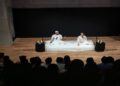
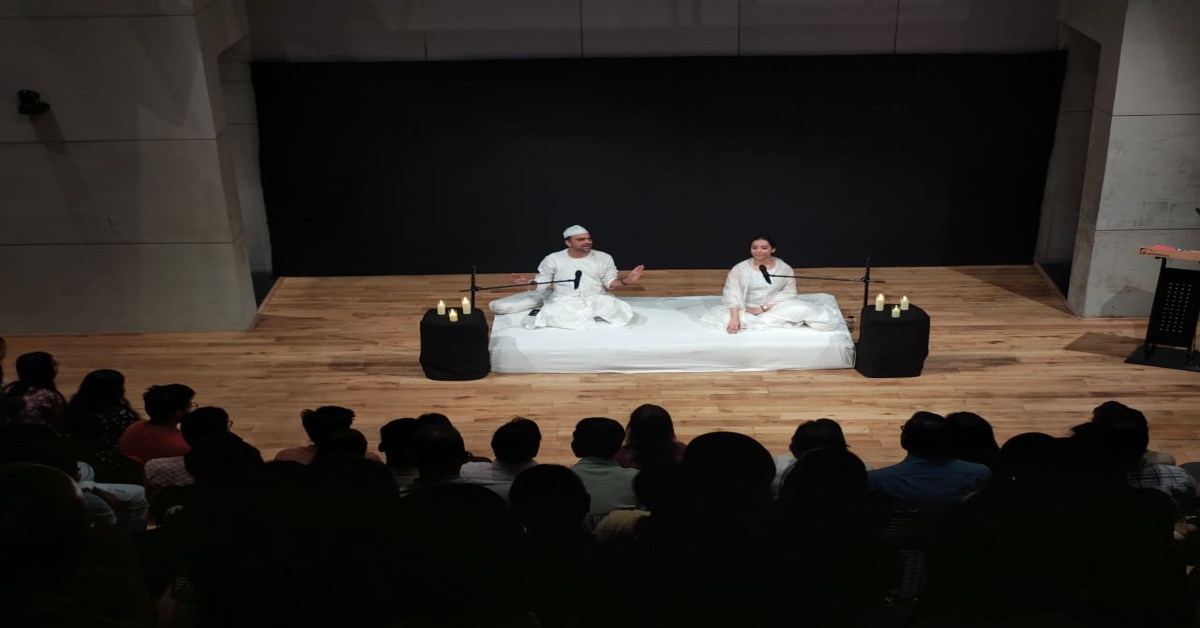
Patna : Arthshila Patna hosted ‘Dastan Jhansi Ki Rani Ki’, a special Dastangoi performance revisiting the life, courage and resistance of Rani Lakshmibai, on Saturday, October 10.

Through oral storytelling, Dastangos Dr Himanshu Bajpai and Dr Pragya Sharma narrated key episodes from the queen’s life, highlighting her determination, military leadership and opposition to British colonial expansion.
Organised alongside Arthshila Patna’s ongoing exhibition, March to Freedom: Reflections on India’s Independence, the performance offered audiences an opportunity to revisit an important chapter in India’s freedom struggle.

Storytelling Brings Rani Lakshmibai’s Early Life To The Stage
The performance opened with verses from the celebrated poem commemorating Rani Lakshmibai’s valour, setting the tone for the story of a queen who became a symbol of resistance against colonial rule.
The narrative began with Manikarnika, affectionately known as Manu, portraying her as a fearless, curious and confident young girl.
One episode recounted how Manu came to the aid of Nana Sahib after he was injured while riding a horse. Her quick thinking and courage offered an early glimpse of the qualities that would later define her life.
When her fearlessness was questioned, Manu challenged the idea that courage should give way to fear, establishing a theme that ran throughout the performance.
Manu’s Belief In Women’s Strength
Another episode focused on Manu’s insistence that the women around her should be companions rather than merely attendants.
She encouraged them to learn horse riding and the use of weapons, including swords and bows. When Kashi asked who would teach them these skills, Manu responded that she, their teachers and other masters would help them learn.
The exchange highlighted women’s capabilities, self-reliance and collective strength, presenting Manu as someone who wanted the women around her to develop confidence and practical skills.
The episode also connected the queen’s personal story with broader themes of women’s participation and leadership.
British Policies And The Struggle For Jhansi
The narrative then moved to the political challenges facing Jhansi following the death of Maharaja Gangadhar Rao.
The British refused to recognise his adopted son, Damodar Rao, as the legitimate heir to the throne. The dispute over succession became part of the wider conflict surrounding British expansionist policies in India.
Through this episode, the performance explored how the struggle to protect Jhansi became intertwined with questions of sovereignty, dignity and resistance to colonial rule.
Battles Highlight Rani Lakshmibai’s Leadership
The battle sequences portrayed Rani Lakshmibai’s military ability and determination in the face of adversity.
The story followed her escape from Jhansi, her journey to Kalpi and her continued resistance at Gwalior. These episodes highlighted her efforts to continue the struggle despite mounting challenges.
The performance also drew attention to Jhalkari Bai and other women who contributed to the resistance against British rule, recognising their courage and sacrifices.
Their stories broadened the narrative beyond the queen herself, highlighting the role of women in the struggle against colonial power.
Final Battle And The Queen’s Resolve
One of the most poignant sections recounted the final battle at Gwalior and the queen’s determination to prevent her body from falling into British hands.
As presented in the performance, Lakshmibai instructed her companions to ensure that the British would not take possession of her body if she died.
The episode underscored the themes of self-respect, resolve and resistance that shaped the performance’s portrayal of the queen.
Meet The Dastangos
Dr Himanshu Bajpai is among India’s leading Dastangos and has performed more than 500 shows in India and internationally, including at Harvard University.
His book Qissa Qissa Lucknowa received the Sahitya Akademi Yuva Puraskar in 2021.
Dr Pragya Sharma, a Dastango from Lucknow, is among India’s few full-time professional storytellers. She holds a doctorate in Economics and previously worked with the National Green Tribunal before pursuing Dastangoi.
Her storytelling repertoire includes historical and cultural figures such as Rani Lakshmibai, Rani Durgavati, Maharana Pratap and Mirabai, as well as stories associated with the Ganga.
Connecting Historical Memory With Contemporary Themes
By bringing Rani Lakshmibai’s story to audiences through the traditional art of Dastangoi, the performance connected historical memory with contemporary reflections on freedom, resistance and women’s leadership.
Presented alongside March to Freedom: Reflections on India’s Independence, the event encouraged audiences to reflect on the contributions of women to India’s history and the enduring significance of courage in the face of oppression.
Rani Lakshmibai’s legacy continues to occupy an important place in India’s historical memory, representing resistance, determination and the struggle for freedom.