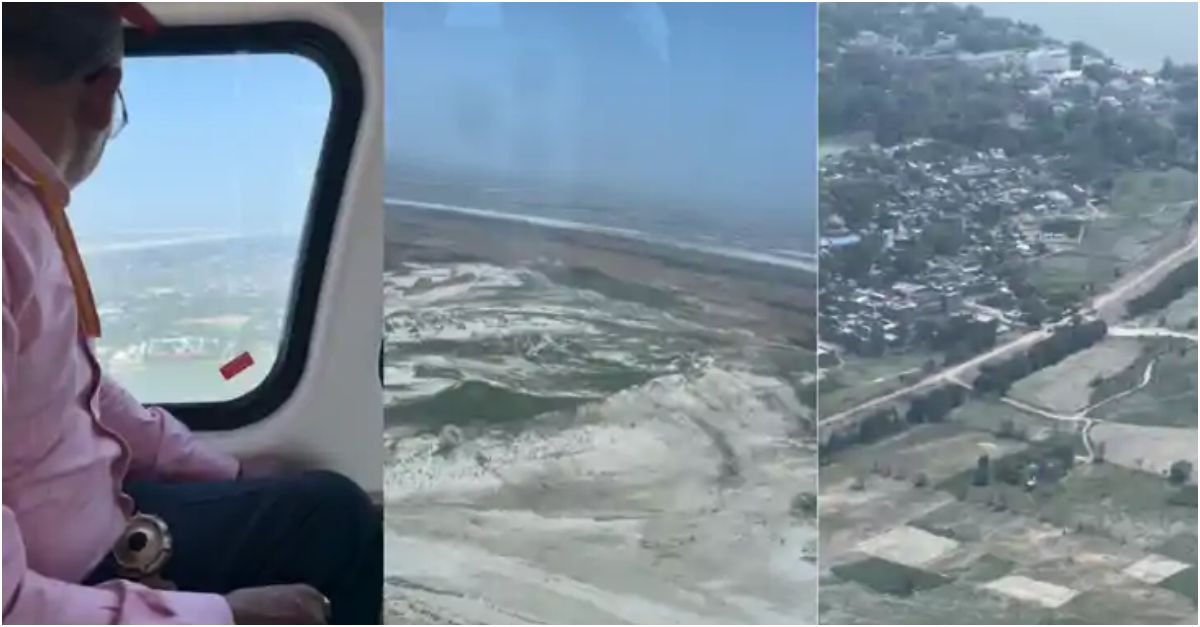
Munger: An aerial survey of a proposed 42-kilometre riverfront road along the Ganges in Munger has been completed, paving the way for construction to begin on a project officials say could reshape connectivity and economic activity in the region.

The route, often described as a “Marine Drive”-style corridor, will link Safiabad to Sultanganj, with senior officials from Bihar’s road construction department and district administration reviewing its alignment by helicopter over the weekend. Authorities said the exercise was aimed at identifying potential obstacles and finalising the project’s design before work begins.
Estimated to cost Rs 5,327 crore, the Ganga Path project will include a mix of elevated and surface roads, with around 12km to be constructed on pillars and the remaining stretch at ground level. Officials have set a four-year timeline for completion.

A second phase is also planned, extending the road by a further 40km from Sultanganj to Sabour in Bhagalpur. The extension is expected to reduce travel time between Munger and Bhagalpur and strengthen regional connectivity.
Local authorities say the development could have wider economic implications. Plans include the creation of commercial zones, food stalls and small businesses along the route, potentially generating employment for local residents. The project is also expected to support tourism by improving access to riverfront sites, including historic ghats and temples.
Officials argue that the improved road network could help integrate parts of north and south Bihar more effectively, while also supporting smaller traders by easing transport links.
Alongside the riverfront project, the aerial survey also reviewed alignments for other proposed highways, including routes connecting Munger to Mirzachauki and Mokama, as well as a larger corridor linking Raxaul to Haldia. The combined infrastructure push suggests a broader effort to position Munger as a regional transport hub.
District officials said a final alignment report would be submitted shortly, after which construction is expected to begin. For many in the district, the project represents not just an upgrade in infrastructure but a potential shift in economic prospects, with hopes it could reduce outward migration and stimulate local growth.