
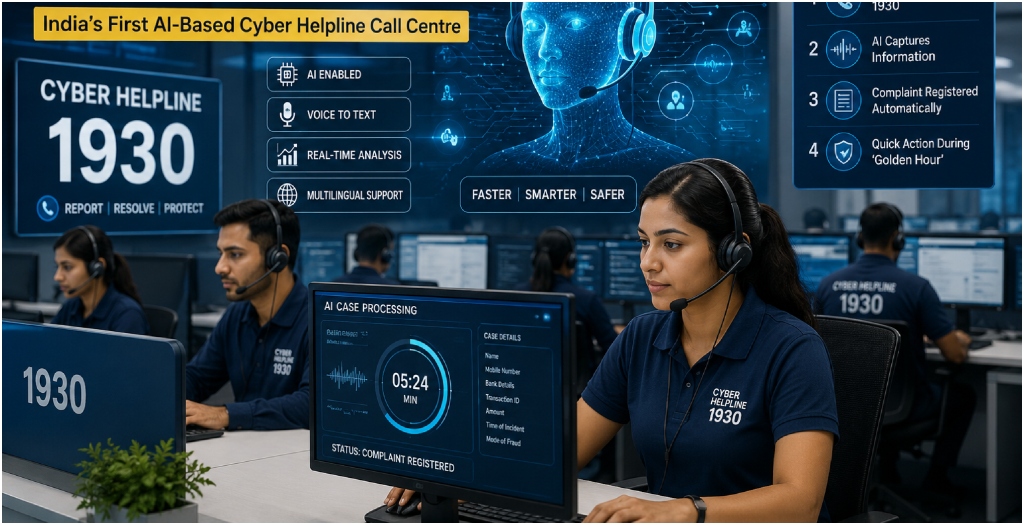
Patna: Bihar CCSU is set to introduce an Artificial Intelligence-based system for cyber helpline 1930, in a move officials say could make complaint registration faster and improve response times in cyber fraud cases.

According to officials from the Cyber Crime and Security Unit (CCSU), the AI-enabled call centre is expected to become operational within the next three to four months. Authorities say it could be the first AI-based cyber helpline call centre in India.
At present, complaints received through helpline 1930 are manually processed by operators, with each case taking around 16 to 18 minutes to register. Officials said the new AI system is expected to reduce this to approximately five to six minutes.

Faster Complaint Processing
The proposed system will use AI-enabled interfaces, real-time voice-to-text technology and structured questionnaires to capture complaint details instantly and update records automatically.
Officials said the technology is expected to reduce manual errors and improve the accuracy of data collection. The system will also assist authorities in identifying recurring fraud patterns and tracking digital platforms commonly used in cybercrime operations.
The CCSU is also planning to introduce multilingual support in the future, allowing complainants to register cases in regional languages.
Expansion Of Existing Infrastructure
The development follows the introduction of an Interactive Voice Response System (IVRS) after the formation of the CCSU in February.
Under the IVRS framework, information such as bank account details, transaction IDs and the timing of incidents is automatically collected from complainants before cases are processed further.
Officials said the number of call lines at the cyber helpline is also expected to increase from 25 to 50 to reduce waiting times for callers.
Rise In Complaints And Call Volume
According to IG (Cyber) Ranjit Kumar Mishra, the introduction of IVRS has already led to a sharp increase in engagement with the helpline.
He said daily call volumes have risen from around 5,500 to 8,100, while the number of reported financial cyber fraud cases has increased from 295 to 430 per day.
Mishra said the first two hours after a cyber fraud incident are considered the “Golden Hour”, as rapid reporting improves the chances of freezing transactions and recovering defrauded funds.
“Immediate complaint registration and timely communication with relevant agencies significantly improve the possibility of recovery,” he said.