Patna: Bihar is quickly becoming known as the “state of bridges”. Since Nitish Kumar became chief minister in 2005, the state has seen record growth in bridge construction. In the past 20 years, 15 big bridges have been built on the Ganga, Son, Gandak and Kosi rivers. Work on 21 more bridges is going on at full speed.

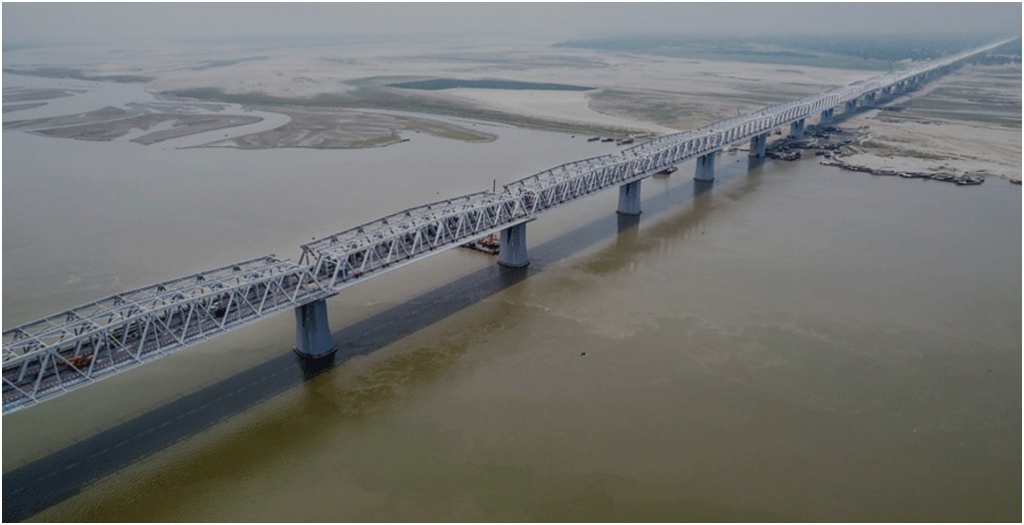
One of the biggest achievements is the six-lane Auntha-Simaria bridge on the Ganga, recently opened by Prime Minister Narendra Modi. At 8.15 km, it is the widest bridge in India. This bridge has made travel between north and south Bihar much easier and is seen as a lifeline for the state. Nitish Kumar has set a goal that people should be able to reach Patna within three hours, and these bridges are central to that plan.
On the Ganga river alone, eight bridges are already in use. Nine more are under construction, and plans for three new ones have started. The Son river will soon get its seventh bridge, linking Bindol and Koshihan, while the Panduka Ghat bridge will connect Akbarpur to Dehri. Both projects will also help travellers going towards Uttar Pradesh.

The Gandak and Kosi rivers are also changing fast. Seven bridges are working on the Gandak, three more are being built and four new ones are planned. On the Kosi, four bridges are ready and three are in progress. The biggest project here is a 10.02 km-long bridge from Bheja in Madhubani to Bakaur in Supaul, being built under the Bharatmala Project at a cost of about Rs 1,200 crore. When completed, it will be the longest bridge in the country and cut the distance between the two districts by 30 km.
This wave of bridge construction is not just about roads. It is also expected to boost trade, make healthcare and education more accessible, and connect communities across the state. If all projects finish on time, travelling to Patna and across Bihar will be faster and easier than ever before.