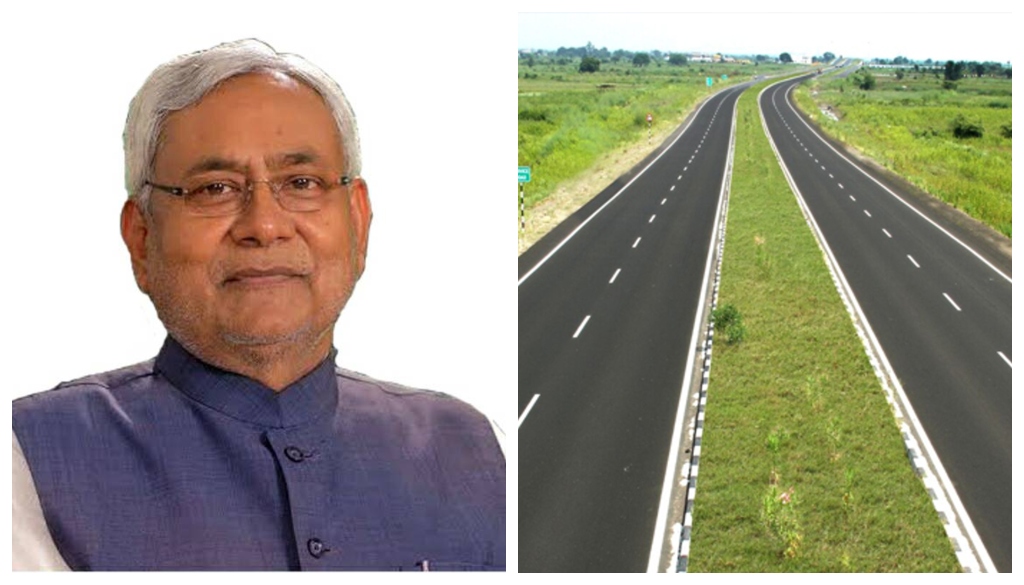
Patna: Since CM Nitish Kumar took over as Chief Minister in 2005, Bihar has witnessed a quiet revolution in connectivity. Roads that once ended abruptly now stretch across the state, while bridges link regions divided by vast rivers, creating new avenues for development and mobility.

Before 2005, Bihar had only 14,468 km of roads. By 2025, this has increased to 26,081 km. National highways have grown from 3,629 km to 6,147 km, and state highways from 2,382 km to 3,638 km. Major district roads have almost doubled from 8,457 km to 16,296 km, enhancing access between remote areas and urban centres.
Bridge construction has also transformed the state’s landscape. Between 1959 and 2001, only 4 bridges were built on the Ganga. Since 2005, 7 new bridges have been constructed. The number of bridges on the Kosi river has increased from 2 to 6, with 3 more under construction. On the Gandak river, 4 new bridges have been completed and work is ongoing on 3 others. The Son river, which earlier had only 2 bridges, now has 6.

Railway overbridges (ROBs) have seen a significant rise from just 11 to 87, with more than 40 under construction, reducing congestion and ensuring safer travel across railway lines.
The Pradhan Mantri Gramin Sadak Yojana has been pivotal in this transformation. Before 2005, the scheme had no presence in the state. By 2025, it has led to the construction of 64,430 km of rural roads, connecting 62,728 villages. Maintenance schemes like OPRMC are now ensuring these roads remain in good condition for years.
Bihar has also progressed in bypass construction. While there was no concrete data before 2005, 47 bypasses have now been approved, with 12 completed and operational.
These developments have brought profound changes. Children can now travel safely to distant schools. Farmers can transport their produce directly to markets, boosting rural incomes. Tourism, too, has been energised, with improved access to historical and natural sites strengthening local economies and cultural identity.