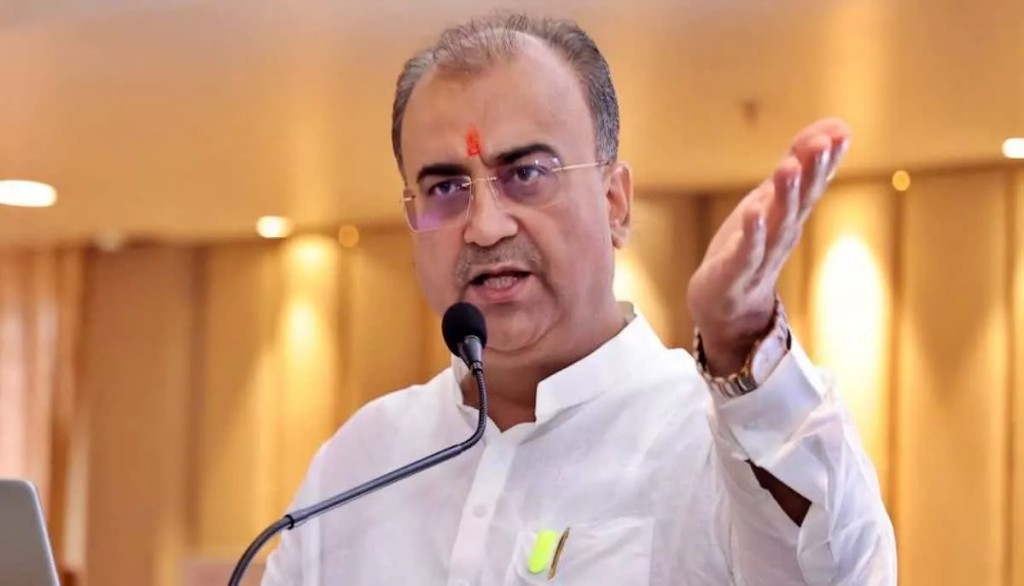
Patna: Bihar has taken a significant step towards improving public healthcare by fully digitising the supply of medicines to government health institutions. Health minister Mangal Pandey said the new system uses digital technology to monitor the movement and availability of medicines online, making the entire process more transparent and accountable. The aim, he said, is simple but crucial: no patient should suffer or be denied treatment because a required medicine is not available at a hospital or health centre.

According to the health department, 14,337 health institutions across the state have now been fully registered under the Drugs and Vaccine Distribution Management System (DVDMS). This online platform allows authorities to track medicines from storage to delivery. Pandey said the results have been encouraging, with Bihar ranking first on the Government of India’s DVDMS portal for the past 16 months. The ranking reflects how effectively the state has managed its drug supply using digital tools.
The online system makes it possible to see, in real time, how much medicine is available, how much is being used and what is needed in the coming days. This monitoring covers all levels of public healthcare, from additional primary health centres and primary health centres to community health centres, sub-divisional hospitals and district hospitals. Officials say this has greatly reduced the chances of mismanagement or irregularities, as shortages can be identified early and supplies can be redirected quickly.

The government has also focused on making treatment easier for patients with long-term illnesses. People suffering from non-communicable diseases such as diabetes and high blood pressure are now being given a 30-day supply of medicines at one time, reducing repeated visits to health centres. To support this system, the State Health Society of Bihar is operating 180 medicine delivery vehicles across the state. These vehicles work continuously to ensure medicines reach health facilities on time, including those in remote areas, strengthening the state’s effort to provide reliable and free healthcare for all.