Patna: Women have emerged as a major force in the Bihar Assembly elections, proving their strength not just at the polling booths but also inside the House. A total of 28 women candidates secured major victories, showing that the female half of the population — which participated in the elections with impressive enthusiasm — is now ready to lead from the front. Their rising representation marks a significant milestone for Bihar, where women voters have repeatedly demonstrated strong political awareness in recent years.

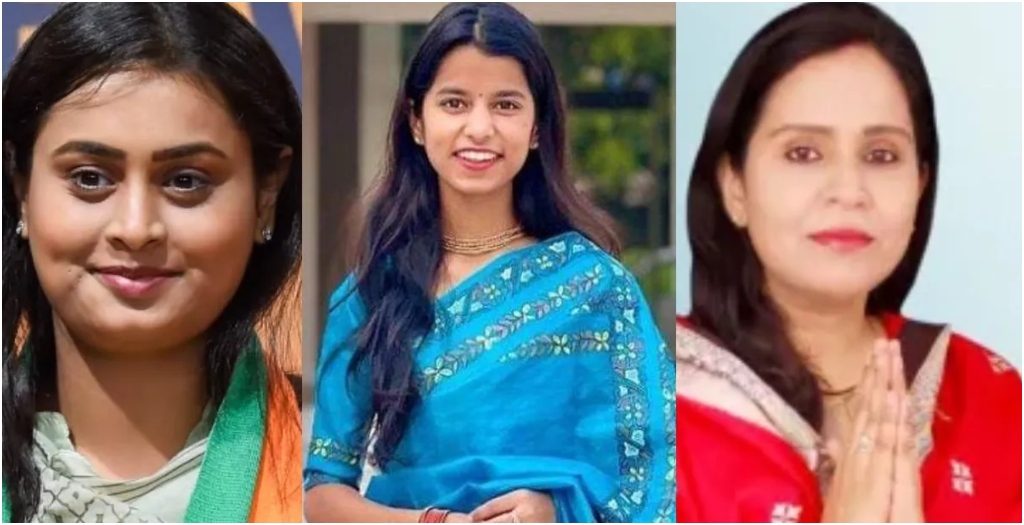
Many of the newly elected women MLAs have built distinguished careers before entering politics, earning recognition in sports, music, medicine, and social service. This is one of the strongest incoming groups of women leaders Bihar has ever seen. The list includes Commonwealth Games gold medallist shooter Shreyasi Singh, celebrated folk singer Maithili Thakur, dentist and first-time candidate Dr. Karishma Rai, and former Deputy Chief Minister Renu Devi, who is known for her long service to public causes. Their backgrounds add diversity and depth to the Assembly, and their entry is expected to strengthen the voices of women on important issues.
Several of these women achieved sweeping victories, defeating strong opponents with significant vote margins. Dr. Karishma Rai, granddaughter of former Chief Minister Daroga Prasad Rai, won the Parsa seat by more than 25,000 votes, defeating JDU’s Chhote Lal Rai. Deepa Kumari, daughter-in-law of former Chief Minister Jitan Ram Manjhi, won from Imamganj by a similar margin against RJD’s Ritu Priya Chaudhary. Shreyasi Singh registered one of the biggest victories of the election by defeating RJD candidate Mohammad Shamshad Alam in Jamui by 54,498 votes. BJP’s Maithili Thakur also earned a strong win from Alinagar, defeating Vinod Mishra by over 11,000 votes. Former Deputy CM Renu Devi won Bettiah for the fourth time, once again proving her popularity.

Other notable victories include Leshi Singh from Dhamdaha, Chhoti Kumari from Chhapra, Shalini Mishra from Kesaria, Shweta Gupta from Sheohar, Anita Devi from Warisaliganj, Snehlata from Sasaram, and Ashwamegh Devi from Samastipur. Many of these women secured their seats by defeating candidates backed by powerful political parties and well-known public figures. Their success reflects the growing trust of voters in women leaders and the belief that women are fully capable of steering policy and public welfare.
This wave of victories also highlights the growing participation of women in politics, even though most parties still do not give women enough tickets. The NDA fielded 34 women candidates — 13 each from JDU and BJP, 5 from LJP, 2 from HAM and 1 from RLMO. The Grand Alliance put forward 11 women from the RJD, 5 from Congress, and one each from VIP and CPI-ML. Despite these limited opportunities, women candidates converted their chances into statement victories that cannot be overlooked. With 28 women now entering the Assembly, Bihar begins a new phase where female representation is not symbolic but influential, and where women’s issues are expected to receive stronger attention.