
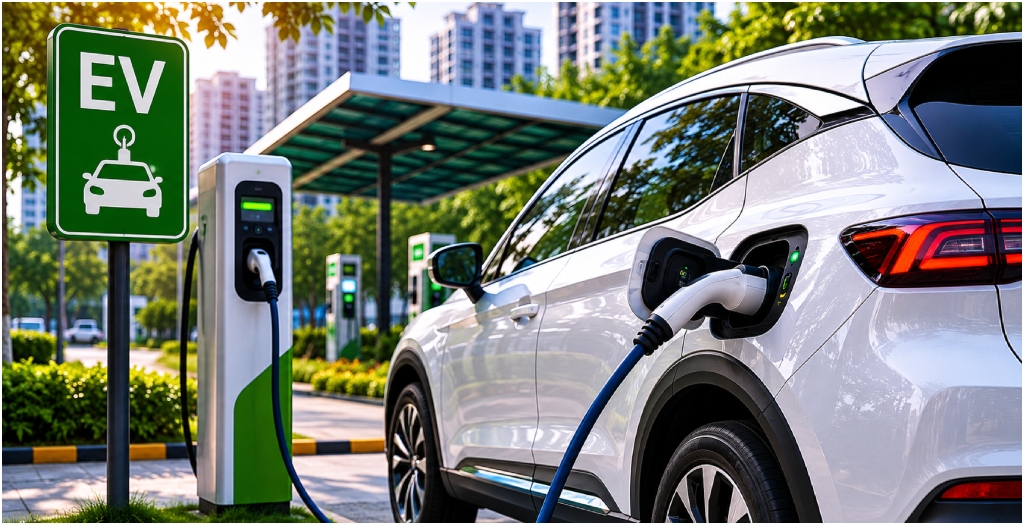
Patna: The Bihar government will provide subsidised parking facilities for private electric vehicles across urban areas and make charging stations compulsory in key public and residential buildings as part of its electric mobility policy.

The measures are aimed at strengthening EV infrastructure in cities and increasing adoption of electric vehicles in both private and commercial transport.
City Parking Plans To Be Introduced

Under the new framework, each urban local body will prepare a city-level parking plan to identify and develop designated parking spaces for electric vehicles.
The plan will include provisions for on-street parking and charging stations at subsidised rates for private EV owners. The Urban Development and Housing Department is overseeing the initiative.
Charging Stations To Be Mandatory In New Large Buildings
The state government is preparing amendments to building by-laws to make EV charging stations mandatory in large urban developments.
The proposed changes will apply to multi-storey apartment complexes, shopping malls and large residential buildings. Once implemented, all major new constructions in urban areas will need to include charging infrastructure.
Officials said the move is intended to ensure that EV charging becomes part of standard urban planning.
Petrol Pumps Asked To Install Charging Facilities
The Transport Department has also directed that electric charging stations be incorporated into fuel infrastructure.
According to a department notification, new petrol pumps will be encouraged to install charging stations during the licence approval process. Existing petrol pumps and CNG stations will also be required to create charging facilities on their premises.
Large hotels and roadside motels have also been brought under the policy framework and will be encouraged to set up charging stations. The state plans to offer financial incentives for eligible installations.
Taxi Aggregators Given Four-Year EV Target
The state has also set a phased compliance target for app-based taxi operators, including Ola, Uber and Rapido.
Under the Bihar Taxi Aggregator Operational Instructions, service providers must ensure that electric vehicles account for at least 20% of their fleet within two years of notification in the Bihar Gazette.
The share must increase to 40% by the end of the third year and 50% by the end of the fourth year.
Compliance And Enforcement
The Transport Department said operators failing to meet the prescribed targets will face action under applicable regulations.
The policy is part of Bihar’s broader efforts to expand clean transport infrastructure and reduce reliance on conventional fuel vehicles in urban areas.