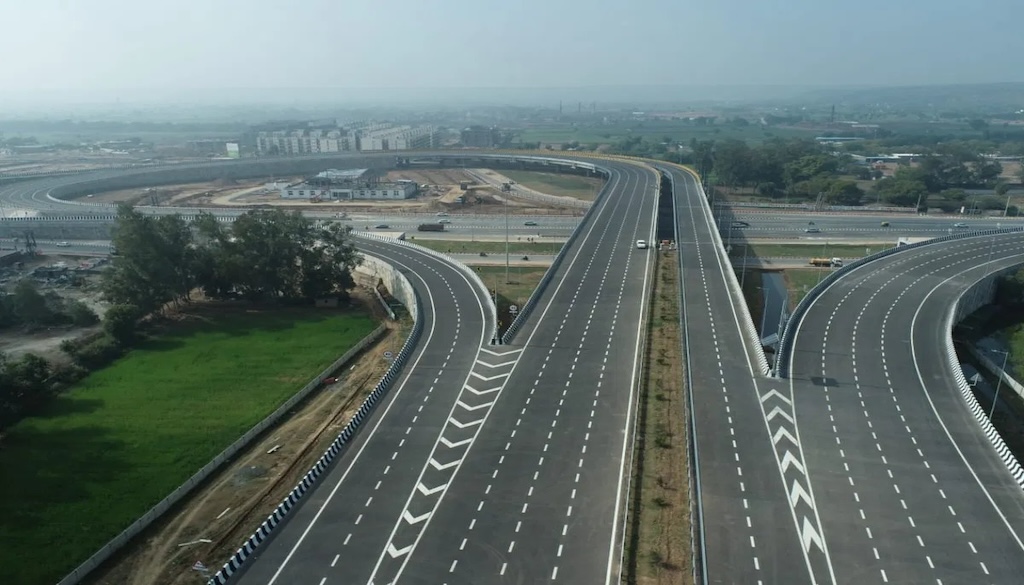
Patna: Work has accelerated on five major expressway projects across Bihar worth Rs 1.18 lakh crore, in what officials say will dramatically overhaul the state’s transport infrastructure by 2027. The high-speed corridors, covering more than 1,626km, are expected to reduce travel time between key districts by half and significantly improve freight movement.

The projects, which are in advanced stages of land acquisition, mark one of the largest road-infrastructure expansions in Bihar’s recent history. Authorities say the expressways will provide a modern mobility framework and help unlock economic growth across agricultural and industrial centres.
Progress gains pace

Among the five routes, the Varanasi–Kolkata Expressway is currently leading in terms of readiness, with most land acquisition completed. Construction, previously delayed in Rohtas and Kaimur districts, has resumed. The 245km corridor, costing an estimated Rs 28,415 crore, is expected to strengthen connectivity between Patna and eastern Bihar while boosting industrial linkage with eastern India.
Direct link to seaports
One of the most ambitious projects will connect the Raxaul dry port to Haldia port in West Bengal. Spanning 407km and costing Rs 26,407 crore, the route is expected to position Bihar as a major logistics and export hub by enabling direct sea access for goods produced in the state.
Strengthening northern connectivity
Preliminary work has also begun on a new corridor running from Gorakhpur to Siliguri. Passing through Darbhanga, Madhubani, Sitamarhi, Sheohar, Araria and Katihar, the expressway aims to ease movement across northern Bihar, where road travel has long been slow and fragmented.
Another major route is expected to cut the Buxar–Bhagalpur travel time from nine hours to four, providing fast mobility between western and eastern Bihar. The Mokama–Munger segment alone has a projected cost of Rs 4,447 crore.
Boost to trade and employment
Officials say the completion of the five expressways will transform Bihar into a key logistics corridor, connecting agricultural belts and industrial centres to broader markets. Reduced transport costs are expected to spur economic activity and generate employment in manufacturing, warehousing and allied services.
“For regions in North Bihar, Seemanchal and East Bihar, which traditionally struggled with connectivity to Patna and other major cities, the new network will be a structural shift,” an infrastructure official said.
A new roadmap for development
The state and central governments have set a target to complete the entire network by 2027. Authorities say the programme is more than a road-building exercise and could reshape Bihar’s economic landscape for decades.
“This is about creating a foundation for long-term growth,” officials said. “The expressways will redefine trade flows, job opportunities and mobility across the state.”