
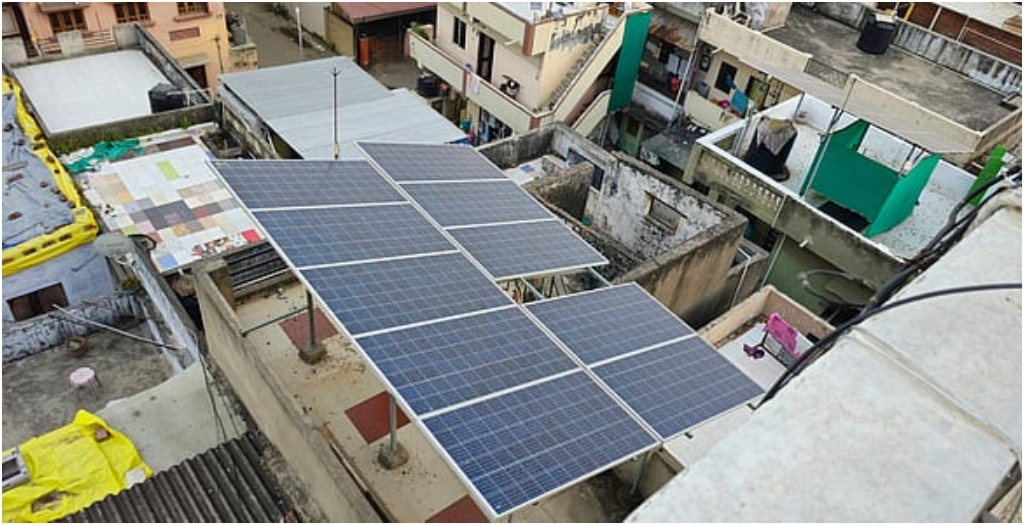
Patna: Bihar’s power distribution companies have received consent from 3.48 lakh consumers under the Kutir Jyoti category to install free rooftop solar panels as part of the state’s clean energy initiative. The scheme has initially been launched for 2.50 lakh consumers, with plans to expand after the first phase is completed.

The first phase aims to install 1.10 kW rooftop solar systems for around 1.10 lakh Kutir Jyoti consumers. Once this target is achieved, the programme will be extended to additional eligible households.
Ten Years Of Free Maintenance

Under the Renewable Energy Service Company (RESCO) model, the agency installing the solar panels will also be responsible for maintaining the systems for the next 10 years.
Consumers will not be required to pay any installation or maintenance charges. They will also be entitled to 125 units of free electricity every month under the scheme.
Consumers Can Sell Surplus Power
If a household generates more electricity than it consumes, the excess power will be purchased by the power utility. According to the scheme, consumers will receive between Rs 1.99 and Rs 3.00 per unit for surplus electricity supplied to the grid.
The arrangement is intended to encourage rooftop solar adoption while allowing consumers to benefit financially from excess power generation.
Mission-Mode Implementation Planned
Power utilities plan to implement the programme in a mission mode similar to the state’s Har Ghar Bijli campaign, which expanded electricity access through special drives and camps.
Officials are preparing to organise similar outreach activities to speed up rooftop solar installations among eligible beneficiaries.
Linked To Free Electricity Scheme
The rooftop solar initiative was announced alongside the government’s decision to provide 125 units of free electricity to all consumer categories.
Officials said the scheme is designed with Kutir Jyoti consumers in mind, as their monthly electricity consumption generally remains within the 125-unit limit. As more households shift to solar power, these consumers are expected to meet most of their electricity needs through renewable energy, reducing the government’s expenditure on subsidised electricity.