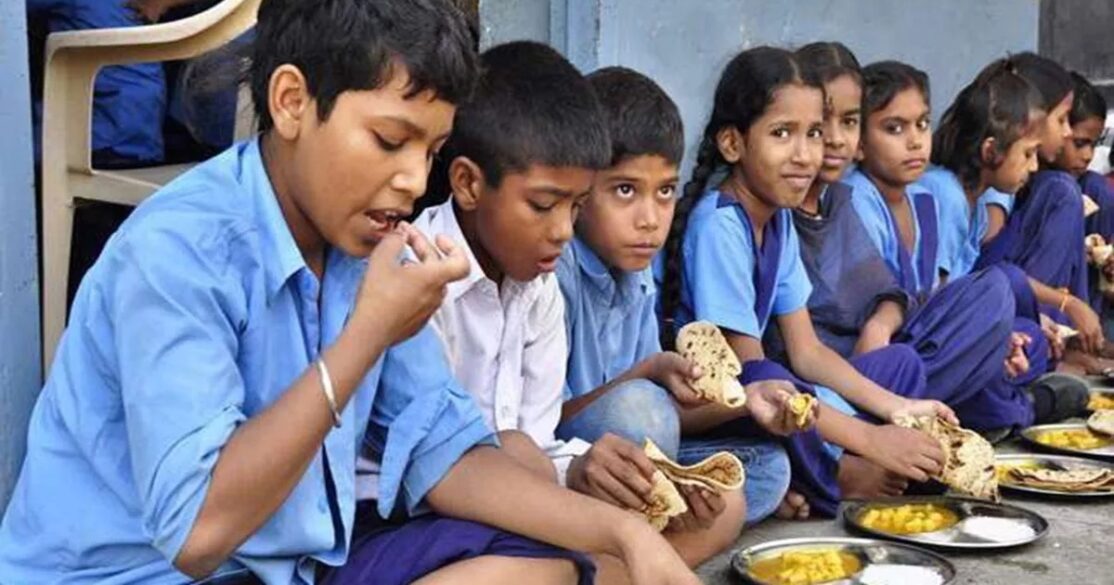
Patna: The Bihar government has initiated a comprehensive audit of the Mid-Day Meal scheme following recurring concerns over the quality of food served in government schools. Under the new monitoring framework, the Asian Development Research Institute (ADRI) will conduct independent assessments of centralized kitchens responsible for preparing and distributing meals across the state.

A memorandum of understanding between the state education department’s MDM Directorate and ADRI outlines a three-year evaluation plan. During this period, ADRI teams will carry out unannounced inspections of more than 100 centralized kitchens operating in all 38 districts and compile performance-based report cards to measure operational standards.
The assessment will examine multiple indicators, including food quality, nutritional adequacy, hygiene protocols and the efficiency of meal distribution. Officials say the initiative is aimed at strengthening accountability and improving health outcomes for students who rely on the programme for daily nutrition.

The audit’s findings are expected to influence the continuation of contracts held by NGOs managing kitchen operations. Organisations will be graded from “excellent” to “poor,” with underperforming agencies first receiving an opportunity to implement corrective measures. Continued non-compliance, however, could lead to immediate contract termination, while strong performers may secure extensions.
A key component of the evaluation will be stakeholder feedback. ADRI teams will visit schools receiving meals from centralized kitchens and interact directly with students, teachers and kitchen staff to assess food quality, quantity and timeliness. Around 5% of schools will be selected randomly for field inspections to determine whether meals maintain quality from preparation to consumption.
Education department officials describe the initiative as a significant step toward strengthening quality assurance and transparency in the scheme. Experts argue that periodic independent assessments can enhance the effectiveness of nutrition programmes while ensuring optimal utilisation of public resources, ultimately supporting better health and learning outcomes for children.