

PATNA: Bihar has emerged as the national leader in prepaid smart metering, with 92 lakh prepaid smart meters installed across the state, accounting for nearly 70% of all prepaid smart meters deployed in India. The achievement was highlighted by Energy Secretary and Bihar State Power Holding Company Limited (BSPHCL) Chairman-cum-Managing Director Ajay Yadav during the 7th CII International Energy Conference & Exhibition (IECE 2026) in New Delhi.

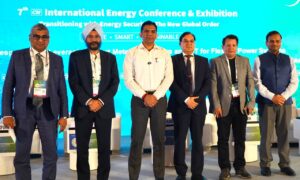
Representing Bihar in the technical session titled “Demand Response 2.0: Leveraging Smart Meters, DT Meters and IoT for Flexible Power Systems,” Yadav outlined the state’s progress in adopting digital technologies to improve electricity distribution, billing efficiency and consumer services.

Bihar records major improvement in power sector performance
According to Yadav, Bihar’s power sector has witnessed significant improvements between 2020 and 2025. Billing efficiency has increased from 75.14% in 2019-20 to 88.46% in 2025-26, while collection efficiency has reached 100%, up from 86%. At the same time, Aggregate Technical and Commercial (AT&C) losses have declined from 35.12% to 11.54%, and the state’s ACS-ARR gap has turned positive.
He said prepaid smart metering has substantially reduced electricity theft, virtually eliminated payment arrears, strengthened billing efficiency and improved consumer confidence.
Digital infrastructure driving smarter power management
The Energy Secretary said Bihar has generated nearly 10 billion data points through its smart metering ecosystem, enabling utilities to analyse consumption patterns, forecast demand more accurately and improve operational decision-making.
He also noted that the implementation of Time-of-Day (ToD) tariffs is helping optimise electricity consumption while strengthening demand-side management.
Additionally, Bihar has installed nearly two lakh Distribution Transformer (DT) meters, allowing real-time monitoring of transformer performance, predictive maintenance and better asset planning.
State preparing for future energy demand
Highlighting Bihar’s future roadmap, Yadav said the government is promoting industrialisation, developing 13 greenfield satellite townships, and creating world-class infrastructure to support economic growth.
The state has already recorded a peak electricity demand of approximately 9,475 MW this year while maintaining 23–24 hours of power supply in urban areas and 22–23 hours in rural areas.
“Our focus is no longer limited to ensuring adequate power availability. We are now leveraging the digital energy ecosystem to deliver reliable, resilient and high-quality power supply for industries and consumers alike,” he said.

Smart technologies and renewable energy expansion
Yadav said Bihar is integrating advanced digital technologies across its power distribution network through IoT-based monitoring, GIS-enabled asset mapping, Digital Asset Registers, and an integrated Customer Relationship Management (CRM) platform for faster service delivery and real-time monitoring.
He also highlighted the Suvidha Bihar Portal, which currently offers 21 online consumer services, making electricity-related services more transparent and citizen-centric.
Alongside digital reforms, the state is expanding rooftop solar projects, solarisation of agricultural feeders, and implementation of the PM-KUSUM Scheme, while preparing its electricity distribution network to support greater renewable energy integration through smart grid technologies and advanced analytics.
Experts stress collaboration for clean energy transition
The technical session also featured senior officials, industry leaders and academic experts, including Assam Additional Chief Secretary (Power) Dr. Krishna Kumar Dwivedi, IIT Kanpur Professor Dr. Anoop Singh, Kimbal Senior Director Gopal Parikh and BRPL CEO Abhishek Ranjan.
The panellists emphasised that India’s clean energy transition will increasingly depend on intelligent digital infrastructure, advanced analytics, smart metering and stronger collaboration among governments, utilities, technology providers and research institutions to build a resilient and future-ready power sector.