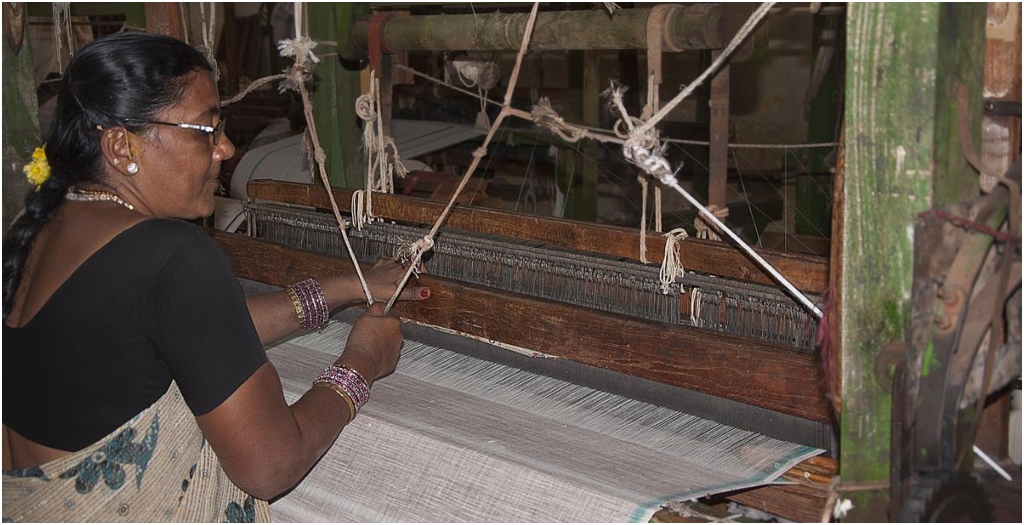
Motihari: In Sundarpur village of Motihari in Bihar’s East Champaran district, life moves to the gentle rhythm of spinning wheels. Almost every street has women sitting with charkhas, spinning cotton yarn into Khadi. What once looked like a quiet village is now a place full of purpose and work. For the women of Sundarpur, Khadi is not just cloth. It has become a source of income, respect and independence, reminding many of Mahatma Gandhi’s idea of self-reliance through Swadeshi.

Just a few years ago, Sundarpur struggled with poverty and lack of jobs. Many men migrated for work, and women stayed at home with little chance to earn. Today, around 500 women in this village of nearly 2,000 people are involved in Khadi production. Village head Radha Devi says the charkha has changed women’s lives completely. “Earlier, women depended on others. Now they earn on their own,” she says. Radha Devi herself is a Khadi worker and started the Sundarpur Khadi Women’s Group in 2018, which is now linked to government departments and welfare schemes.
The Khadi journey began in 2015, when a local NGO trained 20 women to use spinning wheels. Slowly, more women joined, especially those from poor families. Rama Devi, a widow and mother of two, says Khadi gave her a new life. “Earlier, I worked as a labourer and earned only Rs 200 a day after hard work. Now I earn about Rs 12,000 a month,” she says. In the beginning, the women faced many problems such as lack of raw material, old machines and no direct market. With support from the district administration, a modern Khadi processing unit was set up in 2022, running on solar power.

According to the Khadi and Village Industries Commission, Sundarpur now produces around 10 lakh metres of Khadi cloth every year, worth more than Rs 5 crore. The impact is not only economic but also social. Child marriage and dowry were once common, but now families are focusing more on education, especially for girls. Sita Devi, a 28-year-old resident, says she sent her daughter to school using her Khadi income and even built a house. “Khadi gave us confidence,” she says.
The women of Sundarpur are now learning new designs and combining traditional Bihari patterns with modern styles. Their Khadi sarees, kurtas and shawls are sold in cities like Delhi and Mumbai. The group has also entered online markets, with the ‘Sundarpur Khadi’ brand selling on platforms such as Amazon and Flipkart. Government schemes like Atmanirbhar Bharat and Make in India have supported this growth, including a Rs 50 lakh subsidy used to buy new charkhas.
Recently, Bihar chief minister Nitish Kumar declared Sundarpur a ‘Khadi Village’, calling it an example for other villages. Per capita income here has more than doubled, rising from about Rs 3,000 to over Rs 8,000 a month. New houses, toilets and solar lights have improved living conditions, and a local Khadi Haat has been started to attract visitors. As Sundarpur plans to involve more women and even move towards exports, the village shows how simple tools, steady support and women’s determination can quietly change lives.