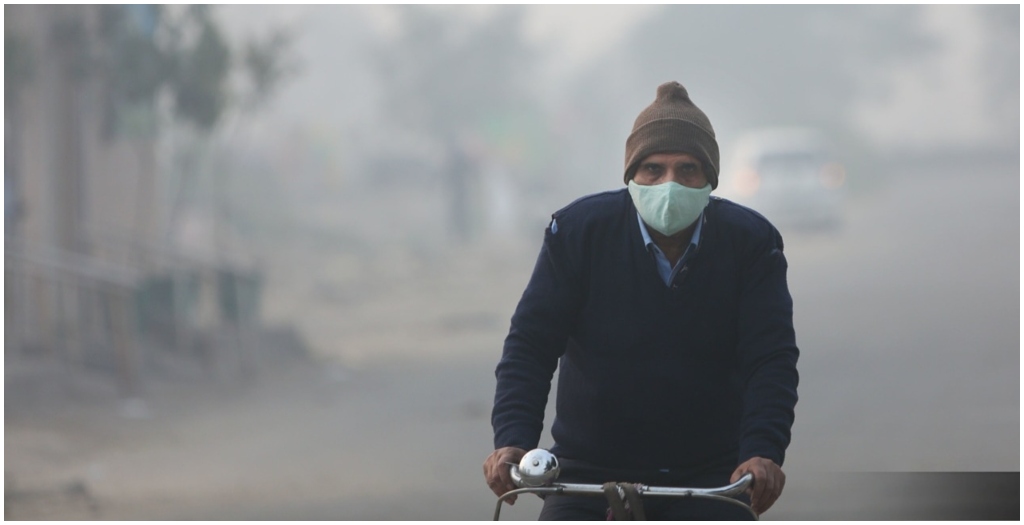
Patna: As winter gets stronger in Bihar, the air across the state is becoming increasingly polluted. According to the latest report from the State Pollution Control Board, air quality has deteriorated in 15 major cities, with the Air Quality Index (AQI) rising sharply. Cold winds are causing smoke and dust particles to settle low in the atmosphere instead of dispersing, turning the air “sick” and unsafe in many places. Experts warn that people with respiratory problems, elderly citizens and children are at higher risk if conditions continue to worsen.

The situation in the capital, Patna, is especially alarming. The AQI at Gandhi Maidan was recorded at 160 on Sunday, marking it as the most polluted area in the city. Other key locations such as Danapur (136), the area near the Planetarium (132) and Rajvanshi Nagar (123) were also in the “moderately polluted” category. Only Patna City showed a “satisfactory” AQI of 100. With dust rising across main roads, the Patna Municipal Corporation has started sprinkling water in several areas to reduce airborne particles, but the impact is expected to take time.
Outside Patna, many cities are experiencing a decline in air quality. Hajipur has emerged as the worst-affected location in the state, recording higher pollution levels than all other districts. Meanwhile, Katihar (96), Motihari (84), Saharsa (83), Bettiah (90) and Bhagalpur (94) are currently in the “satisfactory” range but continue to move towards the danger zone as pollution increases. Residents are already reporting breathing difficulties, especially during early mornings and late evenings when the cold is at its peak.

The weather is expected to make the situation worse before it gets better. The India Meteorological Department has reported a drop of 2–4°C in temperature across many districts of Bihar. As wind speeds slow down in winter, dust and pollutants become trapped close to the ground. The presence of fog and low sunlight further prevents the air from clearing. Meteorologists say that the winter season usually brings the most polluted air of the year, while monsoon is the cleanest period. For now, the weather is expected to remain dry and foggy for the next six to seven days, meaning there is little chance of immediate improvement in air quality.