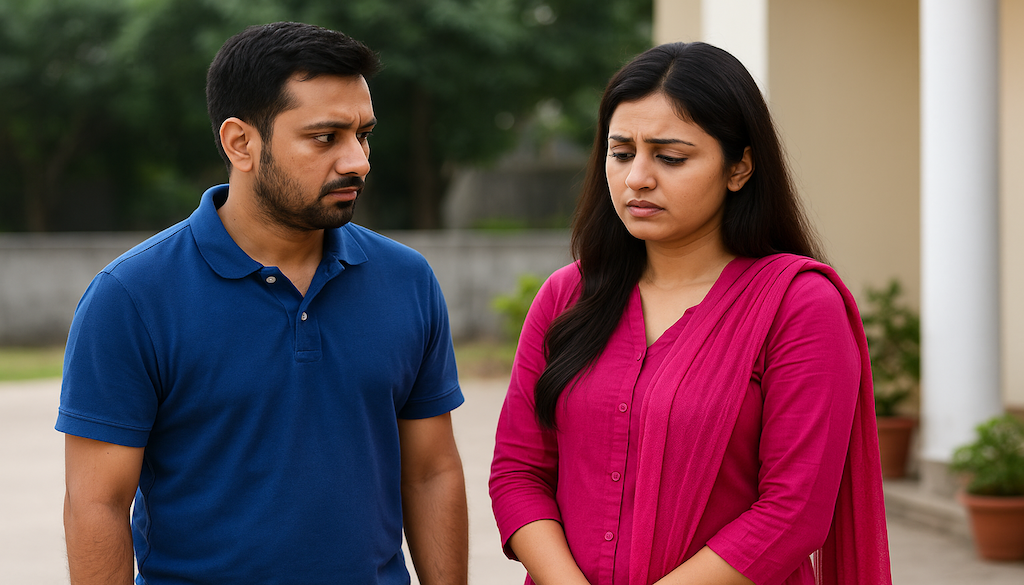
Patna: In an age that often celebrates gender equality and women’s empowerment, a disturbing trend in Bihar is proving how fragile those notions can be in the face of social perception. The Bihar State Women’s Commission has recently received a wave of complaints — over 30 in the past three months — from families whose daughters’ engagements were abruptly broken off for reasons as trivial as wearing slippers or a dupatta during meetings with their prospective grooms.

In these cases, grooms or their families dismissed the women as “illiterate,” “unfashionable,” or “uncultured” based solely on their appearance during brief encounters. The Commission’s chairperson, Apsara, confirmed that such cases have sharply increased in recent months. “Earlier, complaints used to come after marriage. Now, engagements are breaking over minor issues. Many boys and their families are rejecting girls on superficial grounds like attire or lifestyle,” she said.
The Price of a Perception

Families report spending lakhs of rupees on engagements, gifts, and ceremonies, only for weddings to collapse midway. In most cases, the grooms’ families refused to return the expenses, forcing the women’s families to approach the Commission seeking justice and restoration of their social standing.
In some hearings, the Commission has attempted reconciliation, but the grooms’ families have remained unyielding — claiming that their sons “no longer wish to marry” and that the decision is beyond parental influence.
Case One: Rejected Over Slippers
Rashmi Rekha (name changed), a professional from Danapur, Patna, was engaged earlier this year. When her fiancé visited her office post-engagement, she met him wearing slippers — a choice dictated by comfort, not disregard. The groom, however, reportedly took offence, labelling her “ill-mannered,” and promptly called off the wedding.
Case Two: Dupatta Sparks Dispute
In another case, Ragini Kumari (name changed) from Punpun, Patna, faced rejection because she wore a traditional salwar suit with a dupatta during a family meeting to finalise the wedding date. The groom allegedly called her “uncultured” for dressing “too modestly,” and the marriage was cancelled.
Both families have since approached the Women’s Commission, seeking intervention and financial restitution.
A Mirror to Modern Mindsets
The Commission sees these incidents as symptomatic of a deeper societal contradiction — where women are expected to be modern yet modest, educated yet submissive. “Despite progress, the mindset in many households remains regressive. A girl’s worth is still judged by her clothes or mannerisms rather than her character or achievements,” said a senior official at the Commission.
Sociologists note that the rise of such cases reflects the growing influence of social media and appearance-based judgments in matrimonial decisions. While urban India speaks of gender parity, traditional biases continue to determine women’s acceptability in marriage.
For Bihar’s Women’s Commission, these cases are more than personal grievances — they are reminders that in many parts of India, the line between ‘modernity’ and misogyny remains painfully thin.