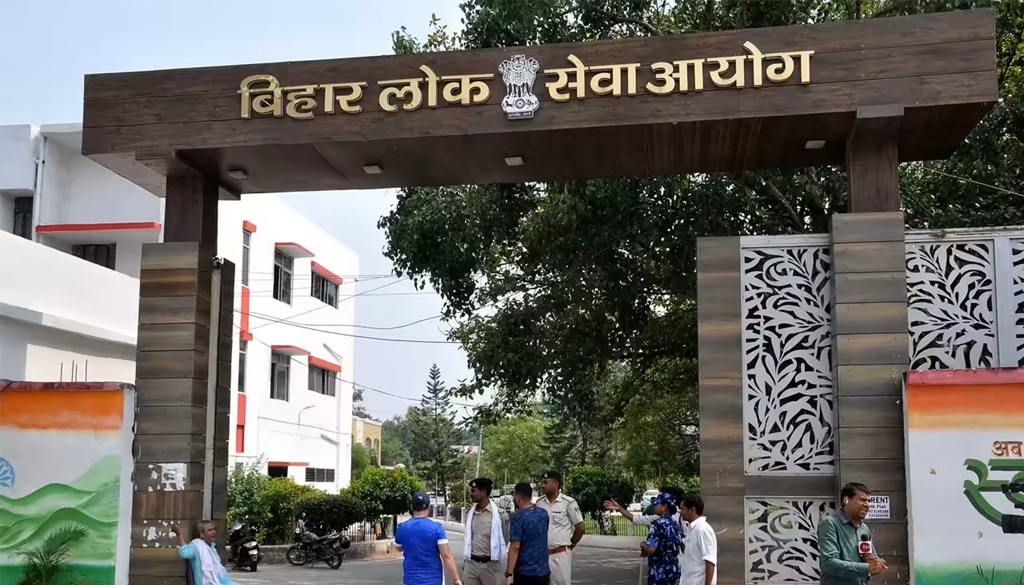
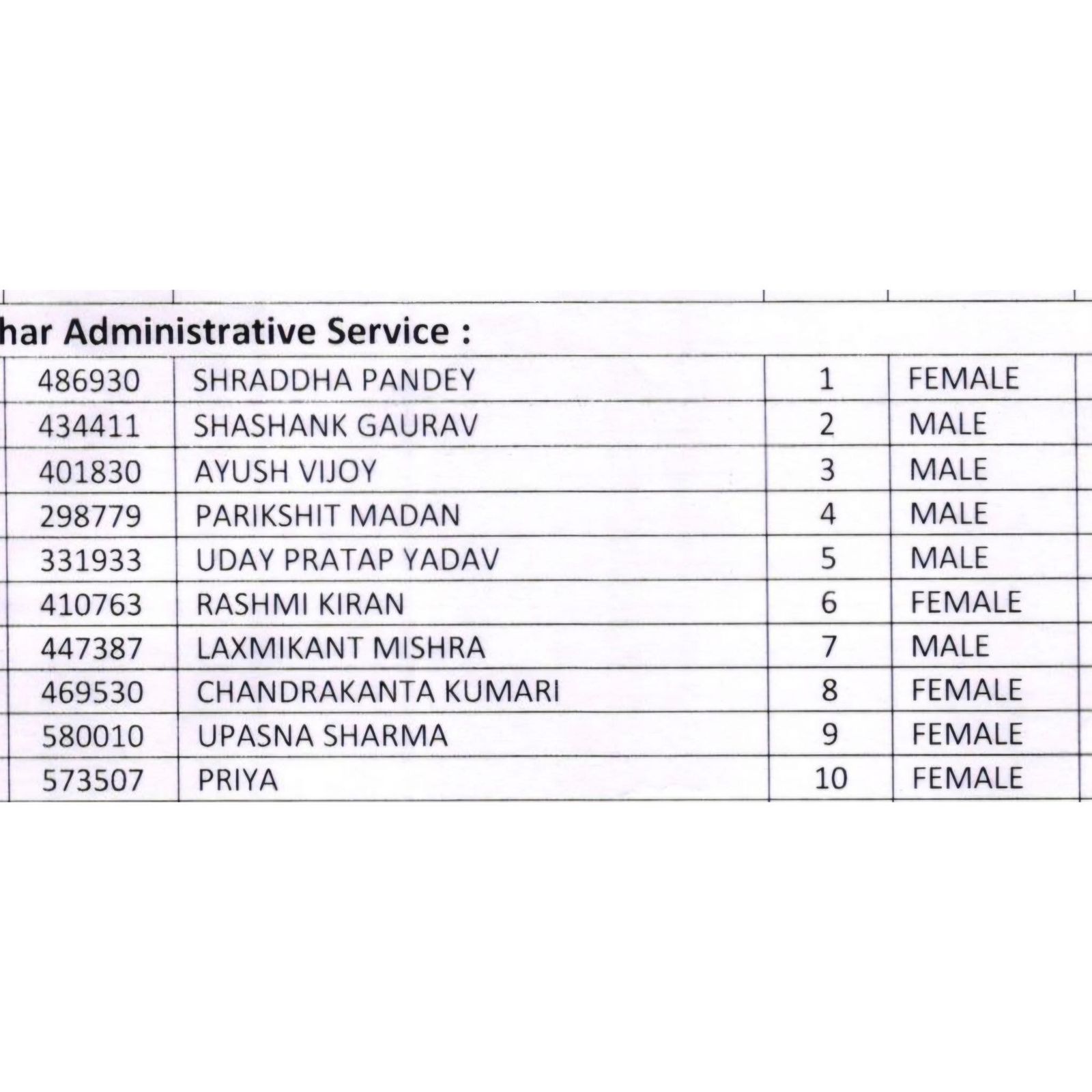
Patna: The Bihar Public Service Commission (BPSC) has declared the final results of the 70th Combined Competitive Examination, bringing to a close one of the largest and most controversial recruitment exercises in the commission’s history.

A total of 2,027 candidates have been selected for appointment to various state government positions, including Sub-Divisional Magistrate (SDM), Deputy Superintendent of Police (DSP), State Tax Officer and Tax Superintendent.
Announcing the results, BPSC chairman Ravi Manubhai Parmar described the recruitment drive as one of the biggest ever conducted by the commission.

Chairman Rejects Paper Leak Allegations
Parmar said investigations carried out during the recruitment process found no evidence of a question paper leak, despite months of protests and allegations raised by candidates and political leaders.
He claimed that some individuals had misled candidates and attempted to create unrest by mobilising outside elements during the agitation.
The chairman’s remarks come after the examination became the subject of sustained public debate and one of Bihar’s most prominent student movements in recent years.
Recruitment Process Spanned Nearly 18 Months
The recruitment cycle began with the preliminary examination held on 13 December 2024.
The Main examination was conducted in April 2025, while interviews were held between January and April 2026.
The final result marks the completion of a process that stretched across more than a year and a half.
Examination Triggered Statewide Protests
The 70th Combined Competitive Examination remained at the centre of repeated controversies throughout the recruitment process.
Among the major flashpoints were protests against the proposed normalisation system, allegations of irregularities at Patna’s Bapu Pariksha Parisar, prolonged student demonstrations, and a hunger strike by Jan Suraaj founder Prashant Kishor.
The issue also drew the attention of national political leaders, including Congress leader Rahul Gandhi.
Student protests against the normalisation policy began even before the preliminary examination was held.
On 6 December 2024, thousands of aspirants staged a demonstration outside the BPSC headquarters in Patna. The protest continued for several hours and eventually led to a police lathi-charge after attempts to disperse the crowd failed.
Several students were reportedly injured during the confrontation.
Teachers And Activists Joined Movement
The agitation received support from prominent educators, including Faisal Khan, popularly known as Khan Sir, and teacher Guru Rahman.
Both participated in demonstrations at Gardanibagh in support of the protesting candidates and were briefly detained by police.
Khan Sir was later hospitalised after his health reportedly deteriorated during the protests.
Bapu Examination Centre Became Flashpoint
The controversy intensified after the preliminary examination was conducted at 912 centres across Bihar on 13 December 2024.
Candidates at the Bapu Pariksha Parisar in Patna alleged irregularities and staged protests during the examination.
Following an inquiry, the commission cancelled the examination only for that particular centre.
However, many candidates demanded that the entire preliminary examination be scrapped and reconducted statewide, arguing that any proven irregularity undermined the credibility of the recruitment process as a whole.
The demand became one of the central issues driving the subsequent agitation.
Vacancies Increased Multiple Times
The number of advertised vacancies was revised repeatedly during the recruitment process.
The commission initially approved recruitment for 1,929 posts on 18 September 2024. An advertisement issued five days later mentioned 1,957 vacancies.
The figure was subsequently revised to 1,964, then 2,031 and finally 2,035 posts before the recruitment process concluded.
Similarly, tentative examination schedules underwent several changes before the commission eventually decided to hold the preliminary examination in a single shift on 13 December 2024.
With the declaration of the final results, the commission has formally concluded a recruitment process that not only attracted lakhs of aspirants but also became one of the most closely watched administrative and political issues in Bihar over the past two years.