Vaishali: As dusk settled over Vaishali on Monday, an international Buddhist pilgrimage quietly came to an end — but the echoes of its purpose lingered far beyond its final steps.

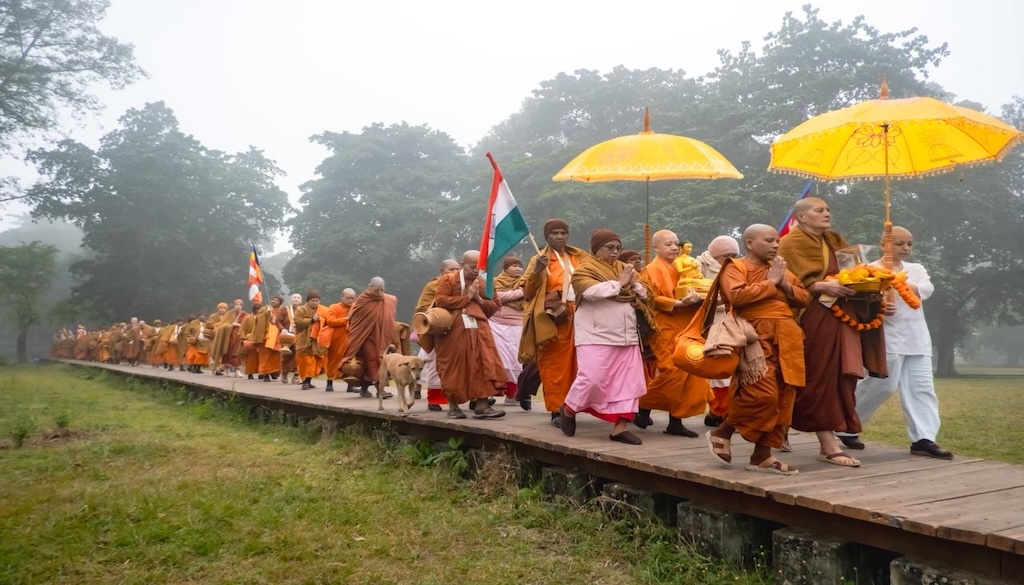
Over the past seven days, 100 Buddhist Bhikkhunīs from 13 countries retraced an ancient route from Nepal’s Shakya region through Bihar, culminating in Vaishali, the city that once altered the course of Buddhist history by opening monastic life to women. The journey concluded this evening with collective prayers and meditation, marking both an arrival and a renewal.
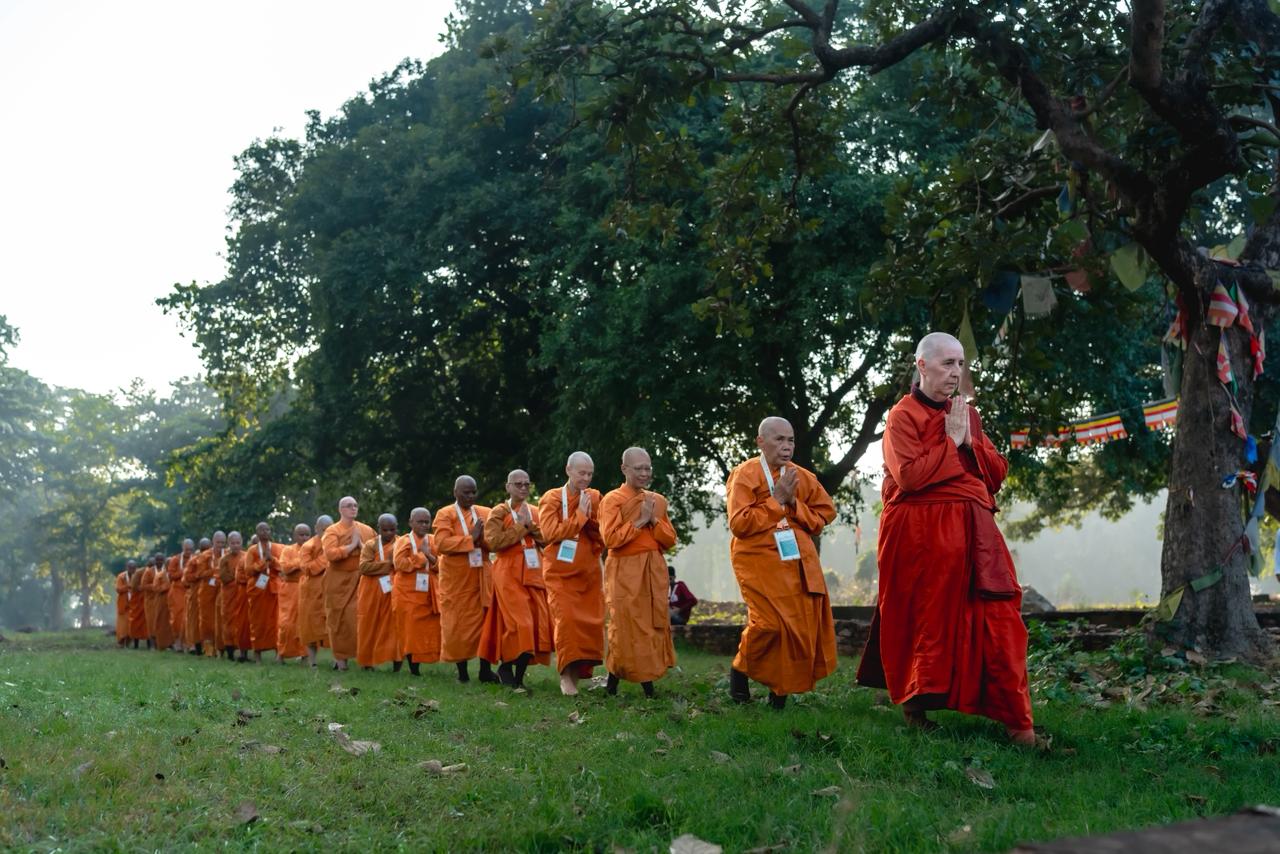

The pilgrimage drew inspiration from the historic march led by Mahaprajapati Gotamī, the foster mother of Gautama Buddha, who walked with 500 women from the Shakya Republic to Vaishali more than 2600 years ago. That act of determination ultimately led to the establishment of the Bhikkhuni Sangha — one of the earliest institutional recognitions of women’s spiritual agency.
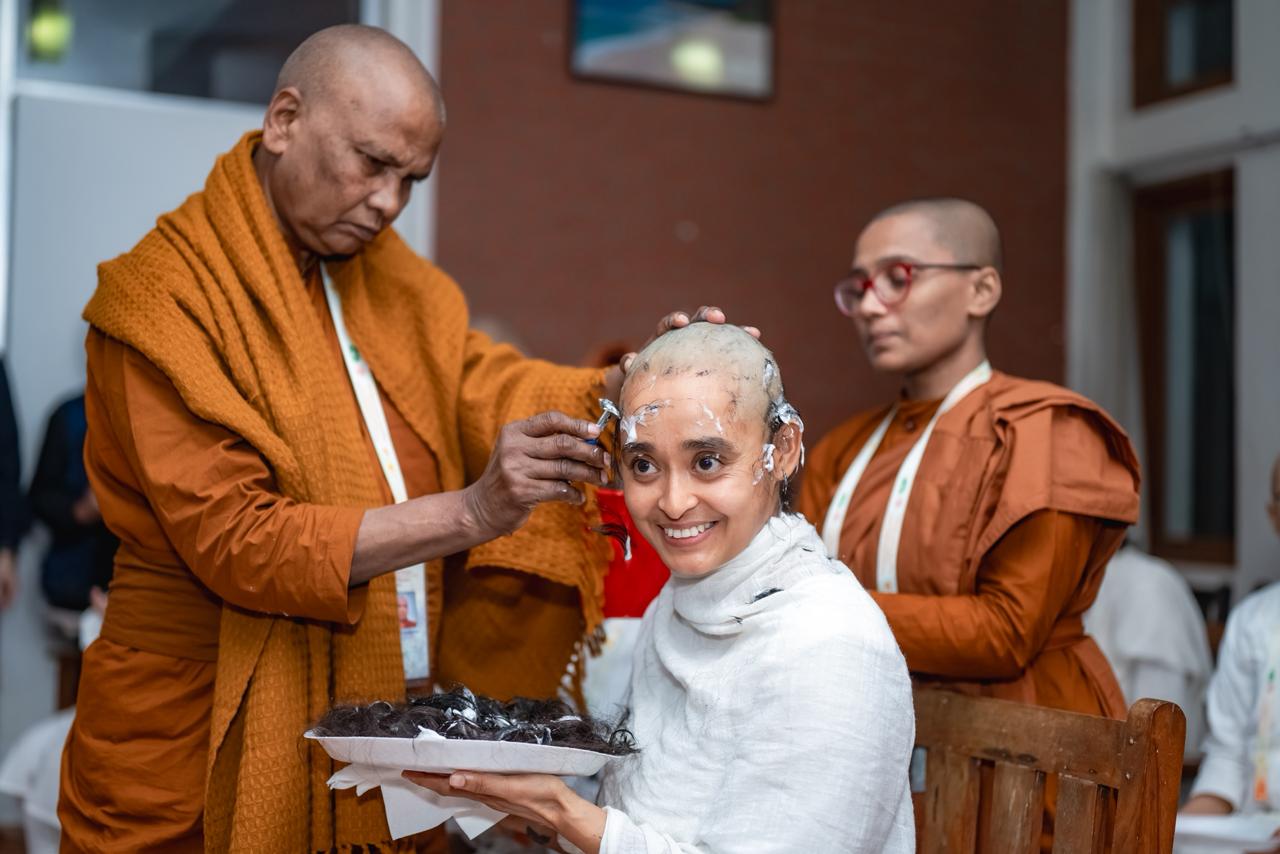
This was not just a reenactment of history,” said Venerable Bhikkhuni Sakya Dhammadinnā, head of the Bodhipakkiya Dhamma foundation in India. “It was a reminder that courage, persistence and compassion are still required to sustain equality — even today.”
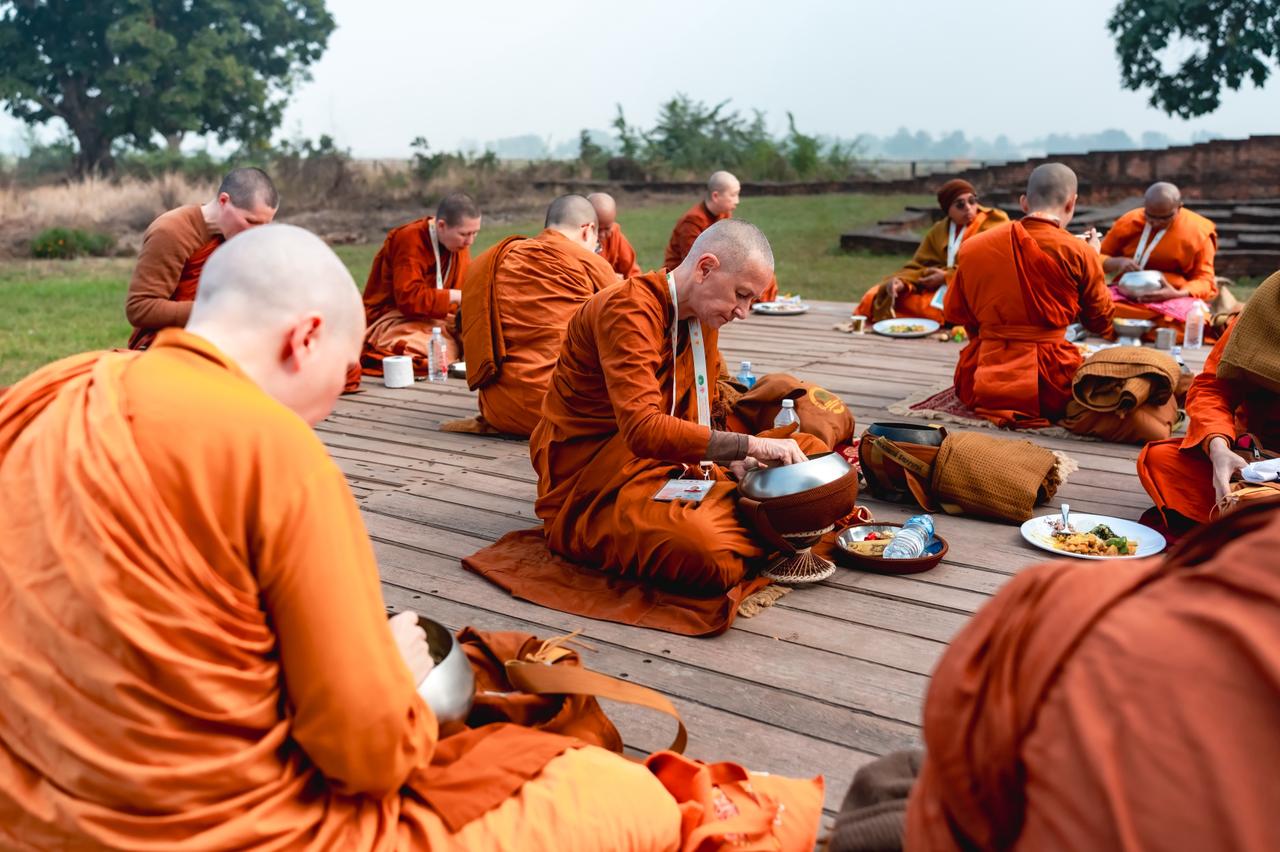
The international character of the Buddhist pilgrimage was shaped through coordinated efforts by Venerable Tathaloka Theri, a senior Bhikkhuni based in the United States, and Mahā Upāsikā Wangmo Dixey, also based in Northern California. Both worked through distinct but complementary global networks.
According to Venerable Tathaloka Theri, Wangmo Dixey led the initial outreach to international Bhikkhunis through her work with the International Tipitaka Chanting Council and as president of the International Buddhist Association of America, drawing on her extensive engagement in India and Nepal.
Venerable Tathaloka Theri, whose Dhammadharini community is based on California’s Sonoma Coast, subsequently coordinated participation among international Bhikkhunis and aspirants linked to Dhammadharini and related networks. Pilgrim Bhikkhunis, Sāmaṇerīs — along with one Sāmaṇera — took part in the journey from 13 countries: India, Nepal, Sri Lanka, Indonesia, Thailand, Vietnam, Cambodia, the United States, Canada, Germany, Australia, the United Kingdom and Cuba.
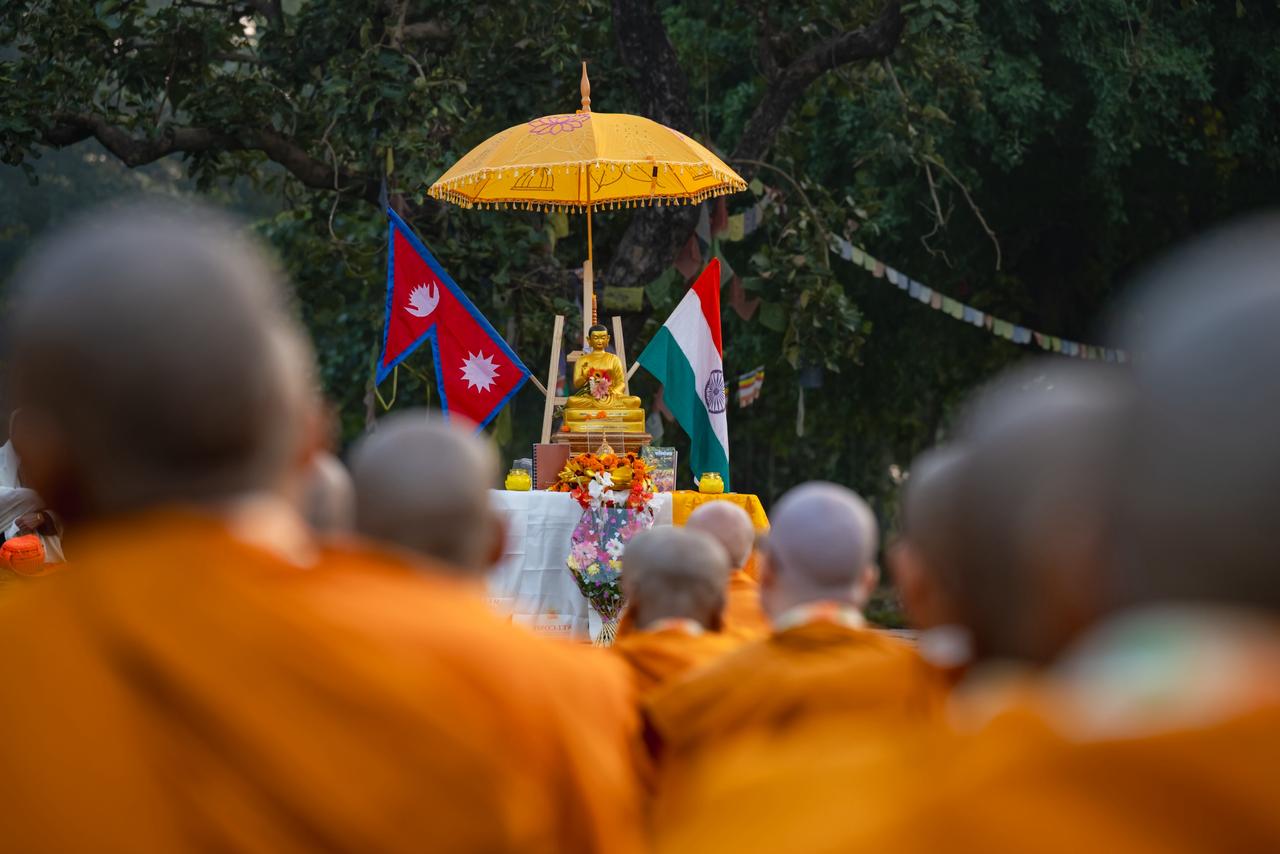
Tathaloka Theri clarified that most Indian Bhikkhunis and aspirants joined through Venerable Bhikkhuni Sakyā Dhammadinnā, the India coordinator of the United Theravada Bhikkhuni Sangha International (UTBSI). Formally, Tathaloka Theri served as senior Bhikkhuni advisor to the pilgrimage in her roles as UTSI International Coordinator for Bhikkhuni Sangha History and Heritage and UTBSI coordinator for North America and Europe.
She added that Bhikkhunis from Thailand and Vietnam were largely brought together by UTBSI’s regional coordinators, working with Venerable Bhikkhuni Vandana of Gujarat, who had previously ordained alongside several of them in Bodh Gaya.
“The strength of this pilgrimage lay in its collective spirit,” one participant noted. “It showed that the Bhikkhuni Sangha is no longer bound by geography, but united by shared values.”
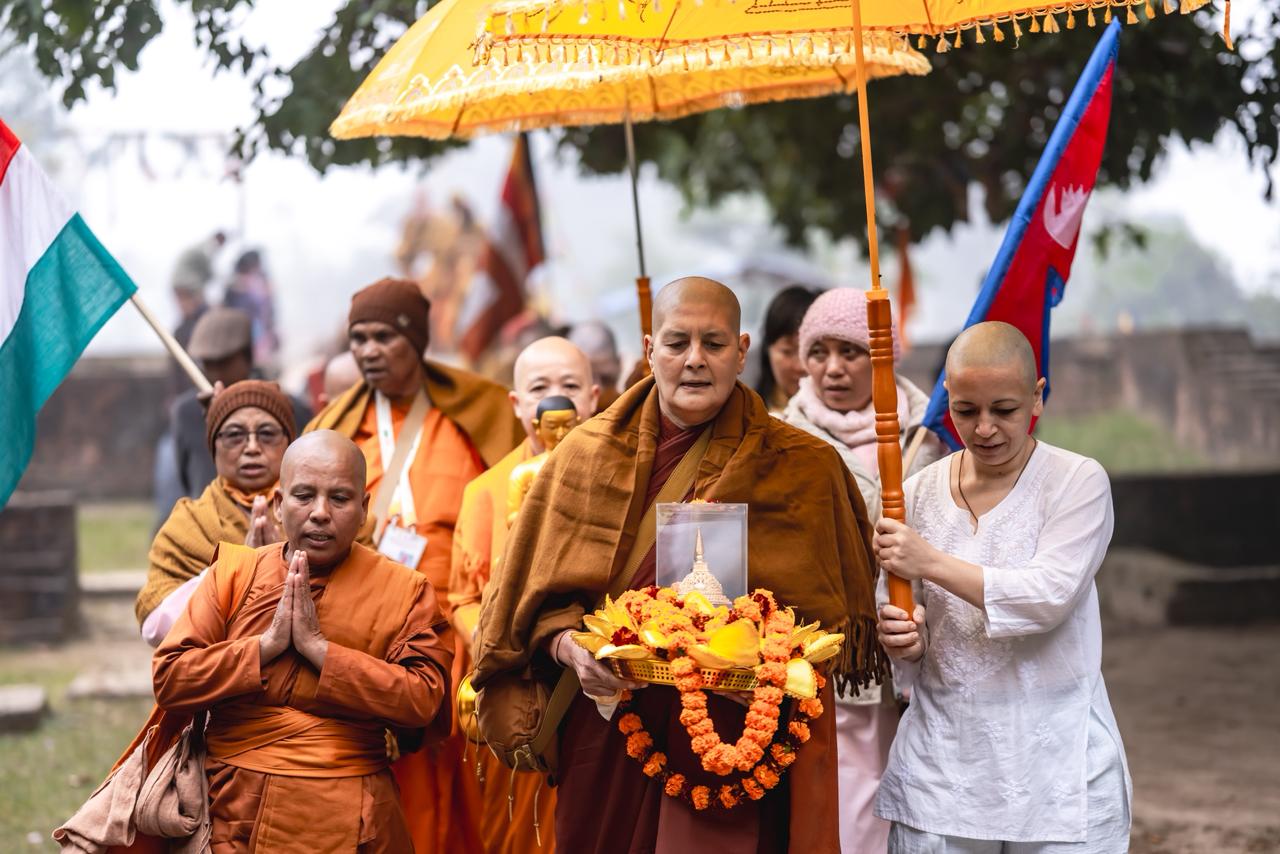
From the ancient palace gates of Kapilavastu, the pilgrims set out along the Abhinishkramana Patha — the Great Renunciation Trail once walked by the Buddha as a seeker, and later by Mahāpajāpatī Gotamī and the Courageous 500. Entering India via the Daruawari route at Valmikinagar, the journey continued through Kushinagar and Nandangarh before culminating in Vaishali. Along the way, the pilgrims carried and meditated with sacred relics of Mahāpajāpatī Gotamī, brought from Sri Lanka and returned for the first time to their original homeland, transforming each halt on the ancient route — from renunciation to final Parinibbāna — into a space of reflection, remembrance and quiet solidarity.
Taiwan-based Tzu Chi Foundation’s vice-president Upāsikā Madam Pi-Yu LIN, quoting renowned senior Taiwanese Bhikkhuni Master Cheng Yen, said the pilgrimage carried renewed relevance in a fractured world. “At a time when humanity is confronting violence, war and intolerance, the Buddha’s teachings of non-violence, compassion and the middle path are not optional — they are essential,” she said.
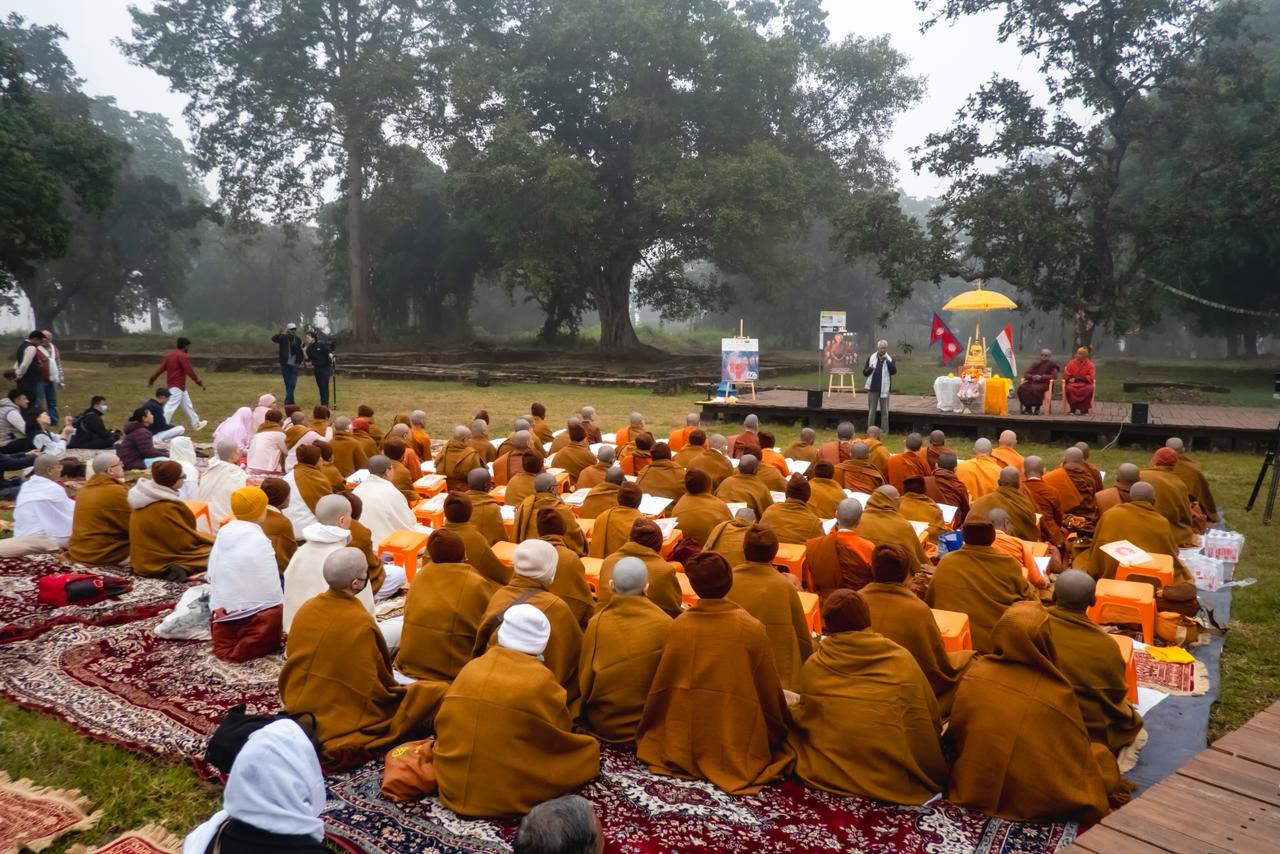
Vaishali’s significance loomed large throughout the journey. According to early Buddhist tradition, Vaishali holds a unique place in spiritual history. It was here that the Buddha granted women full monastic ordination (Upasampadā) following Mahāpajāpatī Gotamī’s appeal. Within a week, she attained arahathood, becoming Buddhism’s first Arahatī, with canonical texts recording that all 500 Sakyan women who followed her later reached awakening.
Vaishali is also remembered as the site of Mahāpajāpatī Gotamī Therī’s parinibbāna — final nirvāna — at the age of 120, three months before the Buddha’s own passing. The pilgrimage concluded at her Parinibbāna Stupa, a site noted by Chinese pilgrims Faxian and Xuanzang, marking moments that reshaped Buddhist spiritual history.
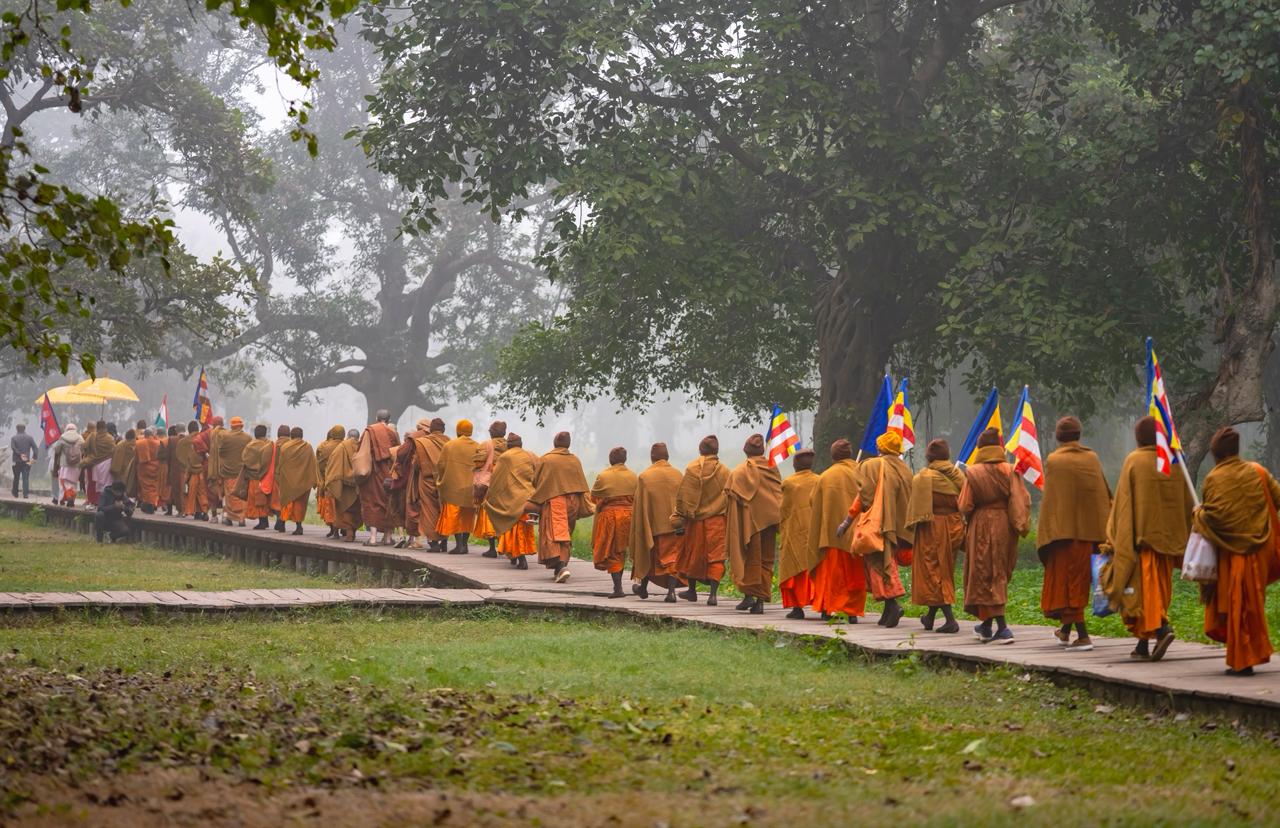
As the pilgrimage concluded this evening, the Bhikkhunīs dispersed quietly, many continuing onward to other sacred sites. Yet their collective journey left behind a powerful reminder: that ancient roads can still carry modern meaning, and that the struggle for dignity, equality and peace remains as vital today as it was centuries ago.