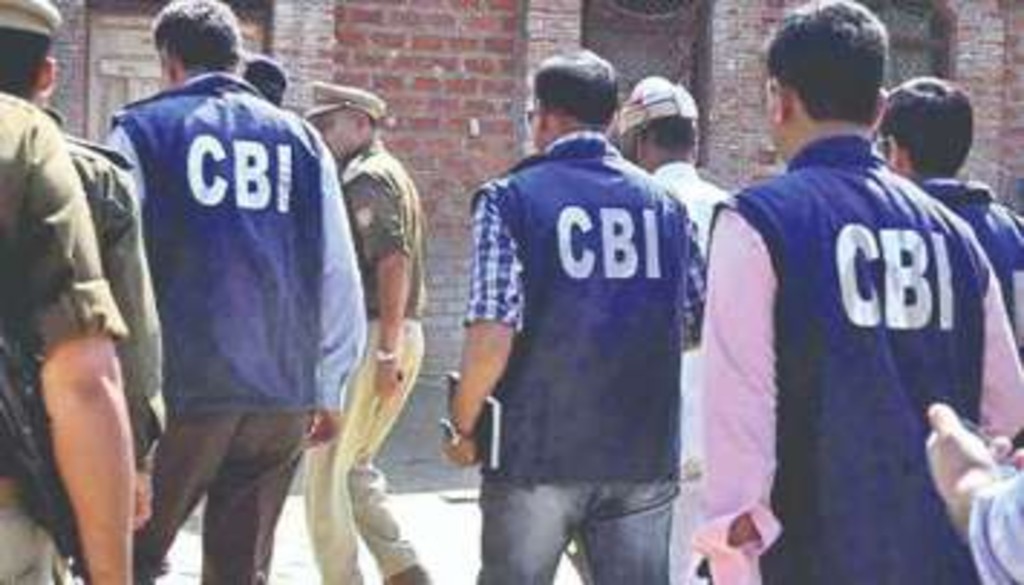
Patna: The Central Bureau of Investigation (CBI) has intensified its probe into the alleged rape and death of a NEET student in Patna, registering a formal case and seeking key documents from the city police. On Thursday, the agency wrote to the Senior Superintendent of Police (SSP), Patna, requesting the case diary, CCTV footage, investigation reports and all related documents and evidence collected so far.

The Bihar government had recommended a CBI inquiry into the case on January 31. Twelve days later, the Union Home Ministry granted approval. The CBI formally registered the case in Patna on February 12 and assigned the investigation to ASP Pawan Kumar Srivastava.
Father’s Statement Forms Basis of FIR

The case was initially registered on the basis of a statement given by the victim’s father at Kadamkuan police station on January 9.
In his statement, the 51-year-old father from Jehanabad said his 18-year-old daughter had left home on January 5 at around 1 pm for Shambhu Girls Hostel in Kankarbagh, Patna. She called him around 9 pm the same night and informed him that she had reached the hostel safely.
The next evening, on January 6, he received a call from a friend informing him that his daughter was lying unconscious in the hostel. The family immediately left for Patna. The hostel caretaker reportedly told them that the student had been admitted to a private clinic in Kankarbagh and might be referred elsewhere.
The family later shifted her to a private hospital in Rajendra Nagar. The father stated that when they reached the hospital around 9 pm, their daughter was unconscious and did not regain consciousness thereafter. He expressed suspicion that she may have been assaulted or subjected to an attempt to establish physical relations forcibly inside the hostel, citing injury marks on her body.
How CBI May Proceed with Investigation
After collecting the case diary and evidence from Patna Police, the CBI is likely to first record detailed statements of the victim’s family members, including her parents, siblings and relatives. The agency may also visit their native village in Jehanabad to understand the sequence of events.
Investigators are expected to examine the girls’ hostel premises and question staff members. Doctors who treated the student at various hospitals in Patna may also be questioned. The team is likely to interact with the medical professionals involved in her treatment as well as the doctors who conducted the post-mortem at Patna Medical College and Hospital.
Key Challenges Before the CBI
Investigators are likely to face several challenges in reconstructing the case:
Time Delay: Several weeks have passed since the incident. Digital data may have been overwritten, physical evidence may have degraded and witness accounts may contain inconsistencies. The agency may have to rely heavily on reconstruction of events.
Addressing Alleged Gaps in SIT Probe: The CBI will need to re-evaluate the scene of crime analysis, sampling methods and the timeline established by the Special Investigation Team (SIT). Any shortcomings in the earlier probe could be used by the defence during trial.
Restoring Family and Witness Confidence: The family and some witnesses have alleged pressure and intimidation. Ensuring witness protection and restoring trust will be crucial for recording free and voluntary statements.
Medical Evidence Correlation: The agency will need to scientifically reconcile the post-mortem report, forensic science laboratory findings and expert medical opinions. Synchronising CCTV footage, call detail records, tower dump data and mobile phone data will be critical. Any discrepancy could weaken the prosecution’s case.
Questions Over SIT’s Initial Theories
The SIT’s handling of the case has drawn scrutiny.
Suicide Angle: Critics allege that investigators initially leaned towards a suicide theory. However, early hospital observations and post-mortem findings reportedly indicated signs of struggle. Legal experts note that investigations should consider all possibilities before reaching conclusions.
Reliance on DNA Evidence: The SIT reportedly treated DNA matching as decisive evidence. After multiple samples failed to yield conclusive matches, the probe appeared to stall, raising questions about whether investigators had identified the correct suspects.
Delayed Integration of Medical Inputs: Allegations have also surfaced that early medical observations suggesting possible sexual assault were not immediately integrated into the investigation framework.
Focus of Investigation: The family has claimed that the SIT concentrated more on questioning relatives rather than exploring external suspects, an allegation that had sparked controversy.