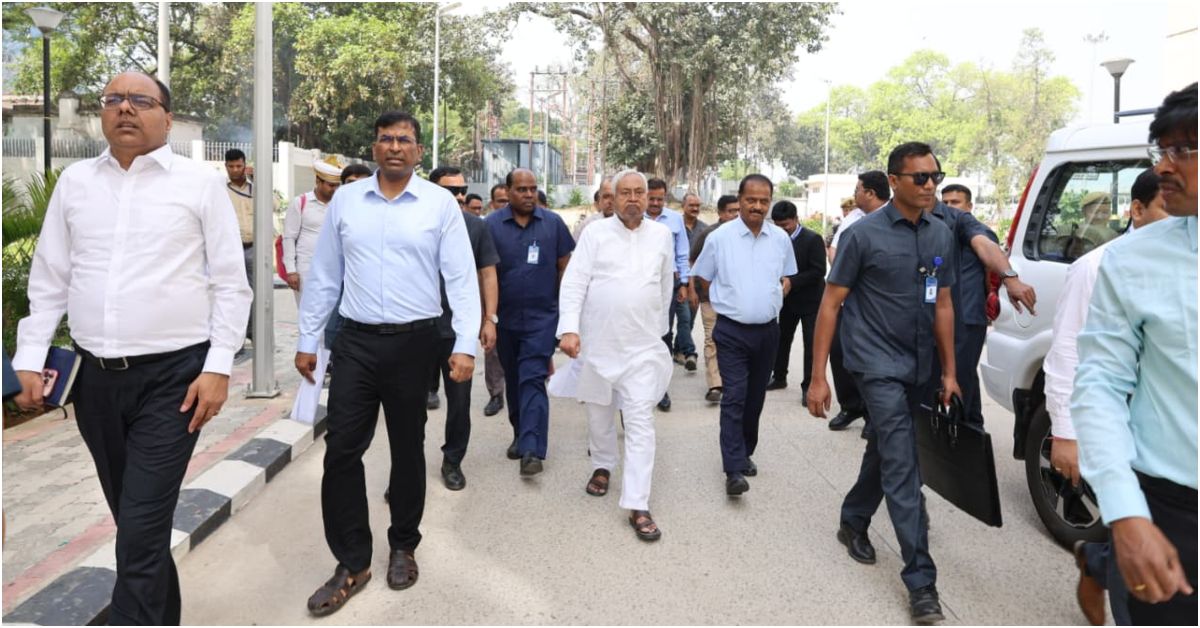
Patna: Chief Minister Nitish Kumar inspected the newly constructed Patna Collectorate complex on Monday and reviewed ongoing development projects in the area, directing officials to expedite several pending works.

During the visit, he inspected various sections of the Collectorate building, including the meeting hall, the office of the Deputy Development Commissioner (District Council) and the office of the Sub-Divisional Officer (Sadar) on the fifth floor. He also reviewed facilities across other floors of the complex.
The chief minister also assessed the progress of a road being constructed from Collectorate Ghat to Sabhyata Dwar. Officials said the road, once completed, will improve access for devotees during the Chhath Puja and for morning walkers, while enhancing the overall appearance of the riverfront. He instructed officials to ensure the project is completed at the earliest.

He further reviewed the construction of the office building of the Senior Superintendent of Police within the Collectorate premises and directed authorities to speed up the work.
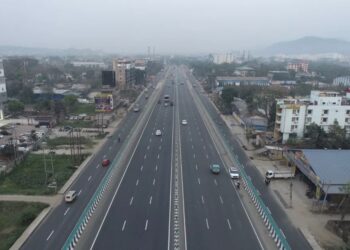
CM also inspected a nearby double-decker flyover and asked officials to complete the remaining work quickly. He emphasised coordination with the Patna Metro Rail Corporation so that the infrastructure can be integrated with the city’s upcoming metro network and improve connectivity.
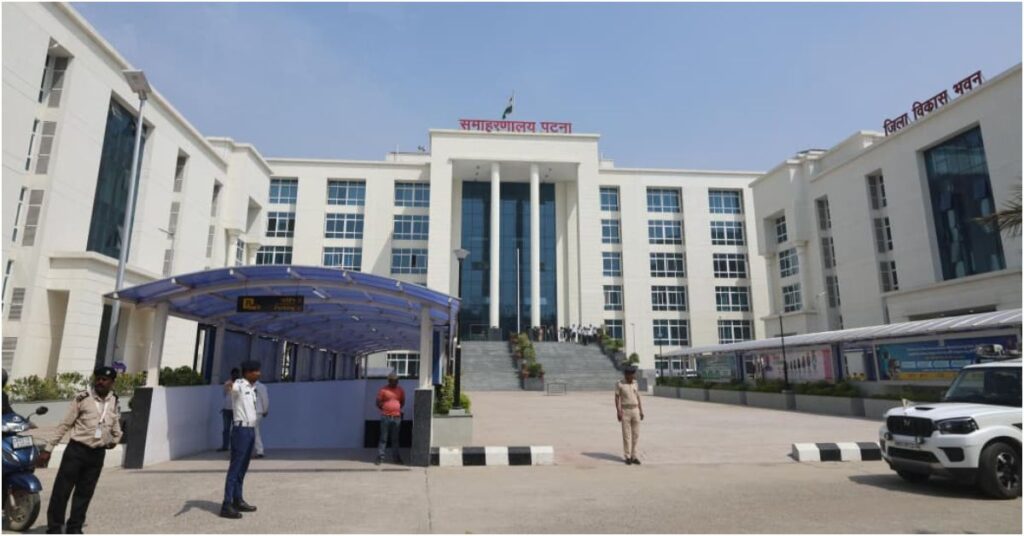
The new Collectorate complex was built after the chief minister ordered the demolition of several dilapidated structures during his Nishchay Yatra in 2017. The modern building has been constructed on a 6.32-acre site along the banks of the Ganga River, replacing the old administrative structures.
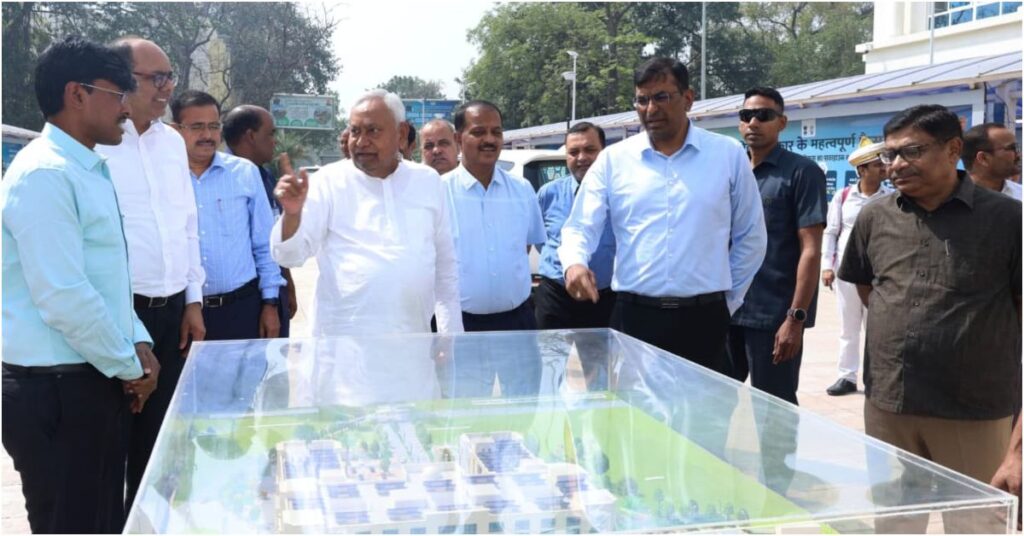
With a built-up area of around 28,388 sq metres, the complex houses the offices of the district magistrate, the district council-cum-district development building and the sub-divisional officer (Sadar). The project incorporated environmental considerations and modern infrastructure, including a water treatment plant, a sewage treatment plant and a 40-kilowatt solar power facility.
Parking facilities have been developed for more than 400 vehicles, including basement parking. Pillars from the main building of the historic Collectorate were preserved and displayed within the complex in compliance with directions from the high court, maintaining a link with the site’s architectural heritage.