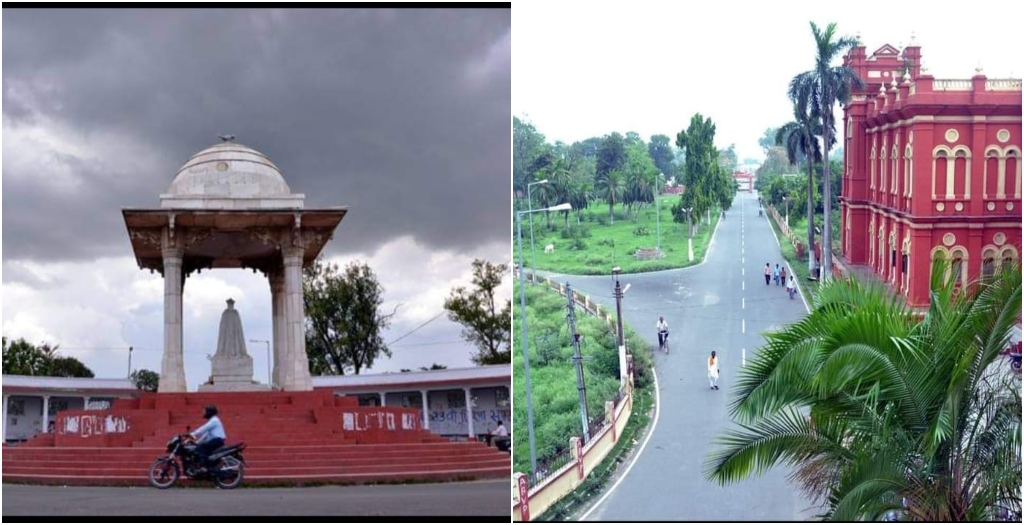
Darbhanga: Most kingdoms in Indian history were built through wars, invasions and violent struggles for power. But in the Mithila region of present-day Bihar, the Darbhanga Raj followed a very different path. The Tirhut State, later known as the Darbhanga Raj, was founded not by force but through knowledge and intelligence. This unique beginning has once again drawn attention after the death of Maharani Kam Sundari Devi, the last wife of Maharajadhiraj Kameshwar Singh. Her passing has revived public interest in how a vast and powerful kingdom came into existence without a single battle at its birth.

The story takes us back to the 16th century and to Mahesh Thakur, a respected Sanskrit scholar from the Khandwala clan. He reached the court of Mughal emperor Akbar not as a general but as a learned man known for his sharp debating skills and deep understanding of administration. Akbar, who valued talent and wisdom, was deeply impressed by Mahesh Thakur’s abilities. According to historians, instead of rewarding him with land or wealth, the emperor granted him control of the Tirhut State. This rare decision made Mahesh Thakur the ruler of a kingdom in 1556. He established his capital at Bhaur in present-day Madhubani district and ruled peacefully until 1569.
After Mahesh Thakur’s death, the kingdom passed through several rulers from the same family. Gopal Thakur, followed by Parmanand Thakur and Shubhankara Thakur, strengthened the administration and expanded the state’s influence. Shubhankara Thakur shifted the capital and founded Shubhankarpur, showing that the kingdom was growing both in size and importance. Over time, the Darbhanga Raj slowly developed military strength as well, especially under Mahinath Thakur, who defended the kingdom’s borders and defeated neighbouring rulers. This marked the transition from a purely scholarly state to a strong regional power.

A major change came in the 18th century when Raghav Singh adopted the title “Singh” instead of “Thakur”. This was more than a change of name; it showed the rising political and military confidence of the Darbhanga rulers. He expanded the kingdom’s control and broke social barriers by appointing trusted people from different communities to key positions. Later rulers continued this expansion, and during the reign of Madhav Singh, the capital was finally moved to Darbhanga city. This decision turned Darbhanga into the political, cultural and administrative centre of Mithila, a position it still holds today.
During British rule, the Darbhanga Raj became one of the most influential zamindari estates in India. Maharajas such as Chhatra Singh and Rameshwar Singh received high titles from the British for their administrative support and loyalty. Rameshwar Singh, known as Maharaja Dhiraj, became famous for building schools, temples and public institutions across the country. His successor, Kameshwar Singh, ruled during India’s independence and the end of the zamindari system. Despite losing formal power, he worked tirelessly to promote education, culture and the identity of Mithila.
Kameshwar Singh died in 1962 without leaving behind any children. Today, the legacy of the Darbhanga Raj continues through extended family members. More than a royal lineage, the Darbhanga Raj is remembered as a rare example in history where wisdom laid the foundation of power. In a land shaped by battles, it stands as a reminder that knowledge, patience and vision can also build a kingdom.