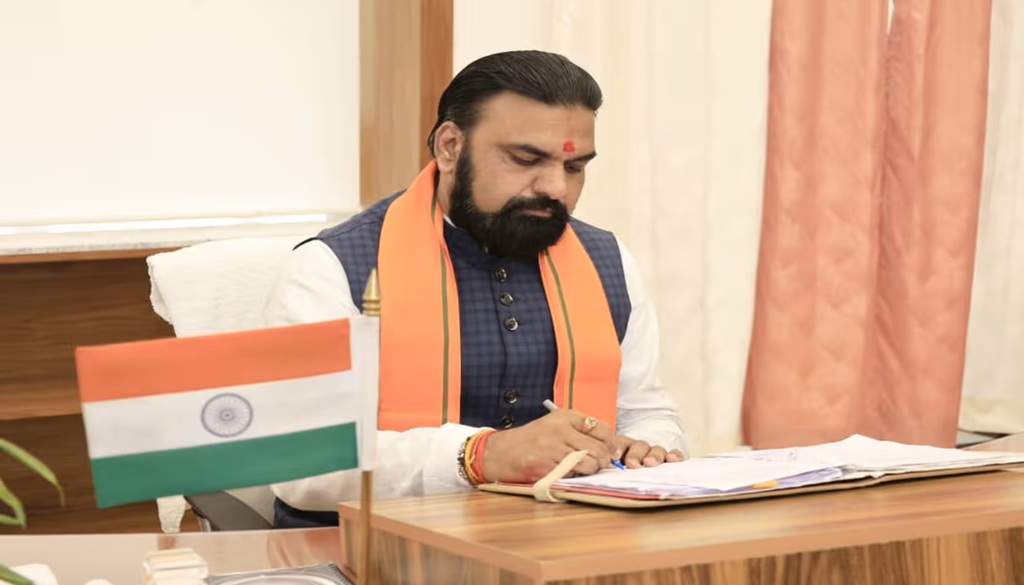
Patna: Days after taking oath as Bihar’s 24th Chief Minister on April 15, Samrat Choudhary is facing a series of political, administrative and economic challenges that could define his leadership in the coming months. While he inherits a state that has seen significant improvements in infrastructure under former Chief Minister Nitish Kumar, experts say the road ahead will test his ability to establish an independent identity.

Choudhary has publicly and privately acknowledged the scale of development achieved during Nitish Kumar’s tenure, particularly in roads and infrastructure, once considered Bihar’s biggest concern. However, he has also indicated the need to move beyond these achievements and address emerging issues.
Internal party dissent emerges as key hurdle
The most immediate challenge for the new Chief Minister lies within his own party. Although NDA allies have backed his leadership, sections within the BJP have reportedly expressed dissatisfaction over his elevation. Political analysts point to a divide between long-time party members and leaders who joined later, with some viewing Choudhary as an outsider.

Political expert Arun Kumar Pandey said the BJP’s central leadership has shown confidence in Choudhary, but internal resistance and lack of enthusiasm among senior leaders could impact governance and decision-making.
Law and order remains critical concern
Law and order is expected to be a major test for the new administration. The handling of high-profile cases, including the alleged rape and death of a NEET aspirant, has drawn criticism due to delays in filing chargesheets even months after the incident.
Analysts say Choudhary will need to ensure swift action against criminals and faster judicial outcomes to build public confidence. Political observer K.K. Lal noted that unless crime is effectively controlled, it will be difficult for the Chief Minister to create a distinct political identity.
Official data, however, indicates a mixed picture. According to figures released earlier by Bihar DGP Vinay Kumar, crime rates declined in 2025 compared to the previous year, with murders down by 8.3 percent, dacoity by 26.9 percent, robbery by 21.1 percent, riots by 21.5 percent and rape cases by 8.2 percent. Arrests also increased significantly.
At the same time, cybercrime has emerged as a growing threat, with over 5,600 FIRs registered by December 2025, a sharp rise from less than 1,000 cases in 2022.
Fiscal pressure from welfare schemes
Managing Bihar’s finances will be another major challenge. Several welfare announcements made ahead of elections—including financial assistance to self-help groups, free electricity up to 125 units, increased pensions and higher salaries for Anganwadi and ASHA workers—have placed an estimated burden of over Rs 12,000 crore on the state exchequer.
To support these schemes, the government introduced multiple supplementary budgets in a single financial year, with a combined size of around Rs 1.61 lakh crore against a base budget of Rs 3.16 lakh crore for 2025–26.
Sources in the finance department indicate that salary disbursement delays have already surfaced, with over 1.5 lakh employees reportedly yet to receive March salaries in several districts.
The state’s debt burden, estimated between Rs 3.5 lakh crore and Rs 4 lakh crore, adds to the pressure, with annual repayments and interest consuming Rs 30,000–35,000 crore. Additionally, projects worth over Rs 50,000 crore announced earlier will now need to be executed by the new government.
Corruption concerns persist
Tackling corruption remains a key public expectation. Despite earlier commitments to a zero-tolerance approach, allegations of bribery at block and district levels continue to surface.
Recent vigilance actions against officials, including police officers, have highlighted the scale of the issue. Notably, all three posts in the state Lokayukta have remained vacant for the past five years, raising concerns over institutional mechanisms to curb corruption.
Delivering on employment and development promises
Fulfilling electoral promises will be crucial for the BJP-led government. Key commitments include generating one crore jobs over five years, expanding government employment, providing free education from primary to postgraduate levels, building seven new expressways and promoting economic empowerment initiatives such as creating one crore “Lakhpati Didis.”
Experts say delivering on these promises while managing fiscal constraints and governance challenges will be critical for Choudhary’s political future.