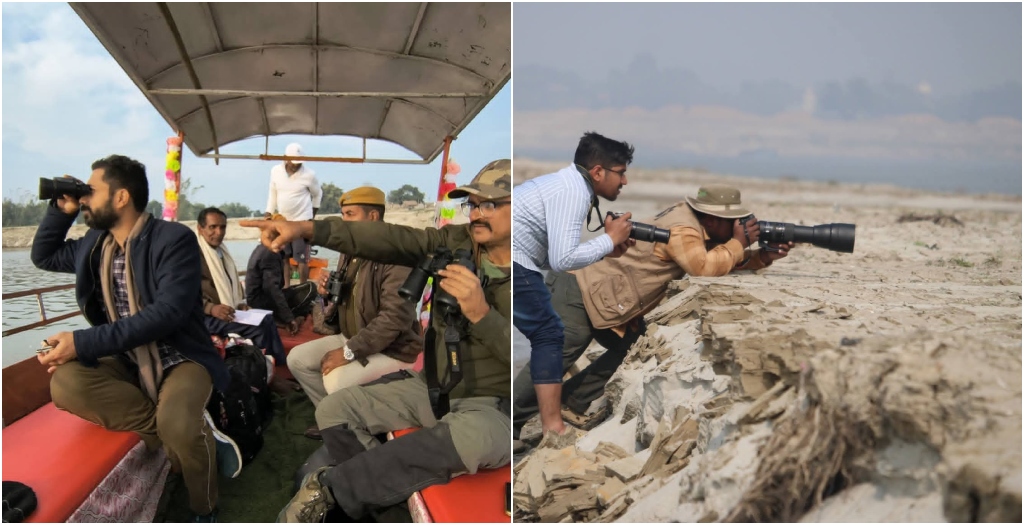
Patna: At dawn on Monday, boats pushed off from ghats across Bihar, notebooks and binoculars in hand. It was World Wetlands Day, and the Ganga was being closely watched — not just as a river, but as a living system that supports birds, people and livelihoods.

The Ganga River Ecosystem Survey 2026, conducted alongside the Asian Waterbird Census and the Bihar State Bird Counting programme, stretched across nearly 250km of the river. Though the Ganga flows for about 450km through Bihar, this carefully selected network of sites offered a wide-angle view of the river’s ecological health.
Eight teams fanned out across Buxar, Bhojpur, Saran, Patna, Munger, Bhagalpur and Katihar. They followed river routes such as Chausa Rani Ghat to Biyasi Bridge, Digha to Bidupur, Kashtaharani Ghat to Bariyarpur, and Sabour to Bateshwar — places where birds congregate, boats dock, and human activity presses close to the water’s edge. Other teams surveyed Manihari Ghat, Barari Ghat, and the Nandgaon Kala Diara–Bhawanipur stretch.

More than 100 participants took part, bringing together university teachers, students, forest department officials, NGO workers, retired professionals, farmers, fishermen and boatmen. Each had a defined role: counting birds, recording observations, photographing habitats, or coordinating logistics along the river.
The focus went beyond bird numbers. Teams noted water depth, visible pollution, sandbars, vegetation and disturbances caused by construction or heavy use. They observed how people interact with the river — washing clothes, fishing, farming along its banks — and how closely livelihoods remain tied to the Ganga’s seasonal rhythms.
For many participants, the survey was as much about awareness as data. Walking along exposed sandbanks or drifting past quiet wetlands, volunteers spoke of how bird sightings often reflected the river’s condition. Where the water was calmer and less disturbed, migratory and resident species were more abundant.
Organisers say the findings will help scientists and policymakers understand how healthy the Ganga is — and where it is under stress. Just as importantly, the exercise reinforced a simple message: the river’s future depends on shared responsibility.