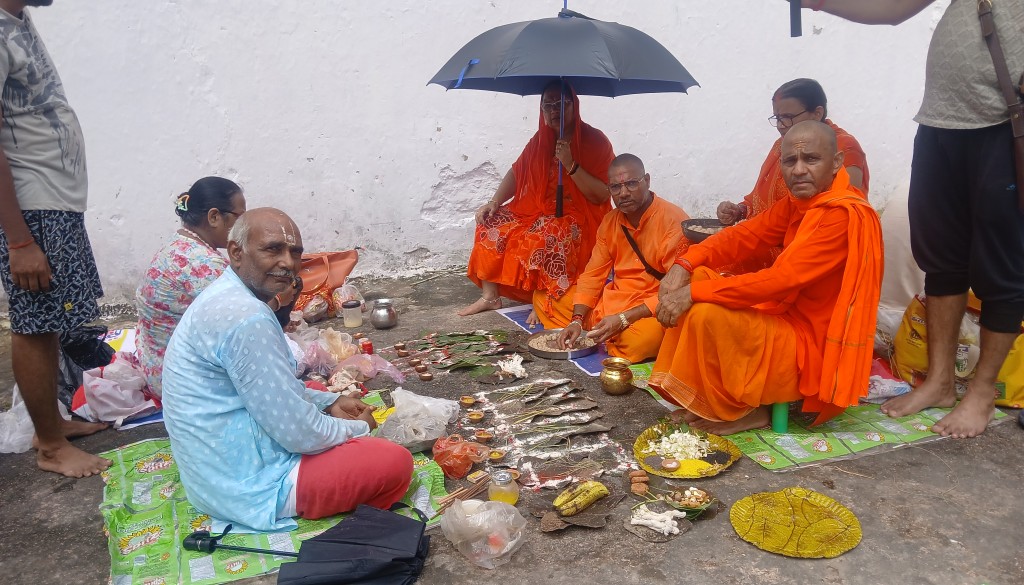
Gayaji: The Pitru Paksha festival in Gaya has entered its 13th day, with devotees performing ritual offerings to ancestors at three of the city’s most revered stone platforms: Bhim Gaya, Go Prachar and Gada Lol. The festival, which spans 16 days, has already drawn more than 2.5 million pilgrims, according to the district administration.

Today Rituals carried out on the 12th day of the Gaya Shradh were considered particularly significant. Religious texts describe this day – Ashvin Krishna Dwadashi in the lunar calendar – as auspicious for seeking liberation for departed souls. Offerings at these sites are believed to ensure peace for ancestors and enable them to attain heaven.
The three altars are deeply rooted in Hindu mythology. The Bhim Gaya platform is linked to the Mahabharata. Legend holds that Bhima, the Pandava warrior, travelled to Gaya after the war to perform oblations for his forefathers, bending on his left knee. The imprint of his knee is said to remain visible on the stone, cementing its sacred status among devotees.

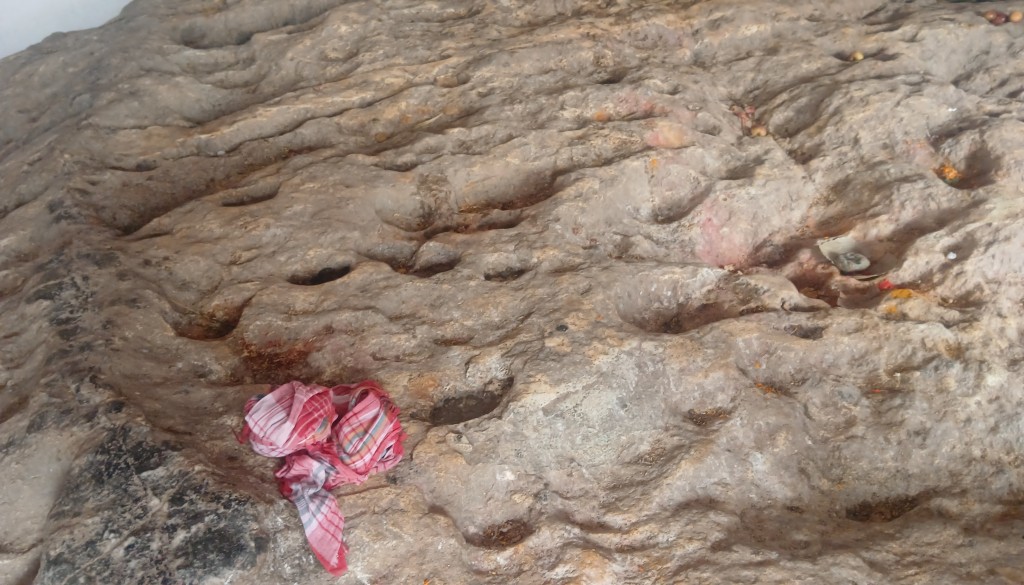
The Gada Lol platform, mentioned in the Vayu and Dharma Puranas, is associated with Vishnu. Scriptures recount that after killing the demon Heti, Vishnu washed his mace in the Gadalol lake, giving the site its name. Offerings here are believed to bring particular merit for the departed.
Go Prachar, the third platform, is tied to a yajna (sacrifice) conducted by Brahma. Tradition holds that at the end of the ritual, Brahma gifted 125,000 Kamadhenu cows to priests. The site, also called Gocchar or Gokhur Vedi, still bears what devotees believe are the hoof marks of the divine cows. Some texts even describe a river of milk once flowing through the area.
With pilgrims arriving from across India, Gaya’s administration has implemented measures for crowd control, sanitation and security. Officials said numbers are expected to rise further as the festival continues.