
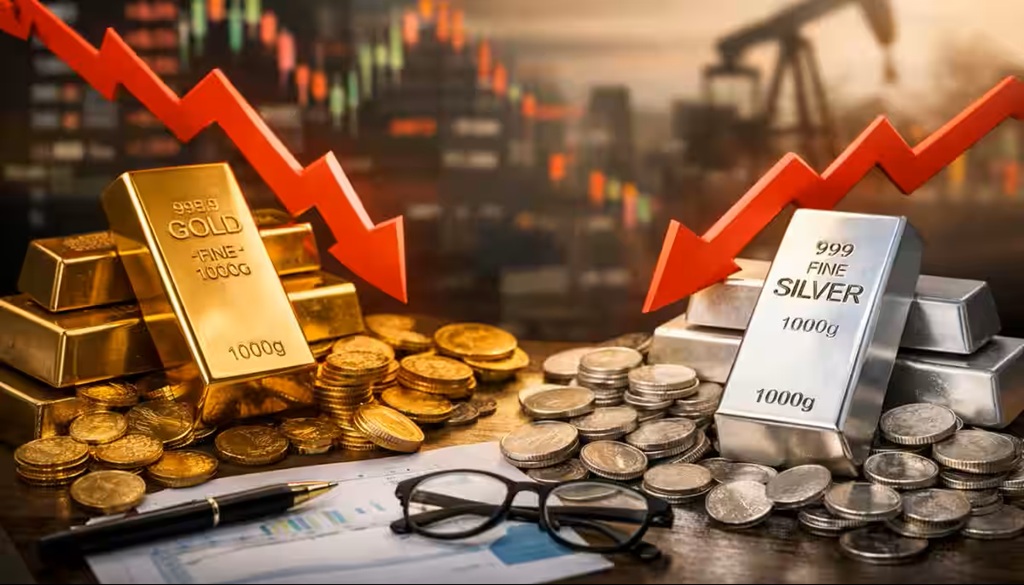
Patna: Gold and silver prices recorded a sharp decline this week, extending a period of volatility that has characterised precious metals markets throughout the year.

According to data released by the India Bullion and Jewellers Association (IBJA), the price of 24-carat gold fell by Rs 6,438 per 10 grams, dropping from Rs 1.54 lakh on June 6 to Rs 1.48 lakh.
Silver also witnessed a significant correction. The price of the metal declined by Rs 14,326 per kilogram, falling from Rs 2.57 lakh to Rs 2.43 lakh during the same period.

Sharp Swings In 2026
Gold and silver have experienced substantial fluctuations since the beginning of the year.
On December 31, 2025, the price of 10 grams of gold stood at Rs 1.33 lakh. The metal subsequently surged to an all-time high of Rs 1.76 lakh on January 29 before retreating in the following months.
At current levels, gold is trading approximately Rs 28,000 below its January peak.
Silver followed a similar trajectory. The metal was priced at Rs 2.30 lakh per kilogram at the end of December 2025 before climbing to a record high of Rs 3.86 lakh per kilogram on January 29.
Since then, silver prices have declined by Rs 1.43 lakh per kilogram over a span of about 135 days.
Why Are Prices Falling?
Traditionally, precious metals tend to gain during periods of geopolitical tension and conflict as investors seek safe-haven assets.
However, market behaviour has differed in the current environment.
Analysts point to ongoing uncertainty in the Middle East, which has prompted many investors to prioritise liquidity. Instead of increasing exposure to precious metals, some investors have been selling gold and silver holdings to build cash reserves and maintain financial flexibility amid volatile global conditions.
Market participants also note that the record highs reached in January encouraged large investors to book profits. The resulting increase in supply placed downward pressure on prices, contributing to the correction seen in recent months.
Despite the recent decline, both gold and silver continue to trade above their levels recorded at the end of 2025, reflecting the broader volatility that has defined global commodity markets this year.