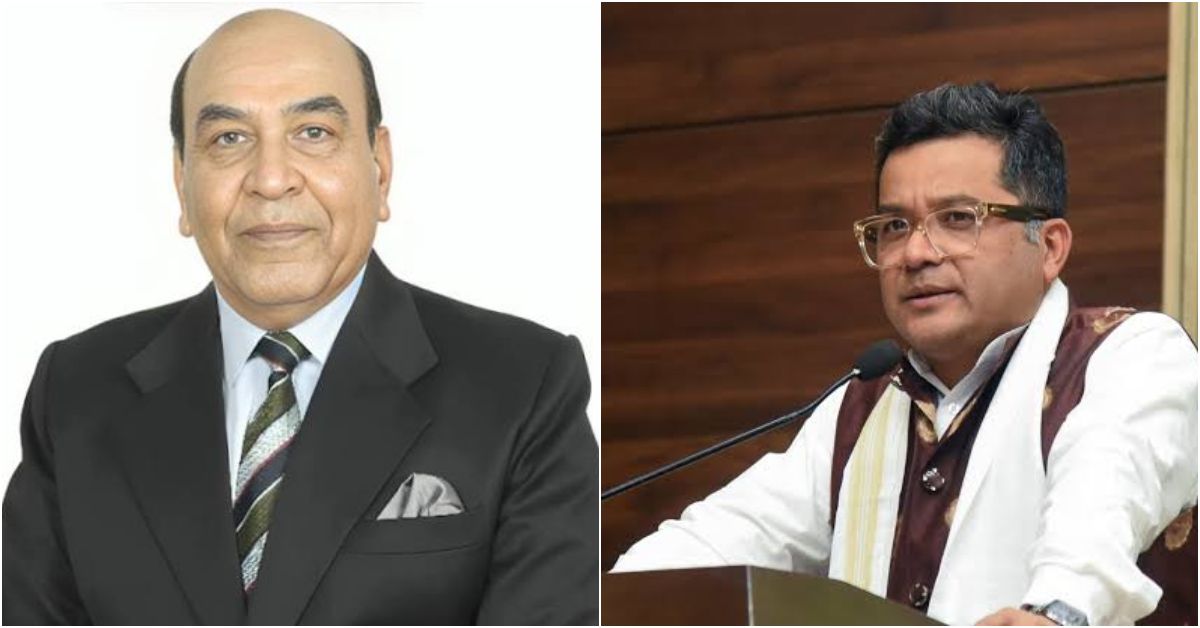
Patna: India will send a high-level official delegation to attend the state funeral of Iran’s Supreme Leader, Ayatollah Seyyed Ali Khamenei, with Bihar Governor Lieutenant General (Retd) Syed Ata Hasnain and Minister of State for External Affairs Pabitra Margherita representing the country.

The delegation will participate in the funeral ceremonies in Tehran from July 4 following an official invitation extended by Iranian President Masoud Pezeshkian to Prime Minister Narendra Modi.
PM Modi Unable to Attend

According to diplomatic sources, Prime Minister Narendra Modi will not attend the funeral due to previously scheduled international engagements, including official visits to Indonesia, Australia and New Zealand.
The government has instead nominated Syed Ata Hasnain and Pabitra Margherita to represent India at the state ceremony.
Hasnain, a retired Lieutenant General and the current Governor of Bihar, is regarded as an expert on strategic affairs, West Asia and counter-terrorism. Margherita, as Minister of State for External Affairs, will represent India’s diplomatic outreach.
Funeral Ceremonies Begin July 4
Ayatollah Seyyed Ali Khamenei, who led Iran for nearly four decades, was reportedly killed in a joint US-Israeli airstrike in Tehran on February 28 during the early stages of the West Asia conflict.
According to the reported schedule, funeral rites were delayed because of the conflict and will now begin on July 4 following the ceasefire.
His remains will be placed for public homage at Tehran’s Grand Musalla complex before funeral processions are held in Tehran and the holy city of Qom. The final burial is scheduled for July 9 at the Imam Reza Shrine in Mashhad.
India Highlights Longstanding Ties with Iran
India’s participation reflects its longstanding diplomatic and civilisational relationship with Iran, which New Delhi considers an important part of its extended neighbourhood.
Following Khamenei’s death, Foreign Secretary Vikram Misri visited the Iranian Embassy to sign the condolence register. During the period of regional tensions, Prime Minister Modi and External Affairs Minister S. Jaishankar remained in contact with the Iranian leadership, according to officials.
Iranian Foreign Minister Abbas Araghchi also visited New Delhi recently, where he met Jaishankar and Modi on the sidelines of BRICS-related engagements.
Continuity in Diplomatic Representation
The decision follows a similar approach adopted by India in 2024 after the death of Iranian President Ebrahim Raisi, when then Vice-President Jagdeep Dhankhar led the Indian delegation to the funeral.
Several countries, including Iraq, Pakistan, Afghanistan, Russia, China and Central Asian nations, are also expected to send official delegations to Tehran for the state funeral.