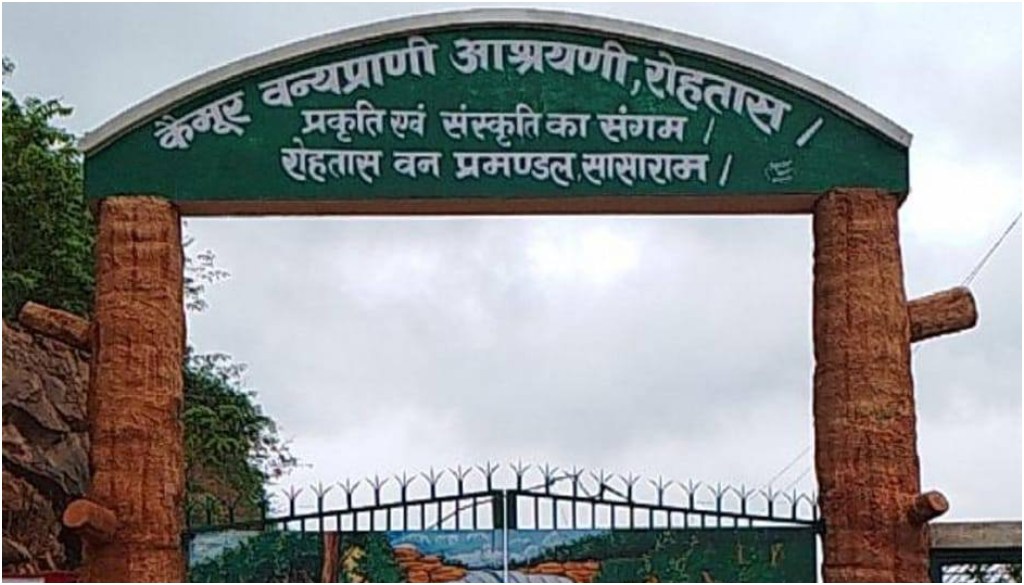
Patna: The Kaimur Wildlife Sanctuary in Bihar is set to be declared a tiger reserve, after receiving in-principle approval from the National Tiger Conservation Authority. The state government has forwarded the final proposal to the central government, with formal notification expected once clearance is granted.

The announcement was made by Pramod Kumar Chandravanshi, Bihar’s minister for environment, forest and climate change, who outlined a series of initiatives aimed at wildlife conservation and management across the state.
As part of these efforts, the Bihar Department of Environment, Forest and Climate Change has signed an agreement with the Wildlife Trust of India to establish a reptile incubation-cum-interpretation centre in Bagaha, in West Champaran district. The facility is expected to support conservation, research and public awareness around reptile species.

In a separate development, the Sanjay Gandhi Biological Park, commonly known as Patna Zoo, has been ranked fourth in the large zoo category by the Central Zoo Authority. The minister said the zoo’s toy train, which has remained closed for nearly a decade, will be reopened after receiving departmental approval. A new control room will also be set up to monitor activities within the park.
Addressing concerns from farmers, Chandravanshi said crop losses caused by nilgai and wild boars had prompted the government to introduce measures to control their population in non-forest areas. Under the scheme, a reward of Rs 2,000 will be provided for killing what the department has described as “dangerous” nilgai and wild boars within panchayat limits. Of the total amount, Rs 750 will be paid to the shooter and Rs 1,250 to the person responsible for disposing of the carcass.
Farmers seeking action will be required to submit a written complaint to the village head, or mukhiya. Following approval from the district magistrate, the mukhiya may then authorise the shooting of the animals.
The announcements reflect a balancing act between conservation goals and the pressures faced by farming communities, as Bihar seeks to strengthen wildlife protection while managing human–animal conflict.