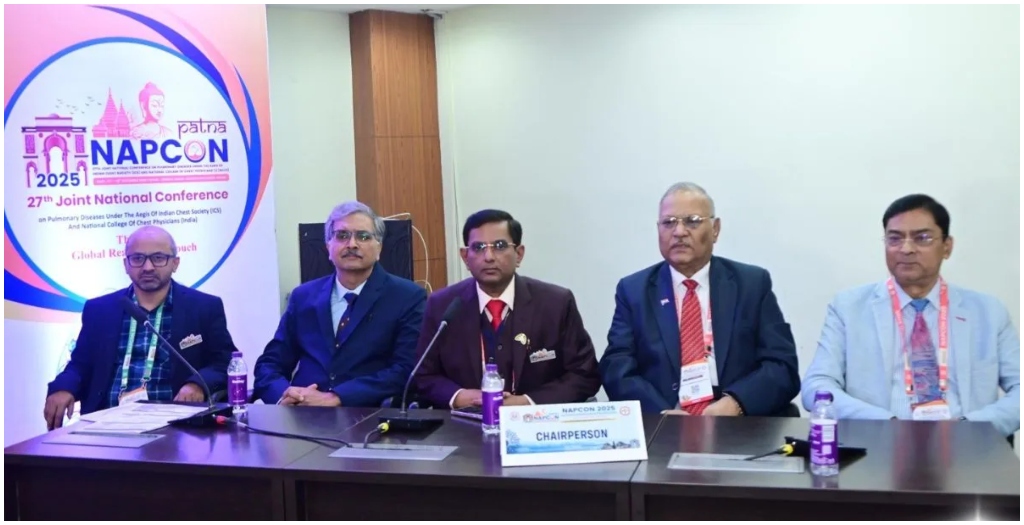
Patna: Lung diseases such as lung cancer and interstitial lung disease (ILD) are still being diagnosed very late in many patients, making treatment difficult and reducing the chances of recovery, experts said at a national medical conference. Dr Ganesh Raghu, a well-known lung specialist from the University of Washington in the United States, shared this concern while speaking at NAPCON 2025, a major respiratory disease congress held at Gyan Bhavan. He explained that many lung conditions progress slowly and quietly, so people often ignore early symptoms and seek medical help only when the disease has become serious.

Dr Raghu said ILD is a serious lung condition that affects the tissue around the air sacs and gradually makes breathing difficult. In the early stages, patients may feel mild breathlessness or a dry cough, which is often mistaken for ageing, pollution-related problems or seasonal illness. Because of this, diagnosis is delayed in many cases. He stressed that if ILD is detected early and treated by experienced specialists, the disease can be controlled and its progression slowed significantly, allowing patients to live a better and longer life.
Speaking about lung cancer, Dr Raghu said the situation is even more worrying. Across the world, most lung cancer cases are detected at stage four, when the disease has already spread to other parts of the body. At this stage, treatment becomes complicated and chances of a complete cure are very low. He explained that lung cancer can be completely curable if detected early, but the lack of routine screening and awareness means patients often lose valuable time. He urged people, especially smokers and those exposed to pollution, to take persistent breathing problems seriously.

Other experts also shared their views during the multidisciplinary discussion. Dr Ritu Agarwal spoke about managing complex ILD cases, while Dr Anant Mohan highlighted the challenges doctors face in India, including limited access to specialised tests. Dr Rohini Handa explained how autoimmune diseases can silently affect the lungs. The session was organised under the leadership of Dr Sudhir Kumar, and doctors from different parts of the country agreed that teamwork among specialists and learning from global experience is essential to improve patient care. Four senior doctors were honoured with the Chest Oration Award for their contribution to respiratory medicine.
The conference also focused on other major lung-related health issues. Experts warned about the growing problem of drug-resistant tuberculosis, latent TB and non-tuberculous mycobacterial infections, stressing the need for accurate diagnosis and timely treatment. Sessions on bronchiectasis highlighted how lung damage after tuberculosis is increasing, while discussions on asthma and allergies showed how new treatments, including modern medicines and biologics, are helping patients with severe breathing problems live more normal lives.