
Gopalganj/Patna: The Thawe Bhawani Temple in Gopalganj, Bihar, is no ordinary shrine. Built in the 16th century by the Chero dynasty and later expanded under the Hathuwa kings, the temple is a sacred site that fuses mythology, history, and unbroken devotion. It continues to attract pilgrims not only from Bihar but also from neighbouring Uttar Pradesh and Nepal.

What sets Thawe Bhawani apart is the presence of an idol of devotee Rahshu alongside the presiding deity. Temple lore holds that it was through Rahshu’s devotion that the Goddess travelled from Kamakhya in Assam to Bihar. According to priests, Rahshu resisted a king’s command to summon the Goddess, warning it would bring destruction. When forced, the Goddess arrived in a storm of darkness and fury, striking Rahshu and the king dead, while blessing the land with her eternal presence.


The temple’s later development is tied to Prince Shahi Bahadur of Hathuwa, who, after a vision of the Goddess, defeated a local landlord and unearthed an idol of Van Durga beneath a tree in 1714. The shrine has since stood as one of Bihar’s most revered Shaktipeeths.
Rituals here carry their own distinct traditions. Unlike other Shakti shrines, coconuts are not sacrificed but offered and taken home. The Nisha Puja of Sharadiya Navratri, dedicated to Mahagauri, is especially significant. The midnight ceremony, attended by thousands, is led by the temple priests and culminates with a havan traditionally begun by the queen of the Hathuwa royal family. Rice grains offered in this puja are believed to grant fertility and prosperity.
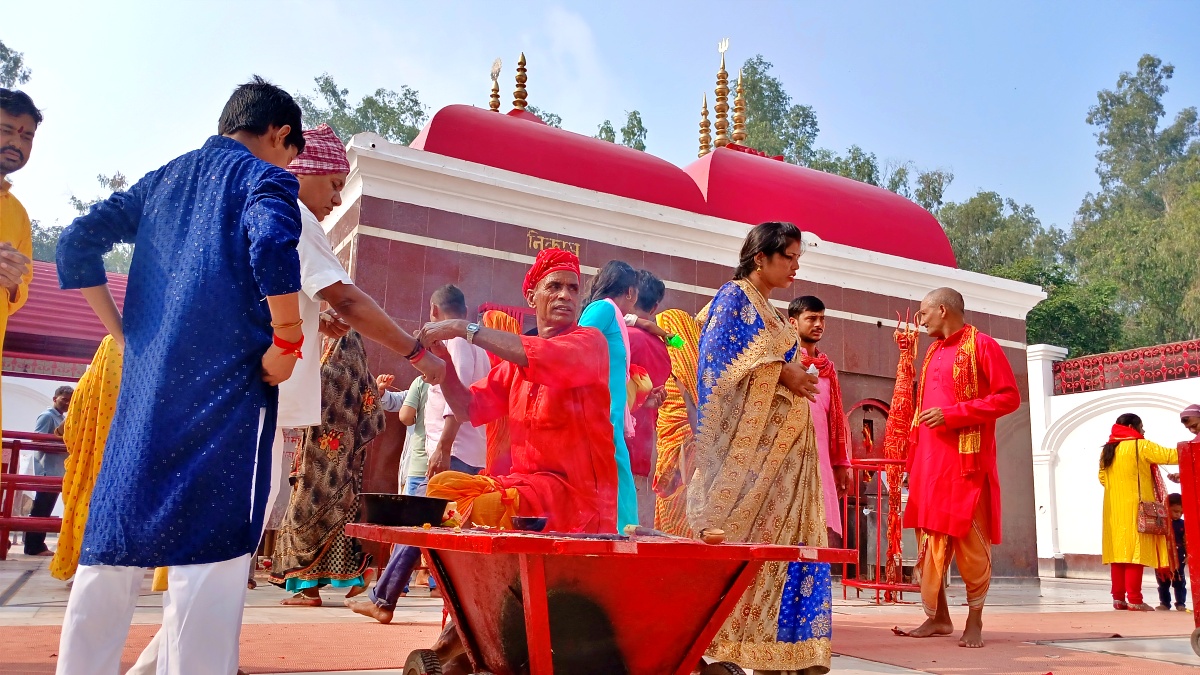
Today, Thawe Bhawani is more than a place of worship—it is a living narrative of faith, folklore, and resilience, where devotees believe their prayers are answered under the gaze of a Goddess who once crossed storm and fire to reach them.