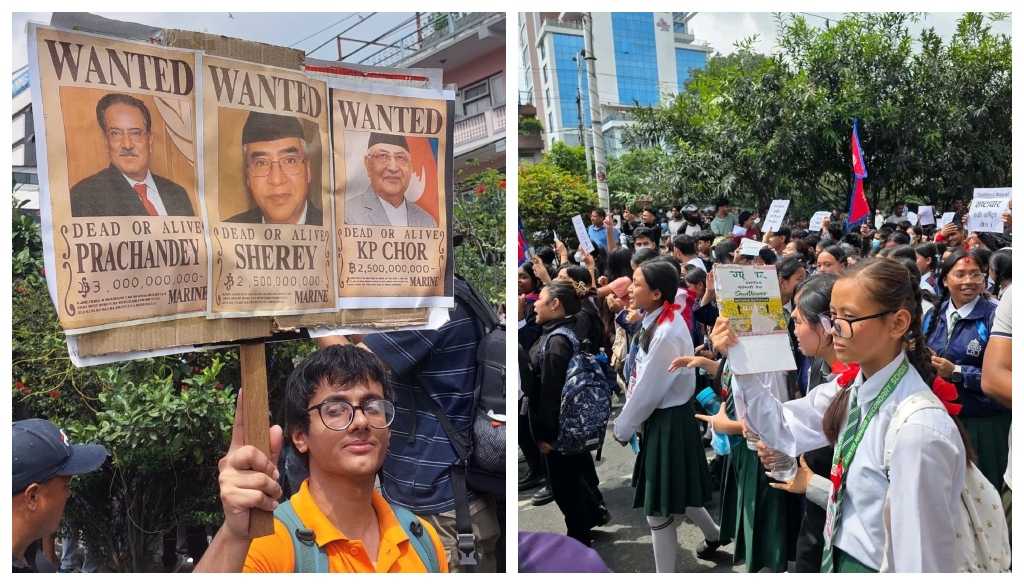
Kathmandu/Patna: Nepal witnessed an unprecedented breach of its federal parliament on Monday as Gen-Z protesters — young people aged 18 to 30 — stormed the complex in Kathmandu, defying barricades and clashing with police over corruption and the government’s decision to ban major social media platforms.

Police responded with water cannon, tear gas and live fire. The Kathmandu Post reported that one protester died of bullet injuries, while dozens more were treated at Everest Hospital and other facilities. The death marks the first fatality since demonstrations began earlier this month.
Authorities said more than 12,000 protesters had gathered in New Baneshwor, occupying gates No. 1 and 2 of parliament. Stones were hurled at police, motorcycles torched and effigies of Prime Minister KP Sharma Oli burnt as the unrest spiralled out of control.

In response, the Kathmandu district administration imposed a strict curfew from 12.30pm to 10pm, citing Section 6(A) of the Local Administration Act, 2028. The restrictions cover areas surrounding parliament, the president’s and vice president’s residences and the prime minister’s official home. The army has also been deployed.
Officials described the situation as “extremely tense” as protesters, who had vowed to remain peaceful, broke through security lines. “This is the first time in Nepal’s history that demonstrators have intruded into parliament,” a senior police officer said.

The unrest follows the government’s September 3 ban on 26 social media platforms, including Facebook, Instagram and YouTube, after they failed to register with the Ministry of Communications and Information Technology. A seven-day deadline given to platforms expired on September 2, triggering outrage among young Nepalis.
Protests have since spread beyond Kathmandu to Pokhara, Biratnagar and Butwal. While officials insist the ban is about regulation and security, demonstrators argue it silences dissent and cuts off a vital platform for expression.