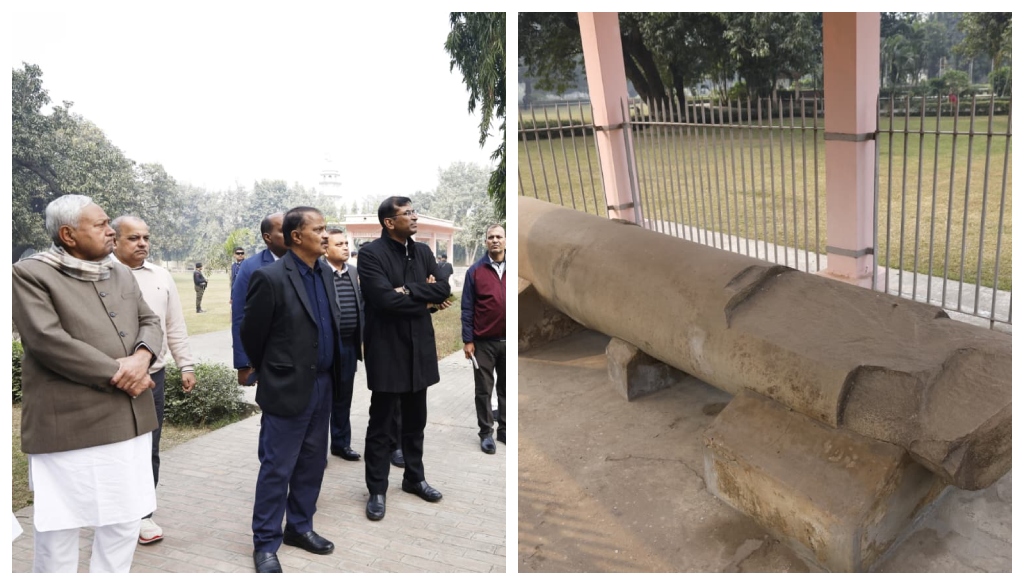
Patna: Bihar chief minister Nitish Kumar on Friday inspected Kumhrar Park, one of Patna’s most significant archaeological sites, and sought improved conservation and visitor facilities for the complex that preserves remnants of ancient Pataliputra.

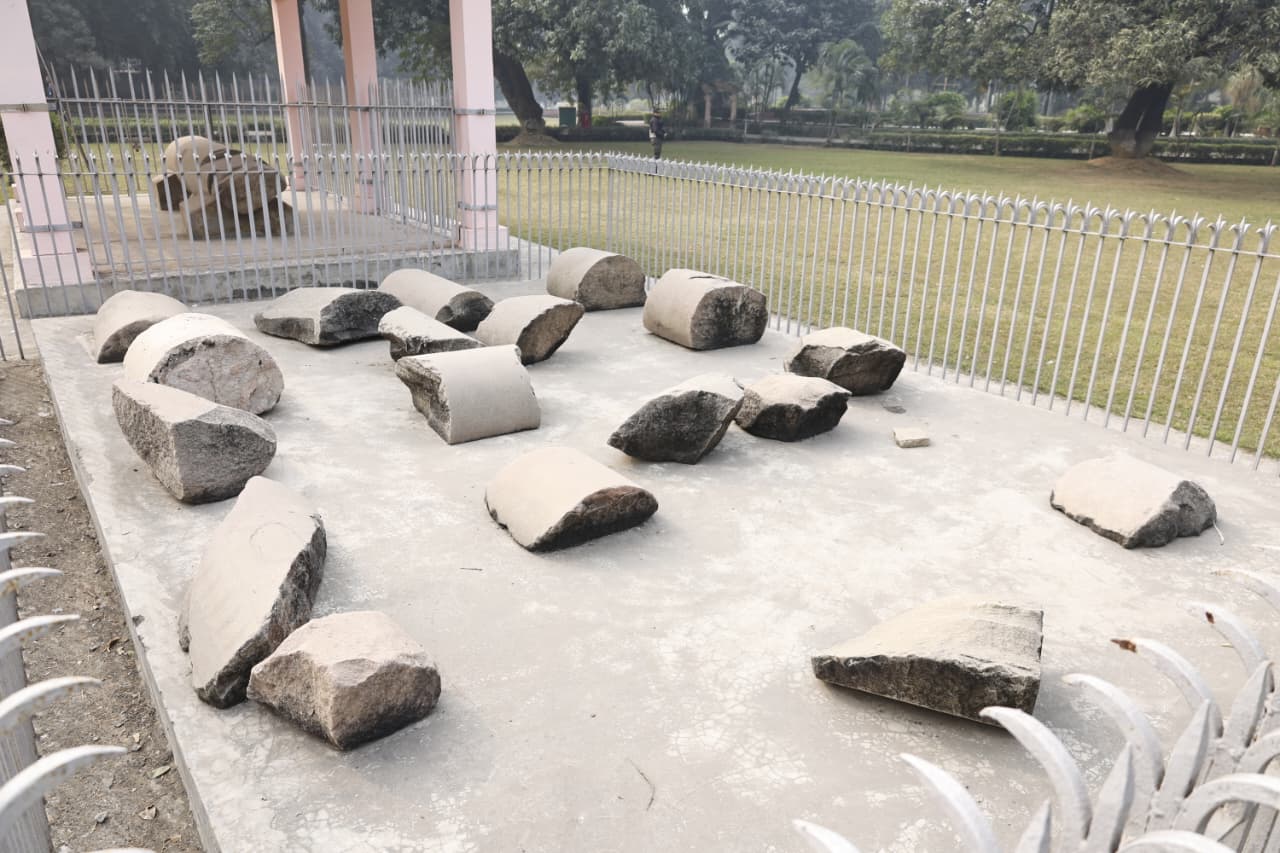
Walking through the park, CM Nitish examined preserved pillar remains dating to the Magadha and Mauryan periods and reviewed information panels detailing the Bulandibagh and Kumhrar excavations, including the celebrated Mauryan assembly hall believed to have had 80 pillars. He also visited the Pataliputra Gallery at the Krishnadeva Smriti Auditorium, where exhibits trace the architecture, material culture and artistic traditions unearthed from the site.

Officials informed the chief minister that Kumhrar Park is under the control of the Government of India and maintained by the Archaeological Survey of India. CM Nitish directed state officials to write to the Union government seeking enhanced development and upkeep, stressing that the park’s scale, footfall and international academic interest warranted better maintenance and presentation.
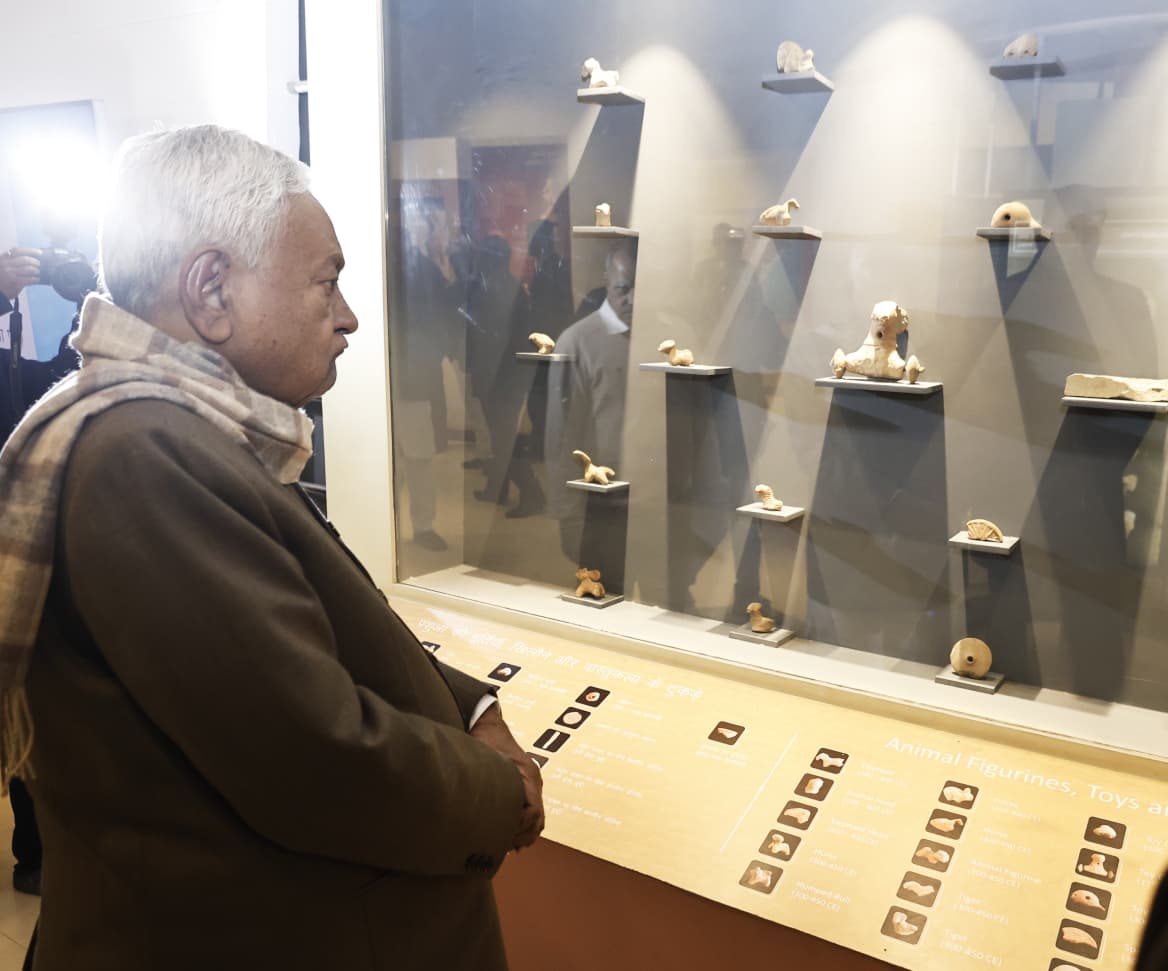
“Kumhrar is integral to the history of the Magadha empire and ancient Pataliputra,” he said, according to officials present. “Students and scholars from India and abroad visit this site. Its conservation and beautification should reflect its global importance.”
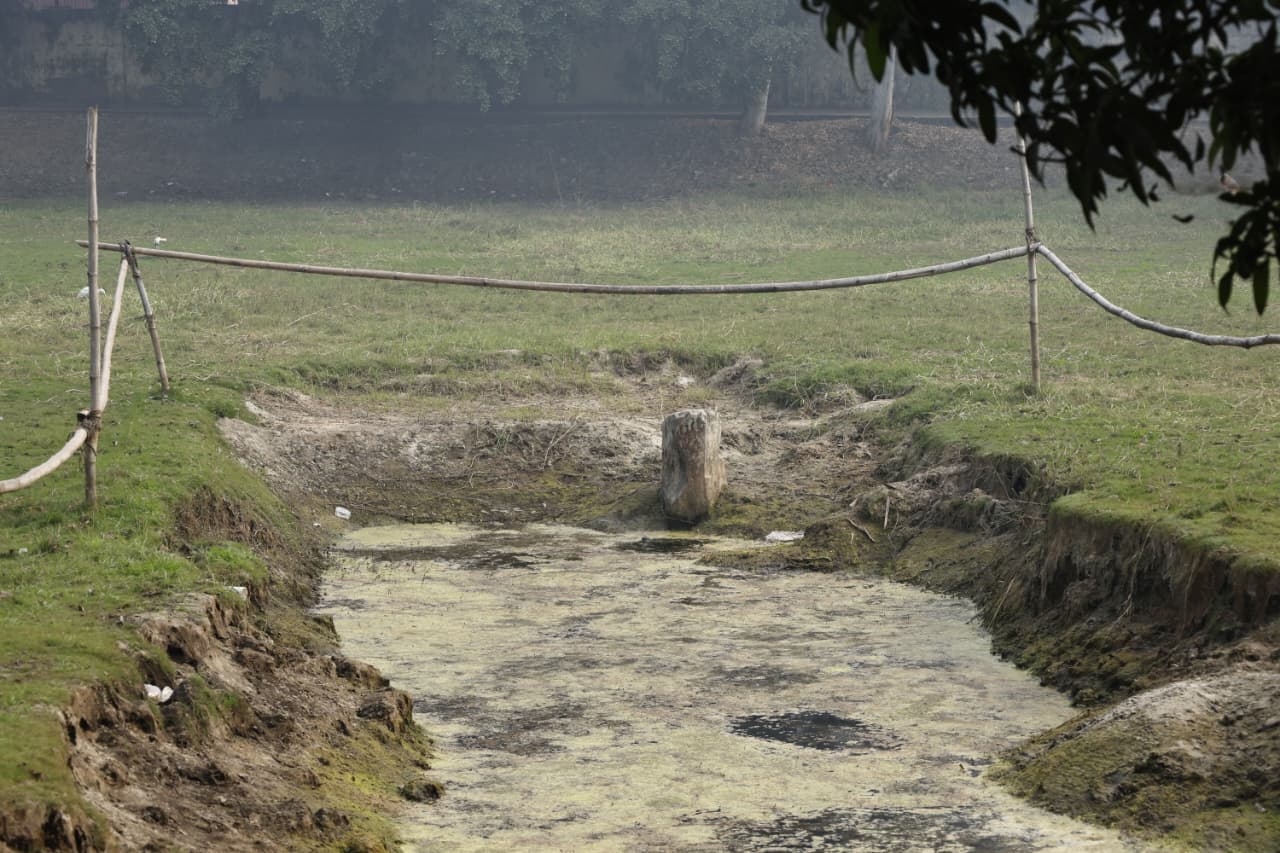
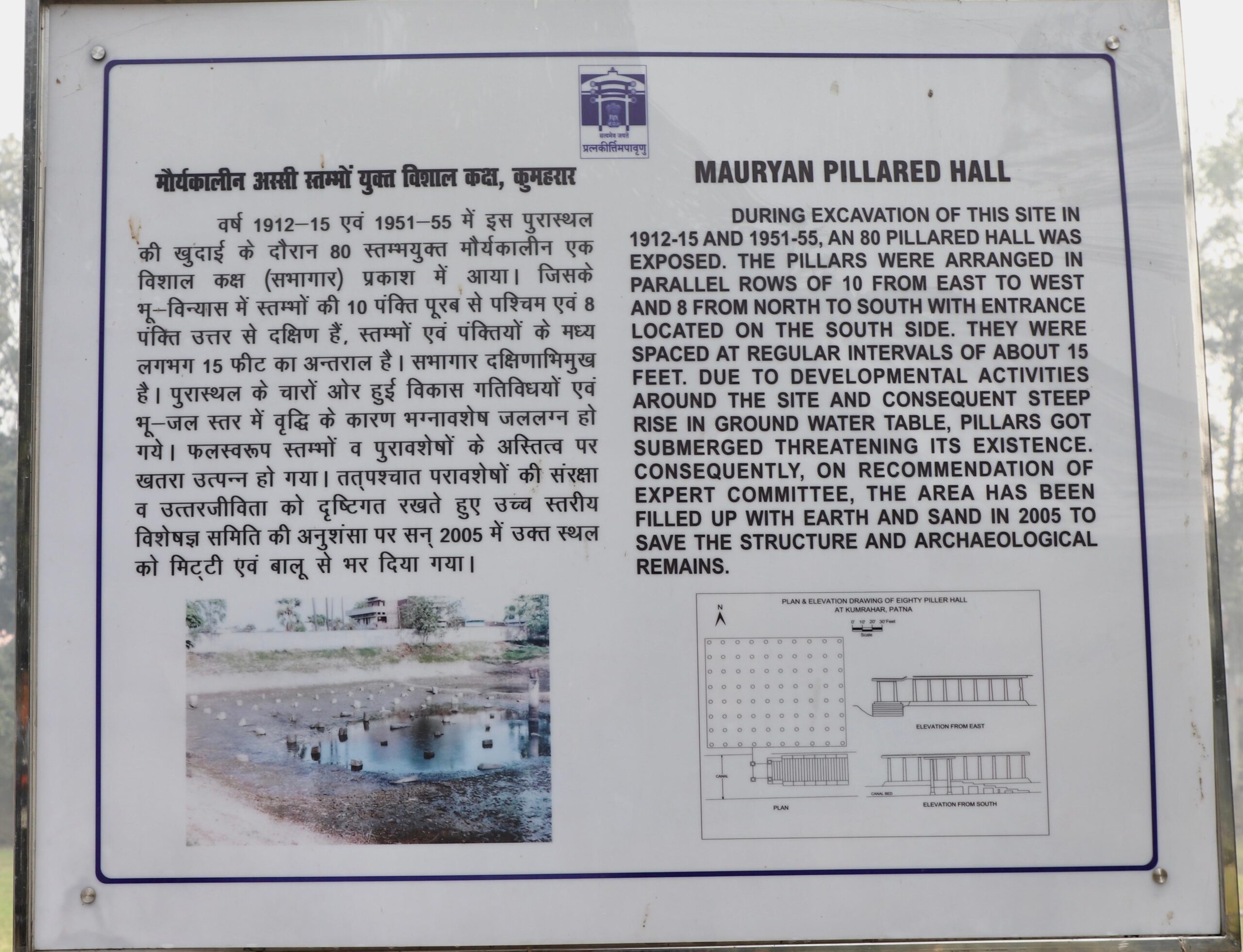
Archaeological excavations at Kumhrar, conducted in phases between 1912–15 and 1951–55, revealed a vast Mauryan-era assembly hall laid out in a grid—ten rows of pillars east to west and eight north to south, spaced roughly 15 feet apart and oriented southwards. Subsequent urban development and rising groundwater levels threatened the remains, prompting authorities in 2005, on expert advice, to re-cover parts of the site with soil and sand to ensure long-term preservation.
Historically, the modern city of Patna corresponds to ancient Pataliputra, which rose to prominence in the mid-5th century BCE when King Udayin shifted the Magadha capital from Rajagriha. Greek envoy Megasthenes, writing in Indica, described the city—then called Palibothra—as a vast, fortified settlement along the Ganges, while Chinese pilgrims Fa-Hien and Xuanzang later recorded its prosperity and subsequent decline. Excavations across Patna have corroborated these accounts, uncovering palisades, drains, fortifications and polished pillars associated with the Mauryan capital.
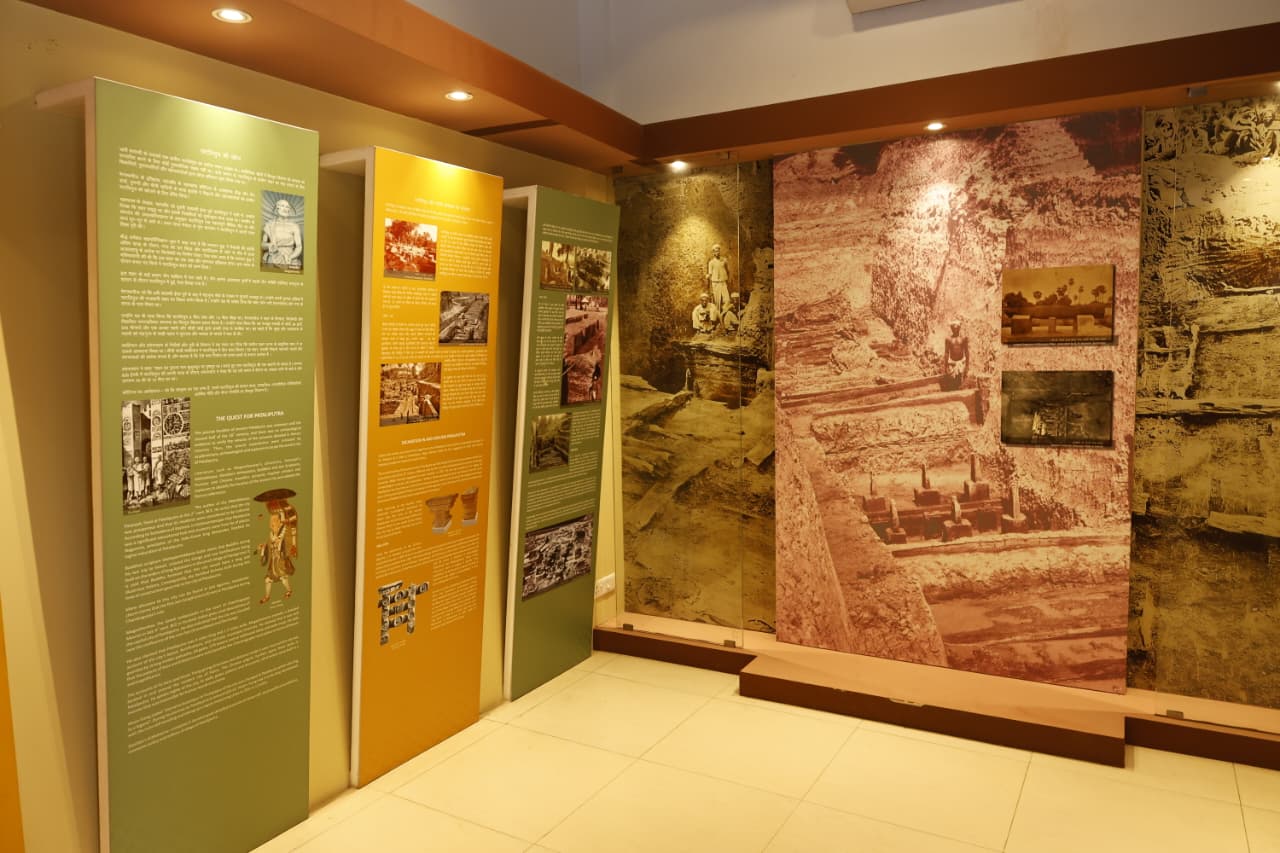
At present, only a few pillar remnants are visible at the 80-pillared hall site, while artefacts and interpretive material are displayed in the Pataliputra Gallery.