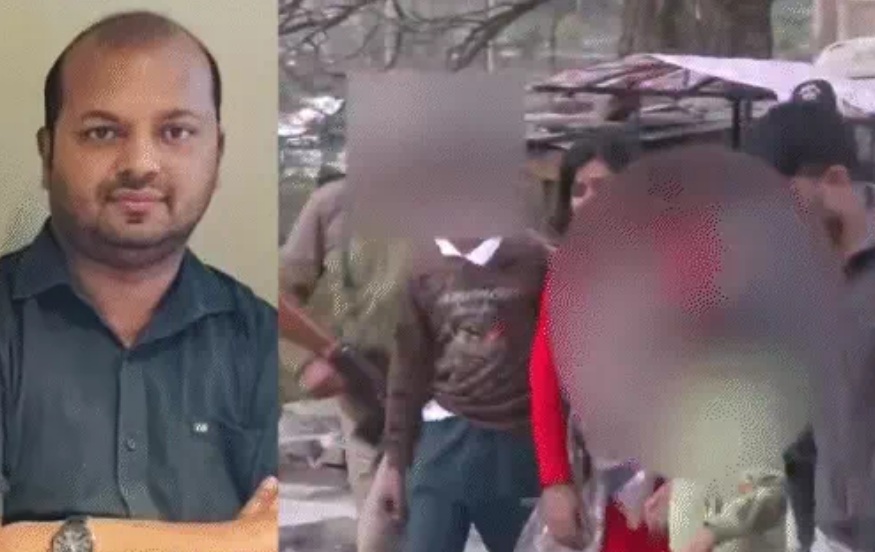
Sasaram: A year after the deadly Pahalgam terror attack that claimed 27 lives, the family of Intelligence Bureau (IB) officer Manish Ranjan continues to grapple with grief, isolation, and unfulfilled assurances of support. Ranjan, a native of Rohtas district in Bihar, was among those killed in the April 22, 2025 attack in Jammu and Kashmir.

“What should I do? I no longer feel like living. I have everything, but without him, life feels suffocating. My only hope is to see my son grow up and become something,” said his wife, reflecting the deep emotional toll of the tragedy. She added that not a day passes without remembering him, and his belongings remain preserved as memories she clings to.
According to family members, she has largely remained confined indoors over the past year and rarely steps out.

Attack and Aftermath
Manish Ranjan had been posted as a Section Officer in the IB’s Hyderabad office for the past two years. On April 27, 2025, he had travelled to Pahalgam’s Baisaran Valley with his wife and children for a vacation when armed terrorists, reportedly dressed in military uniforms, opened fire on tourists after identifying them individually.
As gunfire erupted, Ranjan asked his wife and children to run in the opposite direction, during which he got separated from them. He was later shot dead by the attackers. A video that surfaced after the incident showed his wife and children at the scene.
In the immediate aftermath, when Indian Army personnel reached the site, his wife initially mistook them for terrorists due to their similar attire. Eyewitness accounts suggest she pleaded with folded hands, fearing for her children’s safety, before being reassured by the soldiers that they were there to help.
Family’s Current Condition
Ranjan belonged to Aruhi village under Kargahar police station limits in Rohtas district. His ancestral house is located in the Gaurakshini locality of Sasaram, where only his elderly uncle and aunt currently reside.
Family members said his wife visited the village around six months ago but returned after seeing the condition of the house. She now lives in Prayagraj with her parents along with her children, who have been enrolled in school there.
His uncle, Alok Priyadarshi, said the family has not fully recovered from the loss. “His parents live alone in Jaladaha in West Bengal. Their health keeps fluctuating, and there is no one to take care of them. They have to depend on others even for hospital visits,” he said.
While some financial assistance has been received from the central government and through pension benefits, the family claims that several promises made by the Bihar government remain unfulfilled. “No leader, minister, or official has come back to check on the family after the initial announcements,” the uncle alleged.
Children and Future Aspirations
Ranjan is survived by his wife, a 12-year-old son, and an 8-year-old daughter. According to the family, both children aspire to follow in their father’s footsteps and join the Intelligence Bureau in the future.
“The son has grown older and does not ask many questions, but he feels his father’s absence deeply. The daughter’s questions about her father often leave the family emotional,” the uncle said.
The family owns property in their native village, but no one currently resides there due to the circumstances. Relatives expressed hope that the children may return in the future.
Employment and Pending Support
Family members said an offer for a teaching job was made by the West Bengal government, but Ranjan’s wife declined, expressing a desire to work in her husband’s department. She has reportedly completed an interview process related to this.
However, they reiterated that several support measures announced by the Bihar government have not materialised so far.
Background
Manish Ranjan was the eldest of three brothers. One of his brothers serves in the excise department in Jharkhand, while another is a food inspector in Ambikapur, Chhattisgarh. He got married in 2010.
As the first anniversary of the Pahalgam attack is observed, the story of Ranjan’s family highlights the long-term human cost of terrorism, extending far beyond the day of the incident.