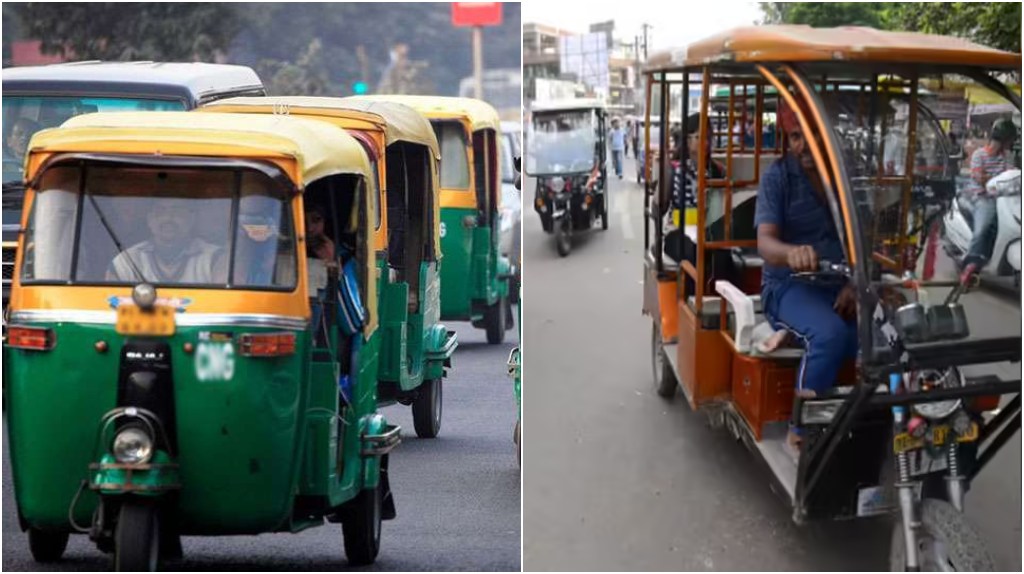
Patna, Fe: The Bihar government’s order making QR codes and police codes mandatory on auto-rickshaws and e-rickshaws from January 2026 has failed to translate into action on the ground, raising serious concerns over passenger safety and enforcement.

A ground reality check across several areas of Patna city has revealed widespread non-compliance, contradicting official claims that the move would help curb auto robbery gangs and improve urban transport security.
The directive was issued with the objective of introducing digital identification for all autos and e-rickshaws operating in the city. However, field verification showed that most vehicles continue to operate without QR codes or police codes.

During inspections in different localities, it was found that the majority of autos and e-rickshaws lacked both identifiers. Several drivers admitted they were unaware of what a QR code was or how the system worked. Many said they had received no information or instructions from transport officials or auto unions.
Munna Kumar, an auto driver, said he had never been issued a QR code and was learning about the requirement for the first time during the interaction. Another driver, Tuntun, said no notice or communication had reached them and that he had heard about QR codes for the first time.
As per the rules, every auto-rickshaw is required to display a police code prominently on the front and rear of the vehicle. Failure to comply can attract fines, vehicle seizure in case of repeated violations, and questioning of both the driver and the owner. Despite this, the ground check found that barring one or two vehicles, most autos did not display any police code.
The new policy also introduced a colour-coded zone system, dividing autos into yellow, blue, green, brown and white zones, each assigned specific routes and designated parking spaces. While this system exists on paper, most vehicles did not display colour codes, and drivers were largely unaware of which zone they belonged to or where they were permitted to operate.
Officials had projected the QR code system as a tool to enhance transparency and passenger safety. Scanning the code is meant to provide key details about the vehicle, driver and owner, allowing quick identification in case of emergencies or criminal incidents. However, the absence of QR codes on vehicles suggests the system has not been implemented at the ground level.
The stricter rules were announced amid rising incidents involving auto-related crimes. Authorities have stated that around 30,000 autos operate in the city, with driver and owner data already available online. The plan was to link this data with visible police codes and QR-based identification to improve tracking, deter criminal activity and assist in traffic management.
For now, the gap between policy and practice remains wide. With strict regulations on record but limited awareness and weak monitoring on the ground, the system risks becoming a mere formality. Unless the administration initiates focused awareness campaigns and ensures strict enforcement, the goal of improving passenger safety and curbing auto robbery gangs may remain confined to official documents.