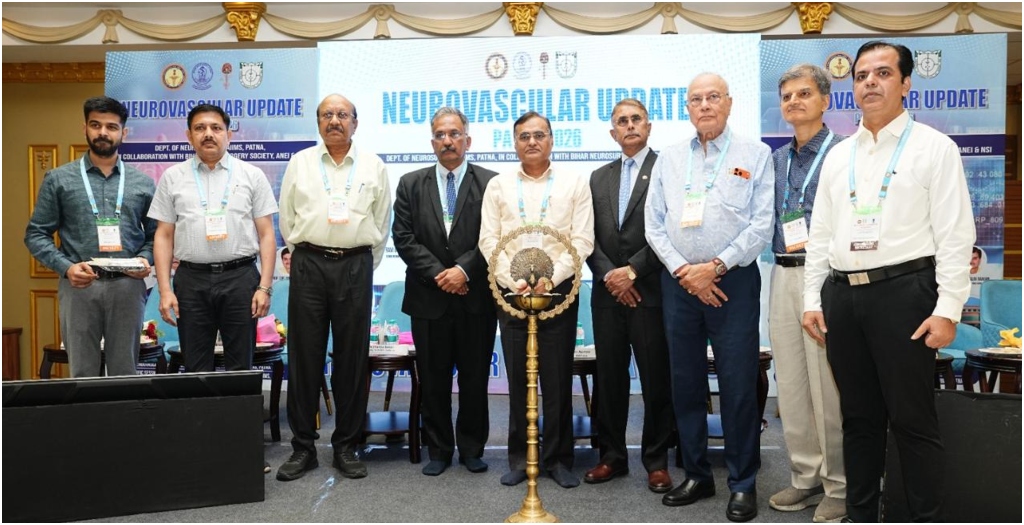
Patna: A major medical conference held in Patna AIIMS has raised serious concerns over the increasing number of stroke and brain haemorrhage cases in Bihar. The event, called Neurovascular Update Patna 2026, was organised on Saturday by the Department of Neurosurgery at All India Institute of Medical Sciences Patna along with the Bihar Neurosurgery Society and the Association of North Eastern Neuroscientists of India. Doctors and medical experts from across India gathered to discuss how modern technology can help save more lives.

The main focus of the conference was on using hybrid technology to provide complete treatment for patients suffering from stroke and brain haemorrhage. Experts explained that hybrid treatment means combining traditional brain surgery with minimally invasive procedures, known as endovascular treatment. They said this method can improve survival rates, especially if patients receive treatment within the first four hours after symptoms begin. This period is often called the “golden hour”, when quick medical help can prevent serious brain damage or death.
The conference was inaugurated by Prof. (Dr.) Brigadier Raju Agarwal, who said AIIMS Patna is committed to improving neurovascular care in Bihar and nearby regions. Several top doctors and specialists addressed the gathering, including Basant Kumar Misra, Sanjay Behari, Sarat Chandra and Manas Panigrahi. They said today’s neurovascular care needs doctors who are trained in both open surgery and catheter-based treatment.

Doctors at the event said Bihar is facing a huge health challenge. Around one lakh people seek treatment every year for stroke and brain haemorrhage in the state. However, experts believe that nearly ten lakh more cases remain untreated or undiagnosed due to lack of awareness and limited access to proper healthcare facilities. They said the government should improve healthcare infrastructure, launch awareness campaigns and support more training programmes for doctors.
Dr. Vikas Chandra Jha, who was also the organising secretary of the conference, said comprehensive neurovascular treatment is available in only around 50 centres across India and just one or two centres in Bihar. He said the number of such centres needs to increase rapidly to meet the growing demand. He also revealed that only 50 to 60 neurosurgeons in the country are trained in both microsurgical and endovascular methods.
More than 300 neuroscientists from across India attended the conference. Other experts including Dr. Sumit Sinha, Dr Arun Agarwal, Dr. Samrendra Kumar Singh, Dr. Rajeev Ranjan, Dr Rohit Kumar, Dr Sanjay Kumar, Dr Gunjan Kumar and Dr Vikas Gupta also shared their views and experiences. The conference ended with a strong message that Bihar urgently needs better facilities, more trained doctors and faster treatment systems to save patients from life-threatening brain diseases.