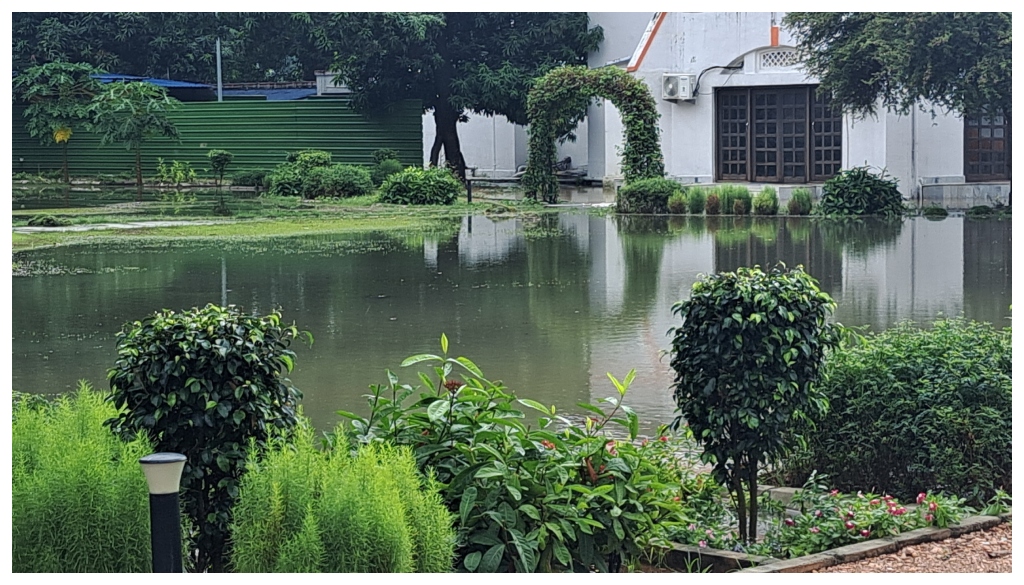


Patna: Patna witnessed city-wide chaos on Monday as relentless rainfall over 12 hours submerged large parts of Bihar’s capital, including high-security government buildings and the official residence of Deputy Chief Minister Vijay Sinha. The deluge laid bare the fragile civic infrastructure, raising serious questions about the city’s preparedness for monsoon-induced emergencies.
Rain began around 11 pm on Sunday and continued without pause until 11 am on Monday, turning vital administrative and residential zones into virtual lakes. Waterlogged roads, flooded homes, and submerged schools were reported across Rajvanshi Nagar, the Secretariat, Vidhan Sabha, and even the Deputy CM’s official residence. Municipal workers struggled to pump out water, relying on heavy machinery including JCBs to create makeshift drainage channels.
 A municipal official described the situation as “natural during heavy rains”, sparking public outrage online. In the VVIP area, two to three feet of water had accumulated. At the Deputy CM’s residence, water gushed in through the main gate, prompting an urgent intervention using earth-moving equipment to divert water.
The Secretariat, where key administrative decisions are made, was heavily waterlogged, making pedestrian and vehicular access nearly impossible. Legislative buildings, including the Vidhan Sabha and Vidhan Parishad, were similarly flooded, with several government employees forced to wade through knee-deep water to reach their offices.
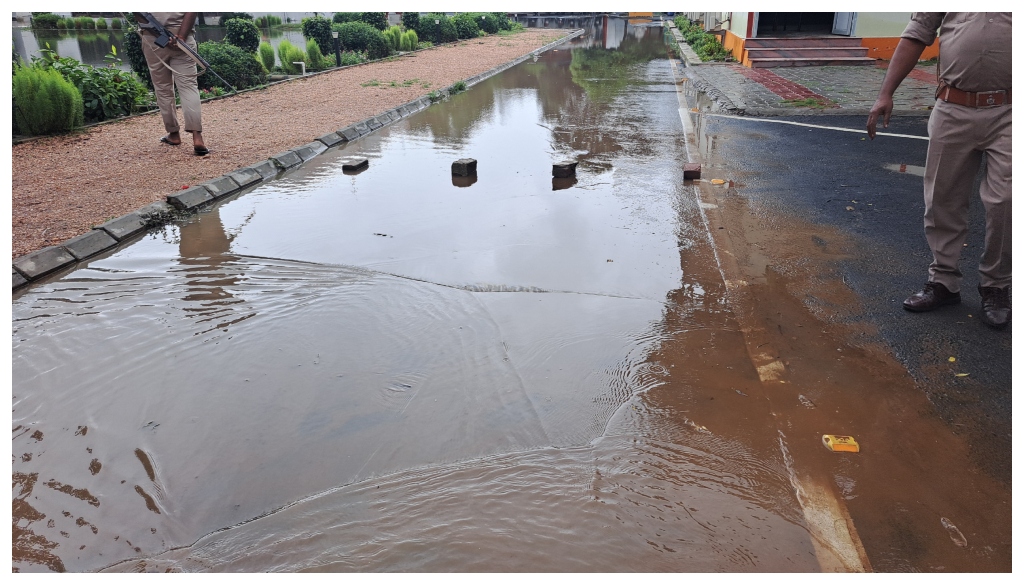 Patna’s public schools were not spared either. In Rajvanshi Nagar, school campuses were under three to four feet of water, making it difficult for children to exit safely after school hours. The roads surrounding these institutions had essentially turned into canals, with vehicles struggling to pass.
Areas like Masaurhi, Station Road, Gandhi Maidan, and Rahmatganj reported similar distress, where water entered homes, shops, and public facilities. While urban dwellers faced misery, the rainfall brought temporary relief to farmers in rural Patna, where only 40 percent of the expected monsoon had arrived until now. For them, the downpour was a much-needed boon for their kharif crops.