Patna: As Muharram approaches, security has been significantly tightened across Bihar with more than 13,700 Tazia processions set to be held under strict police and administrative surveillance. Authorities have announced sweeping measures, including a total ban on DJs, controversial slogans, and provocative tableaux.

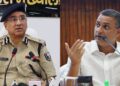
Addressing a press conference at the Police Headquarters on Friday, Additional Director General (Law and Order) Pankaj Darad said that 13,719 licensed Muharram processions will be permitted, and any procession without valid authorisation will not be allowed to proceed. Every procession will be monitored by both police personnel and magistrates, with videography mandated for documentation and evidence.
“Based on incidents from previous years—such as forced donation drives, provocative chants, or processions passing through sensitive religious areas—we’re taking extra precautions this time,” he said. Typically, around two dozen isolated incidents have been reported during Muharram in past years.

To mitigate risks, the police have identified sensitive and mixed-population zones and will deploy additional forces in these areas. Statewide, the deployment will include 50 companies of Bihar Special Police, seven companies of central forces, 3,000 trainee constables, 1,230 trainee sub-inspectors, and 5,100 home guards.
Police officers have been instructed to keep their official phones switched on at all times and respond promptly to any call. District Magistrates, Superintendents of Police, and Sub-Divisional Police Officers are expected to reach any site of disturbance immediately, should an incident occur during the observance.
Real-time monitoring and digital surveillance
A 24-hour control room will operate at both district and state headquarters from July 5 to 7, the main days of the procession. Districts are required to send situation reports every two hours. Quick Response Teams (QRTs) will be on standby to tackle any emergency.
Online platforms will also come under scrutiny. “We are monitoring internet media for provocative or misleading content,” he said, adding that DSP-rank officers will work in three shifts to oversee social media monitoring and report directly to the ADG through the respective SPs.
Officials are also instructed to physically verify procession routes and conduct peace committee meetings in areas with significant religious sensitivities. Preventive actions, including bond filings against potential troublemakers, are already underway.