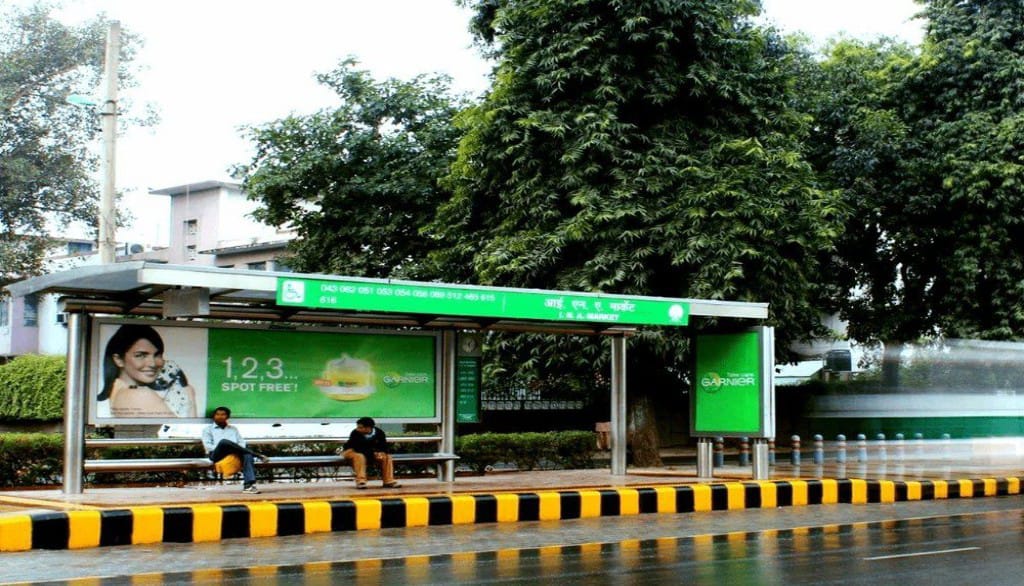
Patna: Patna’s much-touted smart bus stops, built at a cost of several crores to strengthen the capital’s public transport system, are now in a state of severe disrepair. Facilities designed to offer comfort and safety to commuters have instead been overwhelmed by illegal shops, piles of garbage and makeshift clotheslines, turning the project into an emblem of civic apathy.

What was envisioned as a modern transit upgrade has become a patchwork of broken shelters, missing route boards, defunct lights and abandoned structures. As buses refuse to halt at these designated stops, locals say the infrastructure has reduced to “mere decoration”.
Encroachment Everywhere — But Not a Bus in Sight
Across the city, buses rarely stop at the designated shelters. This has triggered a chain reaction:

-
Shops have sprung up inside shelters,
-
Spaces have turned into waste-dumping corners,
-
Some locations now serve as public clothes-drying spots,
-
And several sites have become gathering points for anti-social elements.
Residents say the absence of enforcement has allowed bus stops to be swallowed by daily encroachments.
The situation is especially dire at Chidiya Ghar, where the route display has shattered and the shelter’s roof is peeling off. At Dak Bungalow Chauraha, waste piles sit next to makeshift shops, leaving no space for commuters. Income Tax Golambar bus stops have been fully taken over by vendors, and no bus routes are even displayed.
Near Hotel Chanakya, the “smart” stop has effectively transformed into a stall for brooms and clay pots. On Veerchand Patel Path, clothes hang openly across the bus stand, drying in the sun.
Broken glass, filthy seats, dark shelters and missing boards define stops at Rajvanshi Nagar, R-Block, Gandhi Maidan, Ashok Rajpath, Kurji, Atal Path, GPO Golambar, Tara Mandal, High Court and the Bihar Intermediate Council.
A Failed Plan Under the Smart City Mission
Under the Patna Smart City Mission, ten smart bus stops were constructed and listed formally with the Transport Department for integration into bus routes. But no decision on official stoppages was ever finalised, drying up the intended purpose of the infrastructure.
Without buses stopping, the facilities quickly fell prey to misuse.
Commuters Speak: ‘Hours of Waiting, But No Bus Stops’
Vijay Singh, a resident of Kankarbagh, says:
“Stand at the bus stop, and no bus stops. Move a few metres away, and the driver halts there. After waiting for hours in the sun, we’re forced to take an auto.”
Rajesh Kumar from AG Colony adds:
“Encroachments around bus stops are so dense you can’t even reach the shelter. Drivers don’t bother stopping.”
Another commuter, Ankit Kumar, sums up the irony:
“If buses started stopping at bus stops, passengers would use them. Right now both sides do as they please.”
Locals like Ravi Jha argue that the problem is partly behavioural:
“If passengers ask drivers to stop anywhere, they will. Public awareness is also needed.”
A Costly Structure, Left to Rot
With broken displays, unlit shelters, shattered glass and encroached spaces, Patna’s smart bus stops — once meant to modernise mobility — have become a symbol of squandered public money.
Residents now demand regular cleaning, monitoring and enforcement so the infrastructure can be restored to its intended use.