Patna: Bihar’s new smart drainage system in Patna has been praised for easing waterlogging during this year’s monsoon, with the state disaster management authority describing it as a model for urban flood control.

At a review meeting of the Bihar State Disaster Management Authority (BSDMA), vice-president Dr Udaykant said the Integrated Control and Command Centre (ICCC) played a crucial role in ensuring that rainwater was drained in record time despite hours of continuous rainfall.
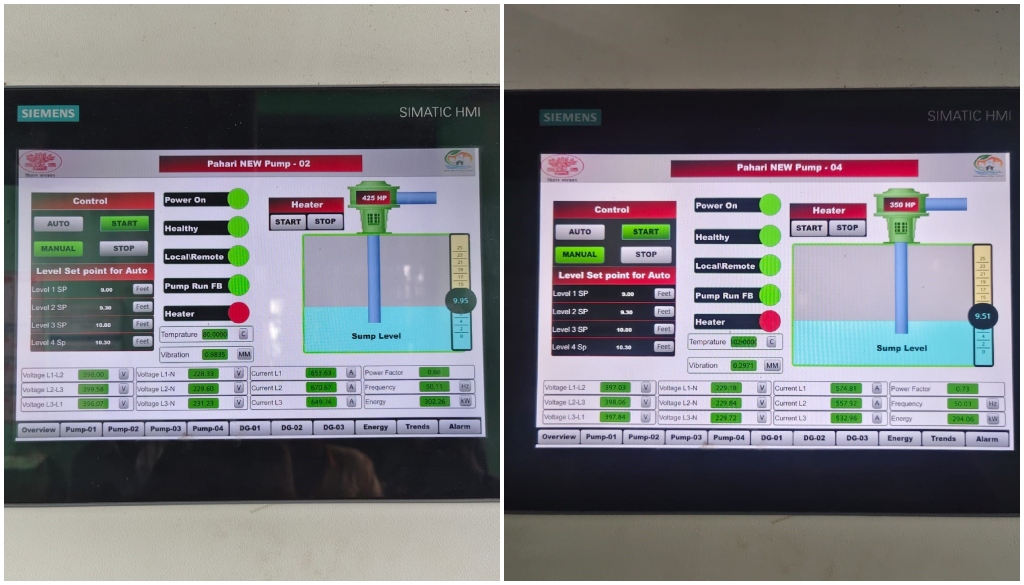
The system – inaugurated in May by chief minister Nitish Kumar under the Patna Smart City project – links the city’s sump houses (pumping stations) to the ICCC using sensor-based technology. Officials said this allowed real-time monitoring of drainage stations, enabling quicker responses to flooding.

During heavy rainfall in July, teams from the Urban Development and Housing Department, led by secretary Abhay Kumar Singh, coordinated drainage operations across Patna. Engineers were deployed in affected areas, while special campaigns for fogging and anti-larval spraying were ordered in neighbourhoods that had experienced waterlogging, including Sonalika Nagar and parts of wards 2, 32, 44, 45, 46, 47 and 56.
Officials reported that 19 quick response teams worked around the clock, supported by 56 permanent drainage pumping stations and 35 temporary stations set up in flood-prone areas. In total, 364 pumps – 265 electric and 99 diesel – were deployed across the city, with temporary pumping stations established in locations such as Danapur, Khanpur and along the Digha canal.
Water was reportedly cleared within hours in sensitive areas including the state assembly complex, Rajendra Nagar, Mithapur, Patna City, Sabzibagh, Digha, Gandhi Maidan and the airport. A municipal helpline fielded waterlogging complaints from across the city, with additional trolley-mounted pumps deployed where required.
The Urban Development and Housing Department said the coordinated monitoring of sump houses and rapid mobilisation of equipment meant residents faced significantly less disruption compared with previous years.