Patna: Bihar’s intense summer heat has begun putting severe pressure on the state’s electricity infrastructure, prompting the power department to adopt special cooling measures for transformers in Patna and surrounding areas.

As temperatures continue to rise across the state, electricity consumption has also increased significantly due to the growing use of air conditioners, coolers and other electrical appliances. Officials said the rising load has increased the risk of transformer overheating and technical failures.
Transformers Facing High Thermal Stress

According to officials, temperatures inside several transformers at substations in areas such as Phulwarisharif and Sampatchak have been recorded between 68 and 70 degrees Celsius during morning hours itself.
Power department experts said transformers become vulnerable once temperatures cross 70 degrees Celsius, affecting operational efficiency and increasing the possibility of fire or explosion.
The department has reported a rise in incidents such as transformer failures, jumper damage and other technical faults amid the increasing load on the power network.
Water Dripping Systems and Fans Installed
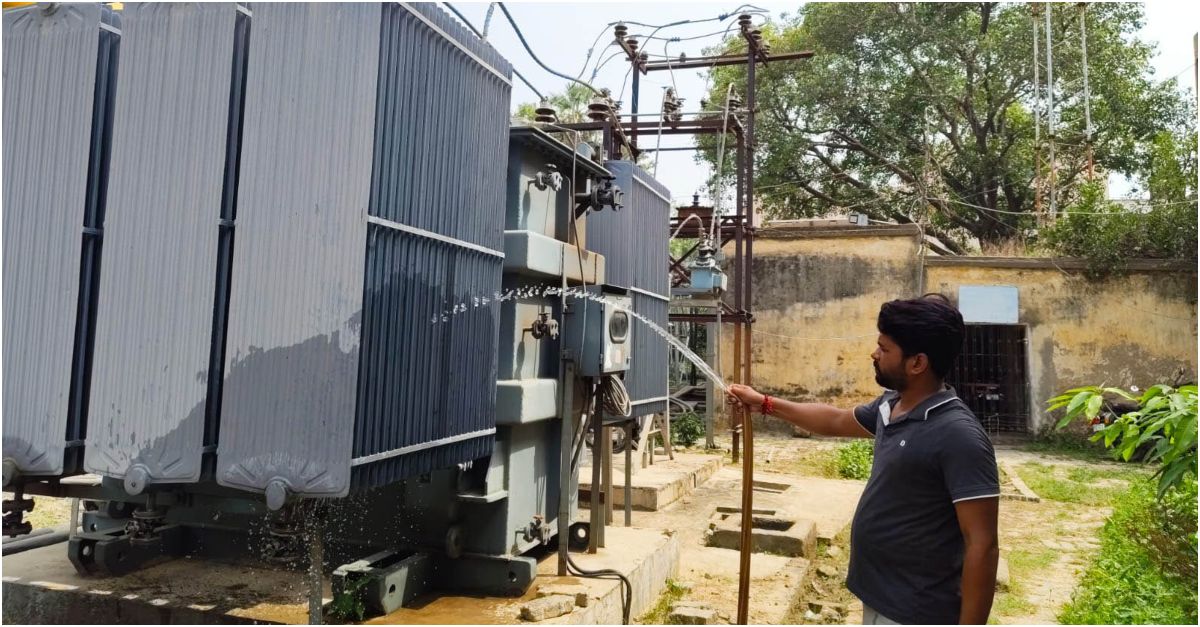
To address the situation, cooling arrangements have been introduced at multiple substations. Large industrial fans have been installed around transformers, while water dripping systems are being used to reduce heat levels.
At some locations, transformers are being continuously sprayed with water to maintain safe operating temperatures.
Officials said transformer temperatures are being checked every 10 minutes to ensure any abnormal rise is immediately addressed.
The Junior Engineer at Sampatchak substation said manual water dripping systems have been installed on two 10 MVA transformers and one 5 MVA transformer to maintain stable temperatures.
Maintenance Work Intensified
Alongside cooling measures, the electricity department has accelerated maintenance activities across the city.
Teams are replacing damaged equipment, changing transformer oil, improving earthing systems and conducting technical inspections to reduce the risk of outages during peak summer demand.
Cleanliness drives are also being carried out around transformers and substations to improve operational safety.
Officials said maintaining uninterrupted electricity supply during extreme heat remains a major challenge, but continuous monitoring and preventive measures are helping the system function smoothly despite rising demand.