Patna: Patna is set for a major urban overhaul, with the municipal corporation approving a Rs 3,043.22 crore budget for 2026–27 that includes a waste-to-energy plant and a series of infrastructure and civic upgrades.

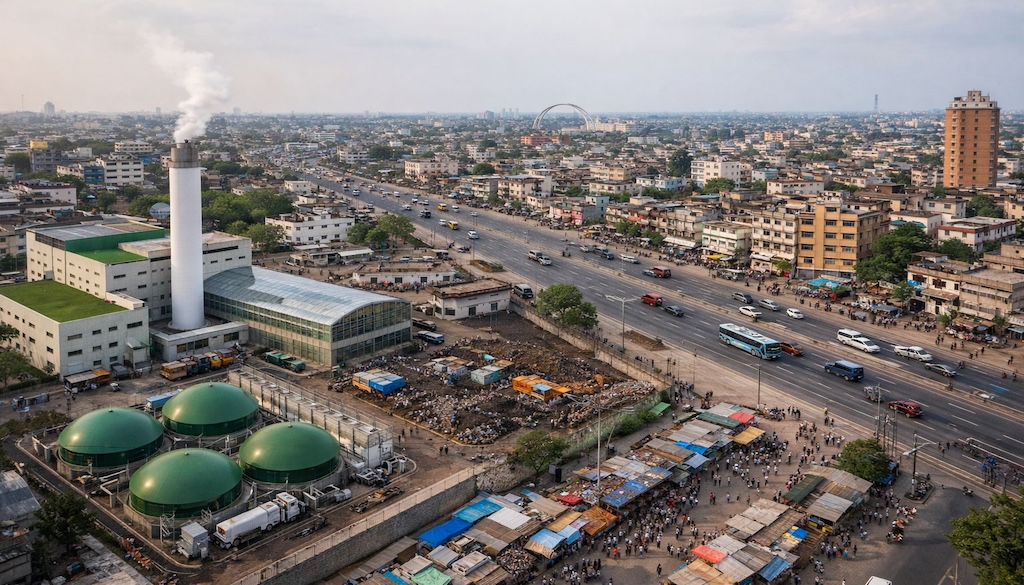
At the centre of the plan is an integrated solid waste management system aimed at modernising waste handling across the city. A 15MW waste-to-energy plant will be set up at Ramachak Bairiya, with officials targeting completion by the end of 2028.
The project, estimated to cost around Rs 513 crore, will include a bio-CNG unit with a capacity of 100 tonnes per day, a composting plant capable of processing 700 tonnes daily, and a material recovery facility.

Authorities said the system would scientifically manage about 1,600 tonnes of waste generated each day from Patna and 12 surrounding urban local bodies, including Danapur, Khagaul and Bihta.
The proposals were approved during a municipal council meeting chaired by mayor Sita Sahu. The new budget marks an increase of Rs 189.22 crore from the current financial year and projects a surplus of Rs 456.63 crore.
Among other initiatives, the civic body plans to develop 31 new vending zones at an estimated cost of over Rs 200 crore, to be funded partly through municipal bonds. Redevelopment of the New Market near Patna Junction into a multi-level shopping complex is also under consideration.
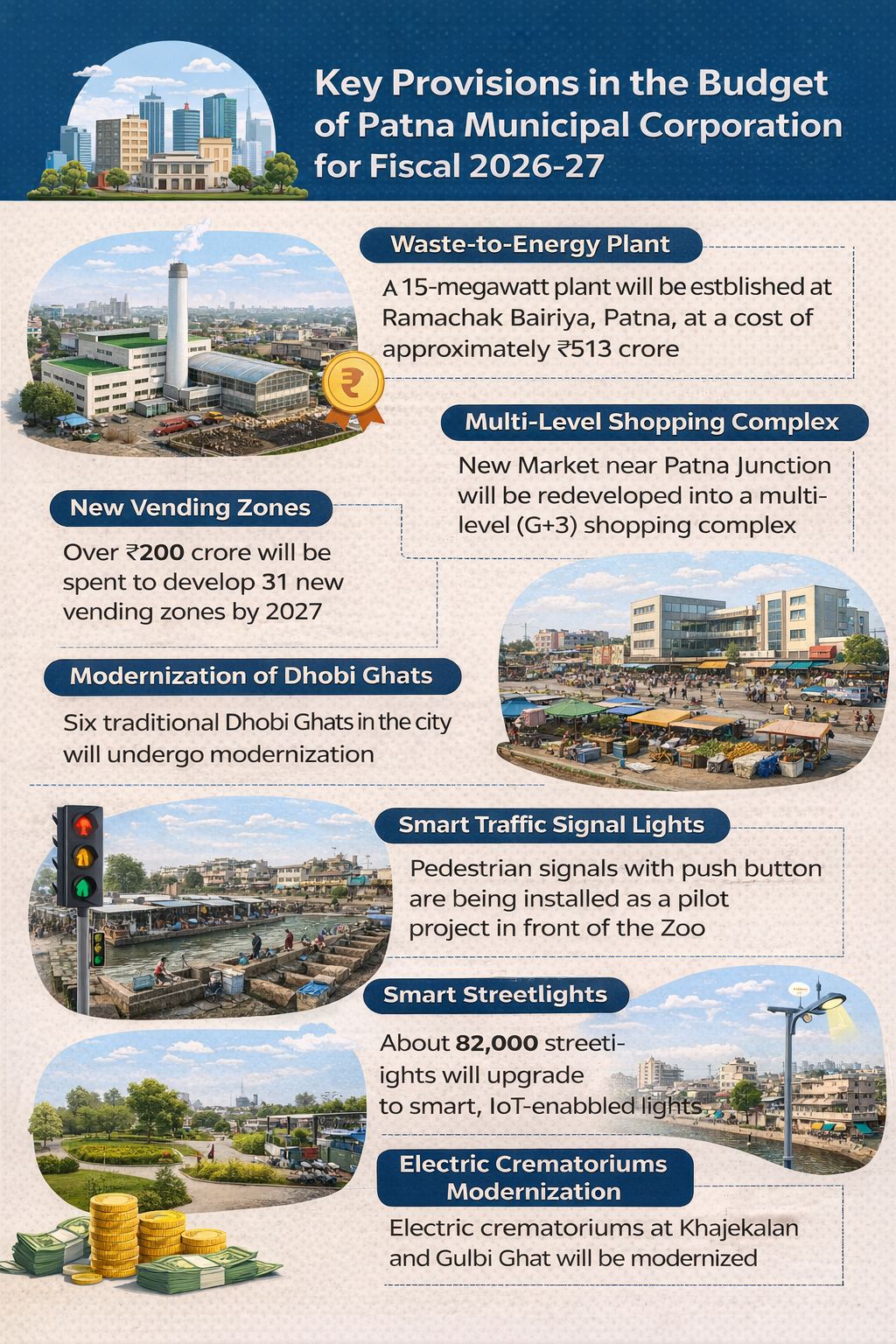
Efforts are under way to improve pedestrian safety, including the installation of smart signal systems near the zoo that allow pedestrians to stop traffic at intervals. The project is being piloted before wider implementation.
To tackle waste disposal, six modern transfer stations are planned across the city at a cost of around Rs 53 crore, with capacities ranging from 150 to 500 tonnes per day.
The corporation is also rolling out an IoT-enabled street lighting system, upgrading around 82,000 streetlights to improve energy efficiency and monitoring.
Other measures include the development of green spaces, open-air gyms in 26 parks, and beautification projects such as new entry gates and improved public spaces.
Officials said initiatives would also focus on sanitation, flood management, rainwater harvesting and digitisation of civic services, including faster issuance of birth and death certificates.
Upgrades are planned for crematoriums and public facilities, alongside the expansion of schemes such as ‘Pink Toilets’ and modernisation of dhobi ghats.
The proposals form part of a broader effort to improve urban infrastructure, waste management and quality of life in the state capital.