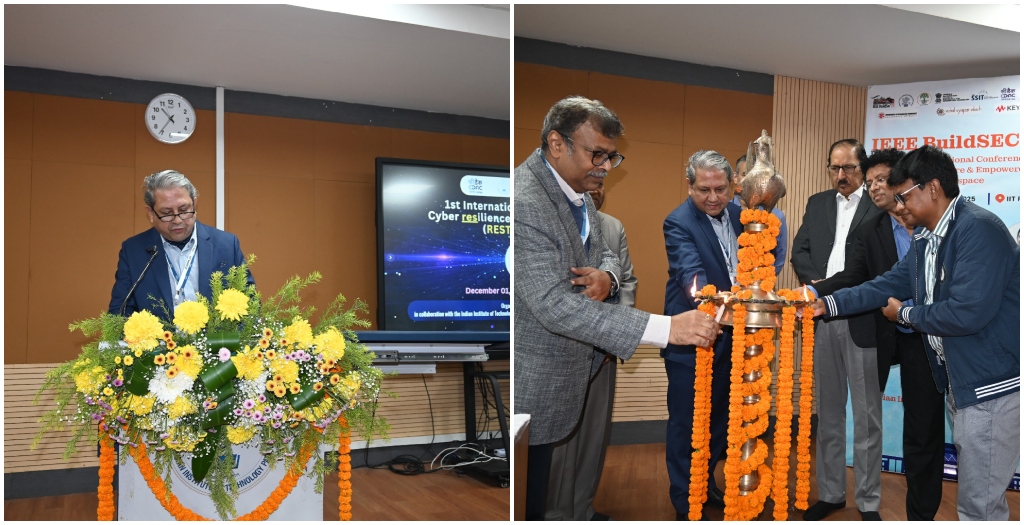
Patna: India took a major step in strengthening its cybersecurity preparedness as leading experts from India and around the world gathered in Patna for the country’s first international workshop exclusively focused on ransomware resilience. The event, named RESTORE-2025, was held on December 1 2025 at IIT Patna and jointly organised by C-DAC Patna, IIT Patna and the University of New South Wales (UNSW) Sydney. It was part of the IEEE BuildSEC’25 International Conference and centred around the theme “Ransomware and Its Counterstrategies”. The workshop aimed to understand emerging cyberattack trends and explore ways to protect India’s digital infrastructure more efficiently.

During the inaugural session, speakers highlighted the growing need for joint efforts to counter increasingly advanced cyber threats. Shri Abhinav Dixit, Centre Head at C-DAC Patna, said that fighting ransomware requires a collective approach from researchers, government, and the industry. He explained that RESTORE-2025 brings together real-world experience and research expertise in line with India’s national digital security priorities. Shri Aditya Kumar Sinha, Executive Director at C-DAC Mumbai, appreciated C-DAC Patna’s progress in building indigenous cyber defence technologies such as GHOST, Ganga Laksham and EYES. He noted that events like this help India predict cyber threats before they escalate into major crises.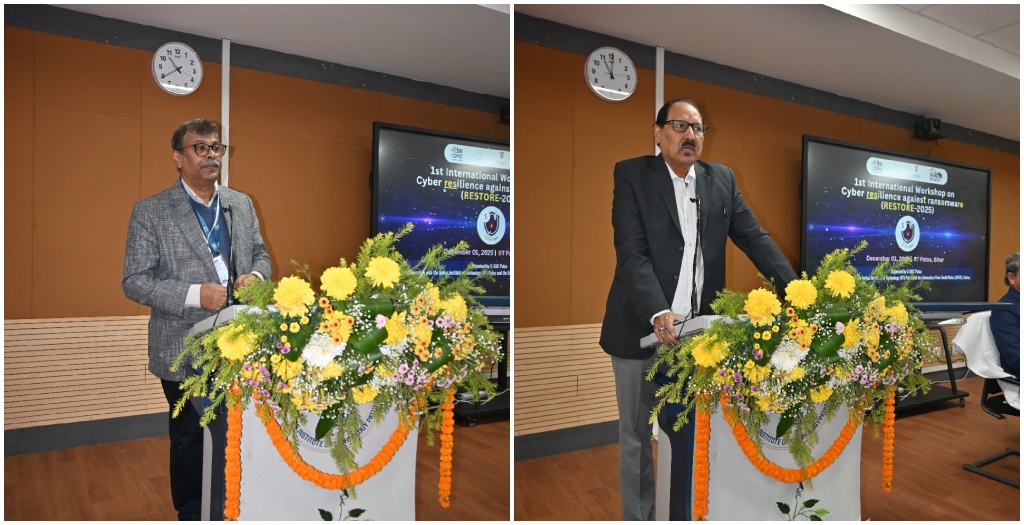
Senior national security and defence experts also shared key insights. Commodore S. Vombatkere (Retd.) stressed that the idea of cybersecurity is evolving beyond simply preventing attacks — resilience now lies in keeping systems functional and recovering rapidly even after an attempted breach. Dr P. K. Saxena, former DRDO senior scientist, said ransomware has become a high-priority concern in India’s security framework and emphasised the contributions of IIT Patna and C-DAC Patna in strengthening India’s technical capabilities in cyber resilience. Chief Guest and IIT Patna Director, Prof. T. N. Singh, highlighted that technological safeguards alone are not enough, stressing the need for cyber ethics and awareness among citizens to build confidence and reduce fear of online fraud.

The technical sessions showcased deep research and practical solutions. A keynote address examined India’s cyber vulnerabilities and defence policies, followed by demonstrations of REDS by Dr Reshmi T. R. and the indigenous cybersecurity platform EYES developed at C-DAC Patna. Researchers from IIIT Hyderabad, IISc Bangalore, IIT Kharagpur, IIT BHU and SETS Chennai presented findings on advanced machine-learning attacks, side-channel vulnerabilities and new detection mechanisms that can curb ransomware damage. A high-level panel discussion featuring senior representatives from the Economic Offences Unit, CERT-In, the Forensic Science Laboratory and NIC Bihar discussed critical operational challenges and policy needs for safeguarding government systems and national infrastructure.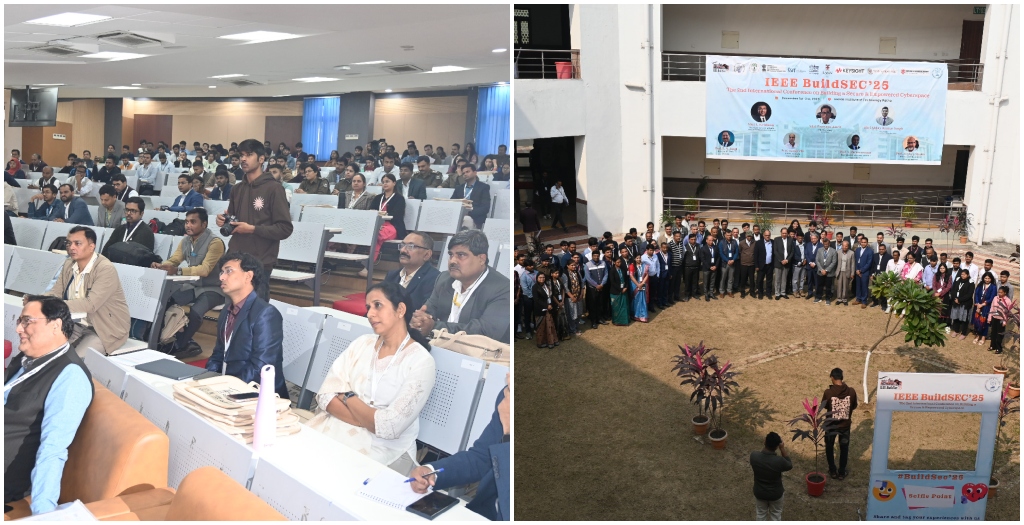
The workshop saw wide participation from academia, defence, and industry. Conveners — Prof. Preetam Kumar, Prof. Jimson Mathew and Dr. Raju Halder — along with Registrar-cum-Dean Prof. A. K. Thakur and faculty members of IIT Patna attended the event. In his closing remarks, Cdr. Vivek Kumar Yadav (Retd.) from C-DAC Patna emphasised that India must continue to encourage indigenous innovation, strengthen institutional collaboration and adopt a unified approach to combat ransomware — one of the fastest-spreading cyber threats worldwide.
RESTORE-2025 concluded on a strong and hopeful note, reinforcing that defending India’s digital ecosystem cannot depend on isolated efforts. Experts agreed that a secure cyber future for the country will require teamwork, continuous research, public awareness, policy support and rapid development of cyber defence tools made in India.