
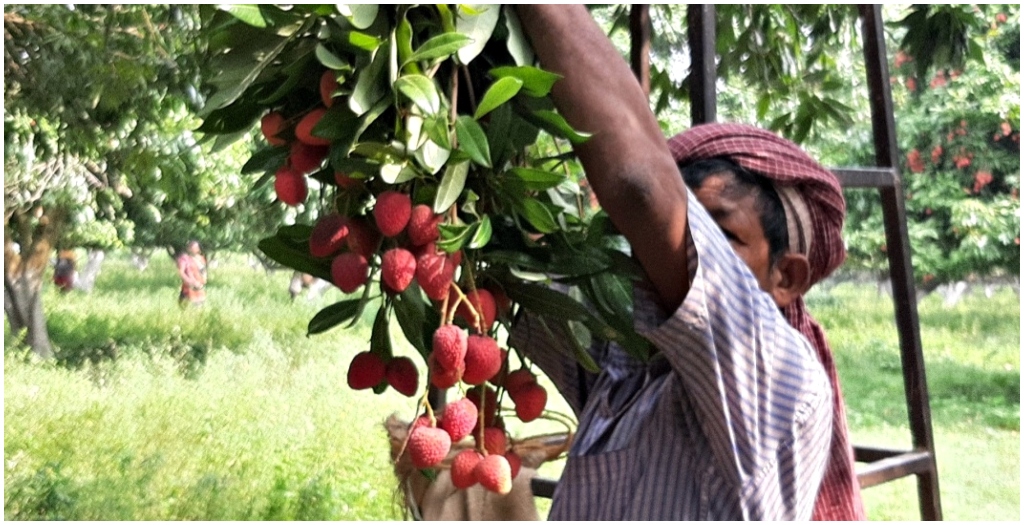
Muzaffarpur: The famous Shahi Litchi crop of Bihar is facing a major crisis this year after a dangerous outbreak of stink bugs damaged orchards spread across nearly 200 acres in Muzaffarpur district. Farmers in the Minapur region say the insects, locally known as Gandhi Keet, attacked trees during the flowering season and caused flowers and young fruits to fall before they could mature. The sudden spread of the pest has left hundreds of growers worried about severe financial losses, as many families depend entirely on the annual litchi harvest for their income.

The Shahi Litchi of Muzaffarpur is known across India and abroad for its sweetness, juicy pulp and unique aroma. Every year, the fruit attracts strong demand in domestic and export markets. This season, however, many orchards that were expected to produce heavy yields now appear damaged and nearly barren. Farmers say trees that were once full of flowers are now carrying dried panicles and fallen fruits. Many growers have spent thousands of rupees on pesticides, but they claim the infestation continues to spread rapidly from one orchard to another.
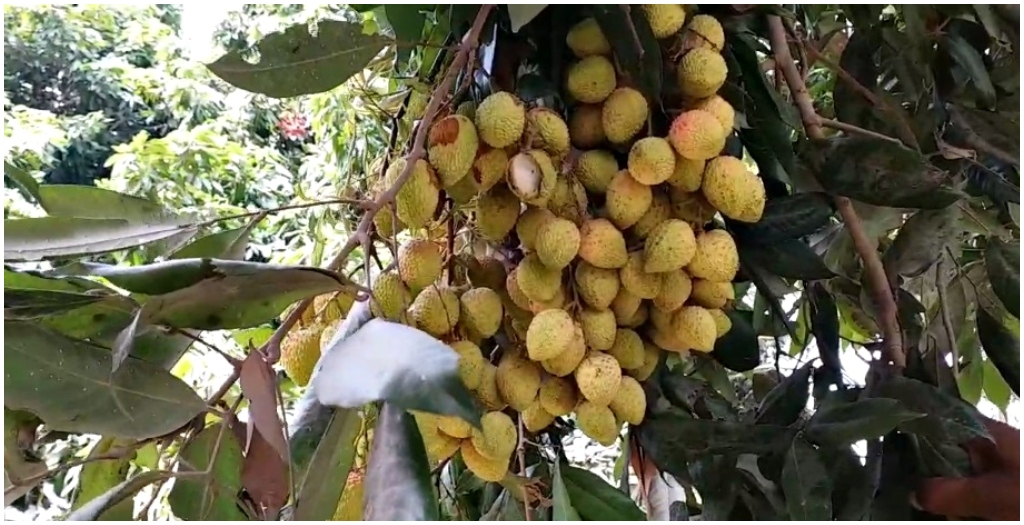

A scientific team from the National Research Centre on Litchi inspected several affected orchards after reports of widespread crop destruction emerged from villages in Minapur. According to principal scientist Dr Binod Kumar, the damage in some orchards has reached as high as 90%. Scientists explained that stink bugs attack crops during the flowering and early fruit-development stages by sucking sap from flowers and tender fruits. This weakens the crop and causes premature fruit drop. Researchers also warned that the insects are migratory in nature and can easily move from treated orchards to nearby untreated farms, making control efforts more difficult.
Farmers say this year’s losses are among the worst they have seen in recent times. Sudhir Kumar, a farmer from Minapur, said the entire livelihood of his family depends on litchi farming and the pest attack has shattered their hopes for the season. Another grower, Sudhakar Prasad Singh, said continuous pesticide spraying has failed to stop the infestation. Many orchard owners now fear they may not even recover the money invested in cultivation. Some growers said the insects hide beneath the fruit, making them difficult to detect and kill.
Experts believe changing weather conditions have made the situation even worse. Continuous rainfall, strong winds, hailstorms and cooler temperatures during March and April affected flowering and fruit development across several orchards. Dr Vikas Das, director of the National Research Centre on Litchi, said the crop requires warmer temperatures for proper growth, but repeated rain and cool winds kept temperatures unusually low this season. Scientists say this has affected the size, colour and sweetness of the fruits while also increasing humidity levels that help pests spread faster.
Researchers have advised farmers to maintain proper irrigation and regularly monitor orchards for signs of infestation. According to experts, light irrigation every three to four days can help protect developing fruits during periods of fluctuating weather. Scientists also recommended combining chemical sprays with manual pest-control methods to reduce the spread of stink bugs. With harvesting season approaching, farmers across Muzaffarpur remain anxious that this year’s Shahi Litchi production could fall sharply, dealing a major blow to one of Bihar’s most famous agricultural products.