By Aditi

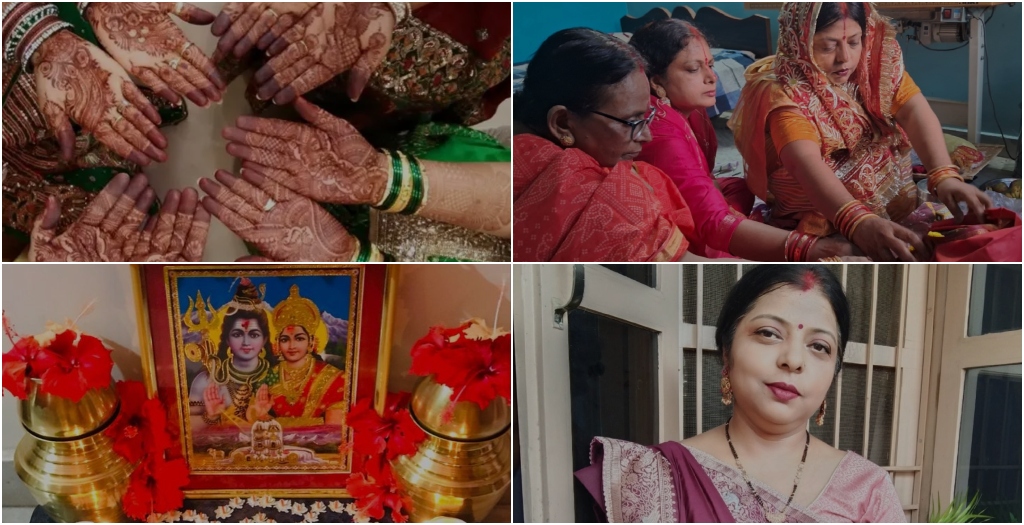
Patna: The festival of Teej is celebrated with devotion and enthusiasm in homes across Bihar. Women observe day-long fasts, pray to Lord Shiva and Goddess Parvati, and dress in festive attire. For many families, the occasion is not only about religious rituals but also about togetherness and cultural pride.
In Patna, Muzaffarpur and several other towns, married women go to temples in the evening to offer prayers for their husbands’ well-being. The fast, often observed without food or water, is broken after night-long worship and songs. Young girls join their mothers and grandmothers, helping with puja preparations and learning the meaning of the rituals.

Pushpalata, from Patna, shares her feelings about the festival. “Teej is not only about fasting. It is about women coming together, singing, applying mehendi, and remembering what our mothers and grandmothers taught us,” she says. “Even though we don’t eat the whole day, there is joy in the heart. Teej connects us with our roots.”
Markets across Bihar buzz with activity in the days leading up to the festival. Shops selling sarees, tusak and silk fabrics, glass bangles, bindis, mehendi cones, and sweets like ghewar and kheer report brisk sales. In towns such as Ara, Hajipur and Gaya, women and young girls are seen bargaining in decorated markets. Sweet shops stay open late into the night to meet the demand.
For many families, Teej is also the time when daughters return to their maternal homes. Relatives gather to celebrate together, share meals after the fast, and exchange gifts. Swings decorated with flowers are set up in courtyards, where women sing folk songs and celebrate the monsoon season. The sound of dholak and clapping hands echoes late into the night in several neighbourhoods.
Vinita from Muzaffarpur says the festival gives her a chance to reconnect with her sisters. “It is not just about devotion. We laugh, sing, and spend time together. This is what makes Teej so special,” she says. Rekha Kumari, a teacher from Patna, adds, “Every year, we come together no matter how far we live. Teej is a reminder of our bonds and our culture.”
The celebrations show how Teej continues to thrive in Bihar as both a religious and cultural occasion. While the rituals remain rooted in devotion to Lord Shiva and Goddess Parvati, the joy of family gatherings and the energy of the markets make it a festival that unites generations.