Patna: Protests have erupted across India over new regulations introduced by the University Grants Commission (UGC) to address caste-based discrimination in higher education, prompting a senior bureaucrat to resign in protest and drawing the intervention of the Supreme Court.

The rules, formally titled the Promotion of Equity in Higher Education Institutions Regulations, 2026, came into force on January 13. While the UGC says the framework is designed to protect students from Scheduled Castes (SC), Scheduled Tribes (ST) and Other Backward Classes (OBC) from discrimination, opponents argue that it unfairly targets students from the general category and grants sweeping powers to monitoring bodies.
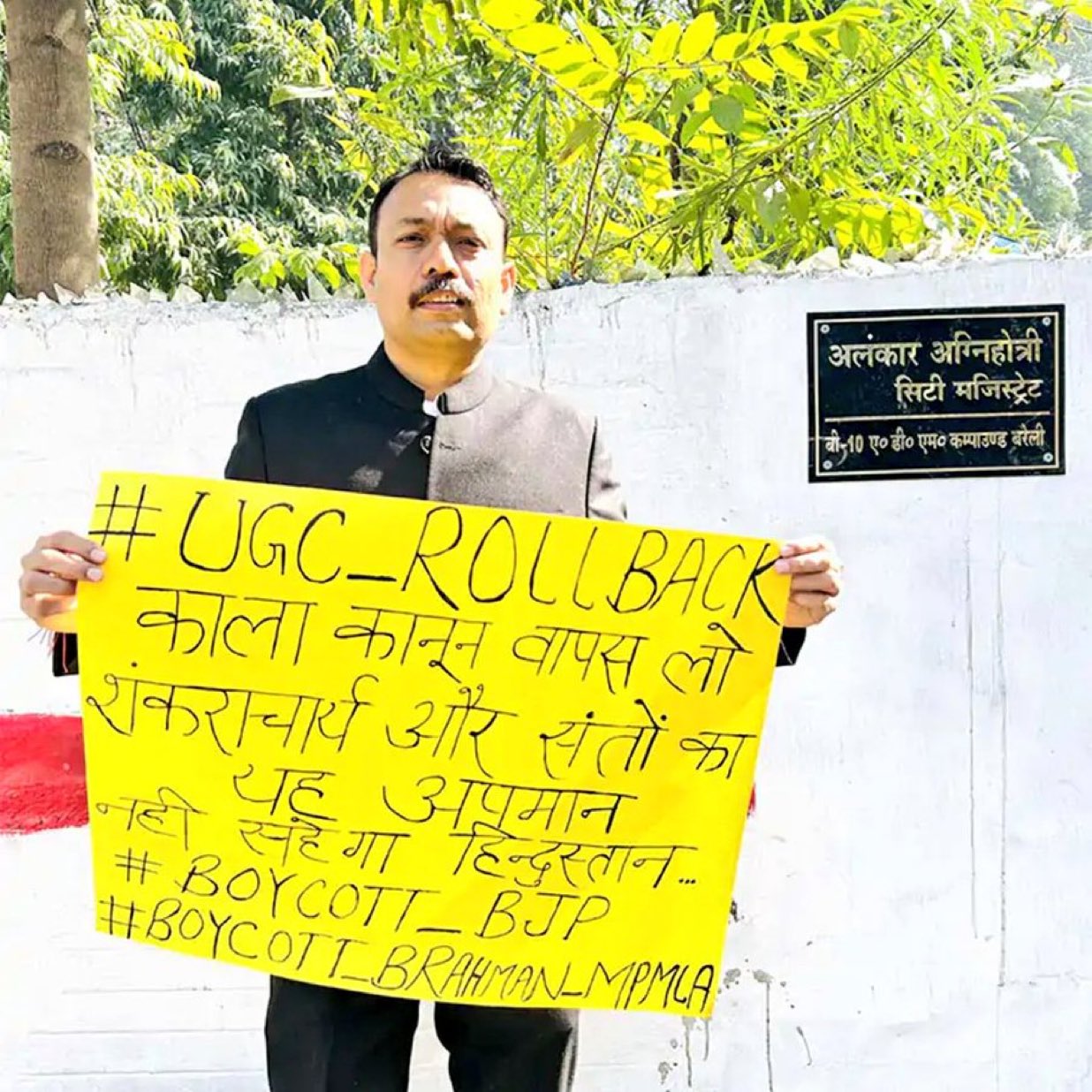
Public anger intensified after the hashtag #UGCRollback trended on social media, amplifying criticism of the regulations. Amid the backlash, Alankar Agnihotri, the city magistrate of Bareilly in Uttar Pradesh, resigned from his post, describing the rules as “one-sided” and alleging that they portray general category students in colleges and universities as “self-proclaimed criminals”.

Under the new regulations, all universities and colleges are required to establish a 24-hour helpline, set up an Equal Opportunity Centre, and constitute an Equity Committee and an Equity Squad to monitor complaints of discrimination. The UGC has warned that institutions failing to comply could face punitive measures, including the withdrawal of funding or accreditation.
The rules have now been challenged in the Supreme Court through a public interest litigation (PIL). The petition specifically targets Section 3(C) of the regulations, calling it arbitrary and discriminatory. It argues that the provision violates fundamental rights guaranteed under the constitution, including equality before the law, freedom of expression and personal liberty, and is inconsistent with the UGC Act of 1956.
Defending the regulations, the UGC has said that complaints related to caste discrimination in higher education more than doubled between 2020 and 2025. The commission argues that a robust monitoring mechanism became necessary following the Supreme Court’s observations in cases such as those of Rohith Vemula and Payal Tadvi, both of which highlighted systemic discrimination in educational institutions.
Student organisations, however, have raised several objections. They say the rules do not clearly address the issue of false or malicious complaints and note that representation from the general category is not mandatory on the Equity Committees. Critics have also expressed concern that the Equity Squads have been given excessive powers, while the definition of “discrimination” remains vague.
As the legal challenge proceeds, opinion remains sharply divided. The UGC insists that effective oversight is essential to ensure a safe and inclusive campus environment. Protesters, by contrast, argue that the regulations risk deepening divisions and fostering further resentment within India’s higher education system.