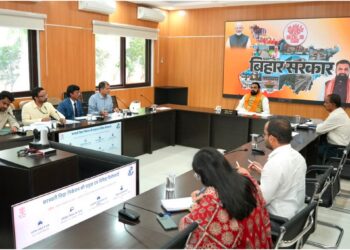
Patna: The Nitish Kumar-led Bihar government on Wednesday presented a massive second supplementary budget of Rs 91,717.11 crore for the financial year 2025–26—an amount economists say is unprecedented for a supplementary financial proposal in the state. The largest allocations have been made towards the Chief Minister’s Women Employment Scheme and the Old Age Pension Scheme.

Finance Minister Samrat Chaudhary had tabled the main budget of Rs 3,16,895 crore on March 3. Since then, the government has brought two supplementary budgets: the first worth Rs 57,946 crore in July and the latest presented after the new government took office in November. Together, these supplementary allocations total Rs 1,49,663 crore—47% of the original budget.
Economists note that such a high proportion of spending outside the main annual financial plan raises concerns about fiscal estimation and populist spending. Nearly 87% of the main budget’s plan fund—meant for welfare and development schemes—has now been routed through supplementary proposals.

Election Promises Fuel Budget Expansion
Analysts say the surge in additional expenditure is linked to major announcements ahead of the Assembly elections. These include Rs 10,000 assistance per woman for self-employment, 125 units of free electricity, a hike in social security pensions, and increased honorarium for anganwadi and school meal workers.
A Patna- based economist said the government’s aggressive welfare push could widen fiscal pressure. “The combined supplementary spending now reaches around 44% of the annual budget. Without strong revenue measures, the state will face increasing debt,” he explained.
He added that while the move could stimulate short-term demand in local markets, long-term benefits depend on strict revenue discipline and outcome-based spending.
Income-Expenditure Gap Widens
Bihar’s financial dependence remains high. According to 2025–26 budget estimates:
- Rs 1,93,091 crore (74% of revenue) is expected from the central government
- Rs 67,741 crore will be earned from state resources
Meanwhile, more than Rs 65,000 crore will go towards salaries and pensions alone—leaving little fiscal space for new schemes. Economists estimate additional liabilities of Rs 58,300 crore due to election-time subsidy and welfare expansions, including electricity relief and payouts to women’s groups and frontline workers.
The deficit gap continues to be filled through loans, making it difficult for Bihar to keep its fiscal deficit near the 3% target.
Women Employment Scheme Gets Top Priority
A provision of Rs 21,000 crore has been made for the Chief Minister’s Women Employment Scheme—the highest allocation in the new proposal—followed by Rs 1,885.65 crore for the Old Age Pension Scheme, Rs 861 crore for road development, and Rs 800 crore for the Student Credit Card Scheme.
The government says Rs 10,000 assistance has already been deposited in the accounts of 1.5 crore eligible women as part of the initial rollout of the employment initiative.
What Is a Supplementary Budget?
A supplementary budget is introduced when expenditure needs exceed what was approved in the main annual budget due to special circumstances such as emergencies, new schemes, rising costs, or policy changes.
As Bihar enters the latter half of the financial year, policymakers now face the challenge of balancing welfare-driven expansion with financial sustainability. Economists warn that the outcome of this “political gamble” will depend on whether the government can generate the revenue needed to support its ambitious commitments.